
Snipe Worlds – Plotting the Course – Episode 6
From the Origins to Mahon
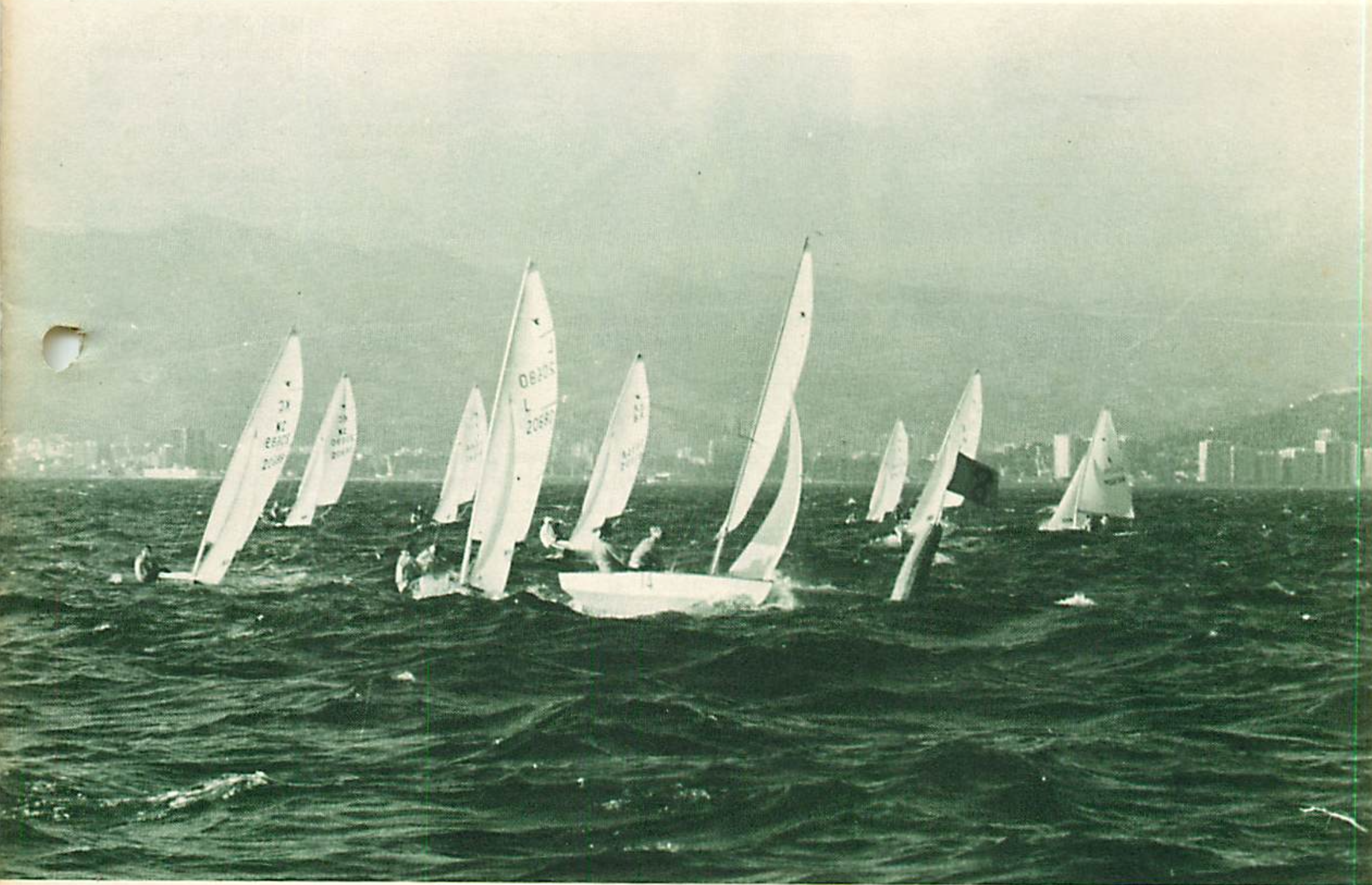
Continuing our journey through the rich history of the Snipe World Championships, this sixth episode covers the regattas held between 1973 and 1981. This golden decade witnessed the historic rise of Felix Gancedo, who brought the Commodore Hub E. Isaacks Trophy to Europe for the first time in over a decade, the dominant performances of South American and American champions, and the memorable 50th Anniversary celebration of SCIRA in Long Beach, California.
XXVI – Malaga, Spain, October 12-20, 1973
With this Snipe World Championship, Felix Gancedo wins the first of his two World titles.
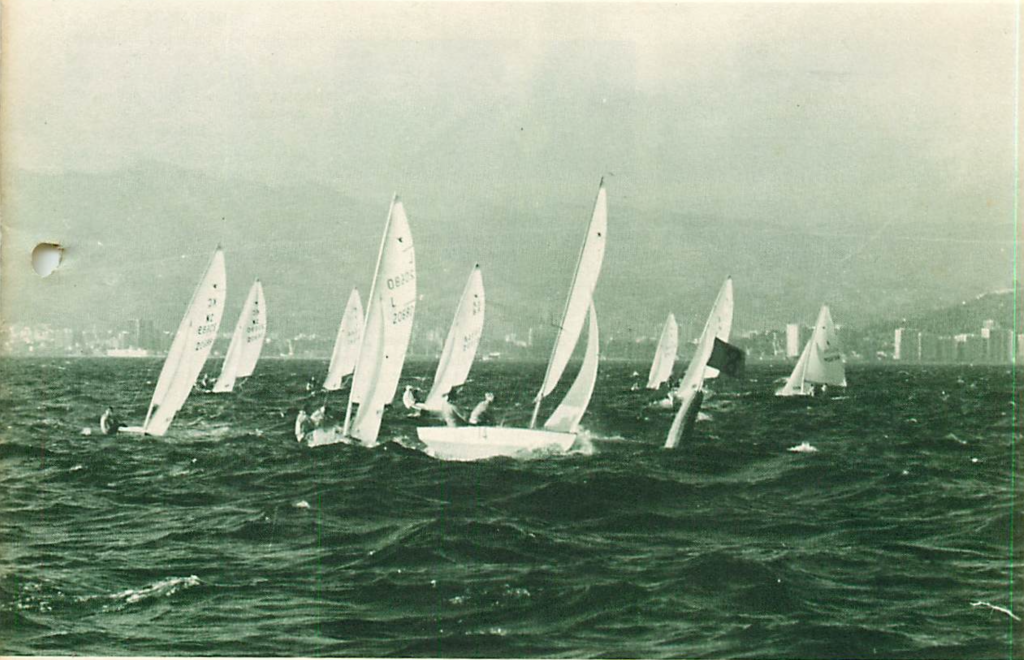
Felix Gancedo is new World Champion – From the Snipe Bulletin December 1973
Per Brodsted is Second and Eric Thorsell Third
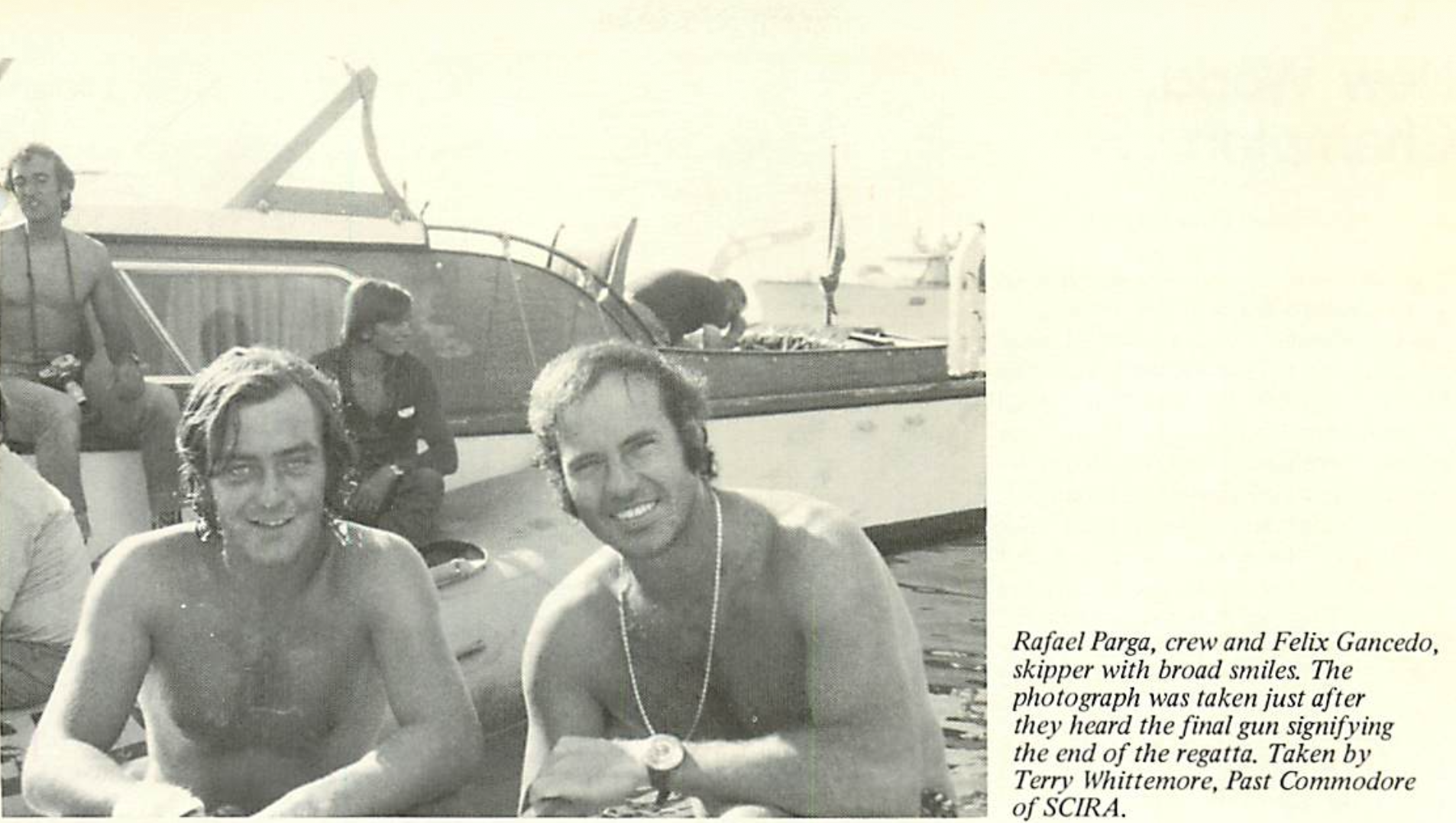
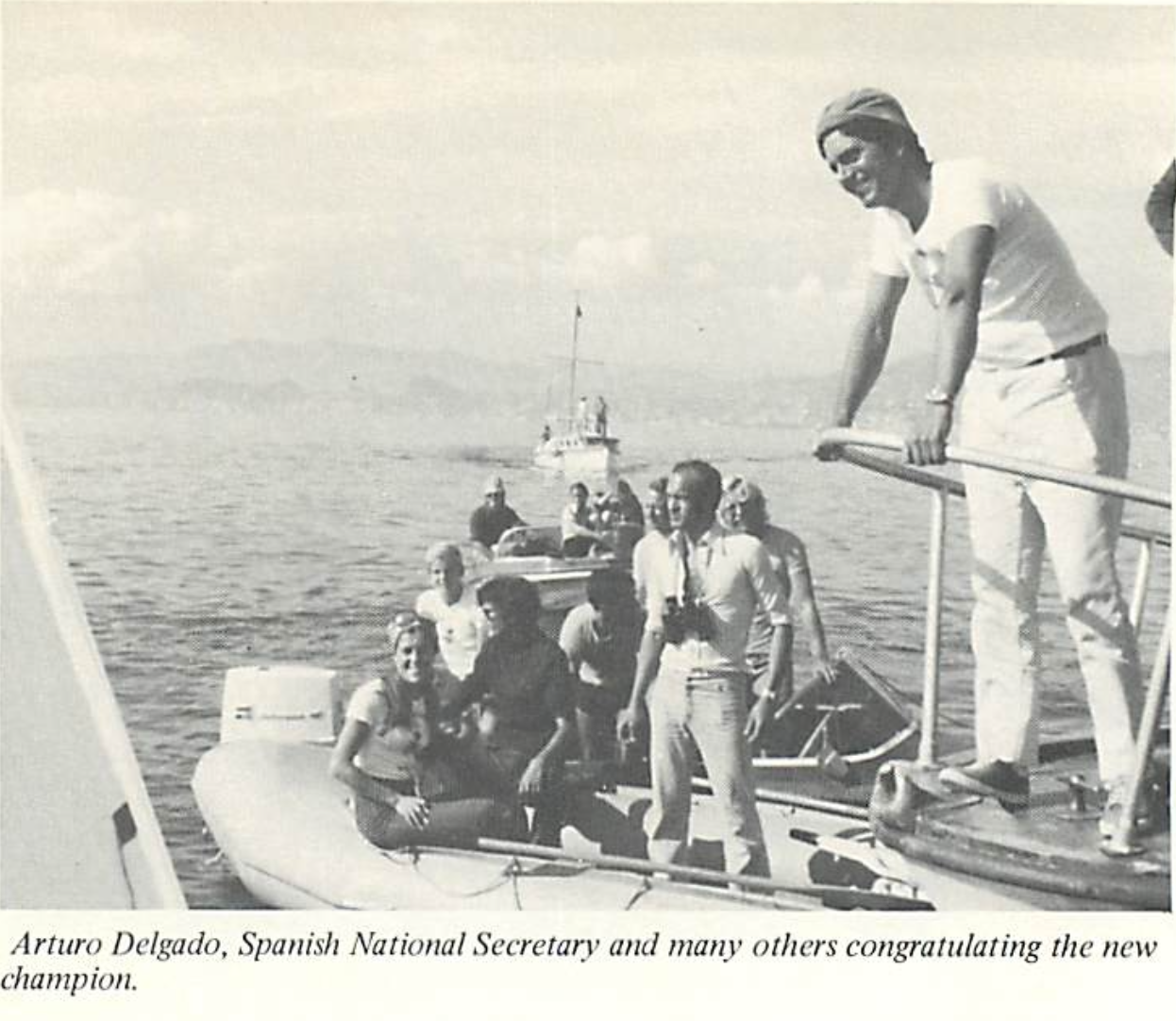
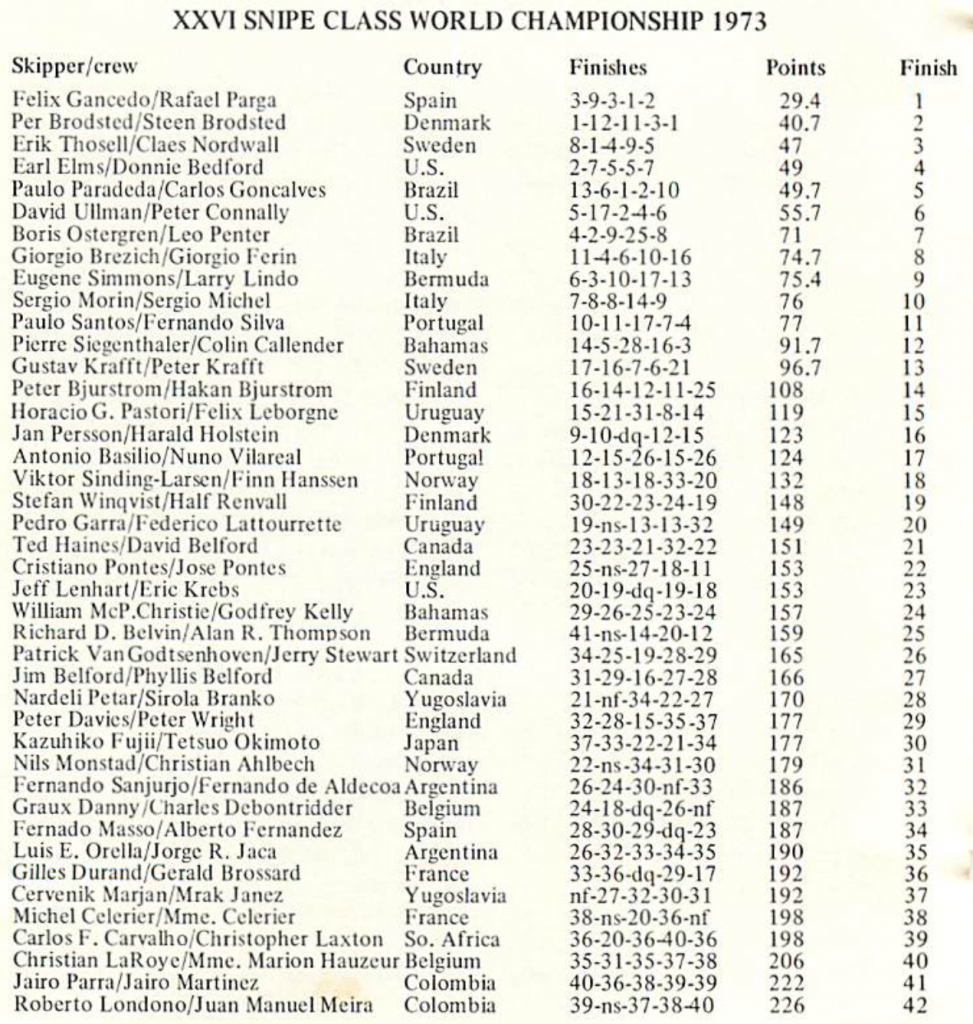
Felix Gancedo of Spain won this year’s top regatta and had taken the coveted Commodore Hub E. Isaacks Trophy to Europe for the first time since Paul Elvstrom won it in 1959. Felix and his crew, Rafael Parga were the most consistent and unquestionably the outstanding sailors in the twenty-sixth running of the event. Their finishes were 3-9-3-2-1 in the 5 of 7 scheduled races held in the Mediterranean October 12-20. Brothers Per and Steen Brodsted of Denmark were the heavy weather sailors and finished second. Eric Thorsell of Sweden was third followed by the U.S.’s Earl Elms [Edotor’s note: he sailed with the future SCIRA Commodore Donnie Bedford], the defending champion. Paulo Paradeda from Brazil rounded out the top five.
Gancedo used a piece of equipment unique in a championship regatta — A BROKEN LEG in a cast. It was unintentional, of course, (beware of motorcycles) as was a case of the flu. In spite of these “go-slows” Felix sailed an almost flawless series. Watching this fine sailor tack in light or heavy wind was a sight to behold.
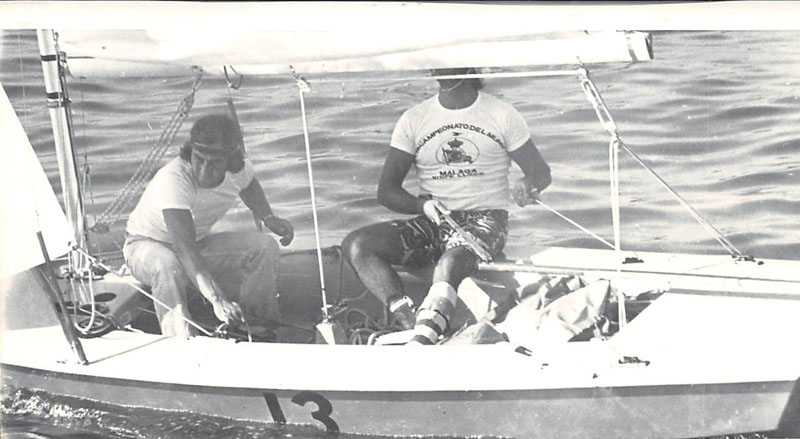
Gancedo used a piece of equipment unique in a championship regatta — A BROKEN LEG in a cast. It was unintentional, of course, (beware of motorcycles) as was a case of the flu. In spite of these “go-slows” Felix sailed an almost flawless series. Watching this fine sailor tack in light or heavy wind was a sight to behold.
Although winning only one race, the Spainish team was always in the top except for the second race when nearly the entire fleet missed the “M” flag. At that point they were in third place but dropped to 9th. They were 3rd in one of the races called because of time; the other called-race found them in the lead. Their starts were always good and they used good tactics throughout the races.
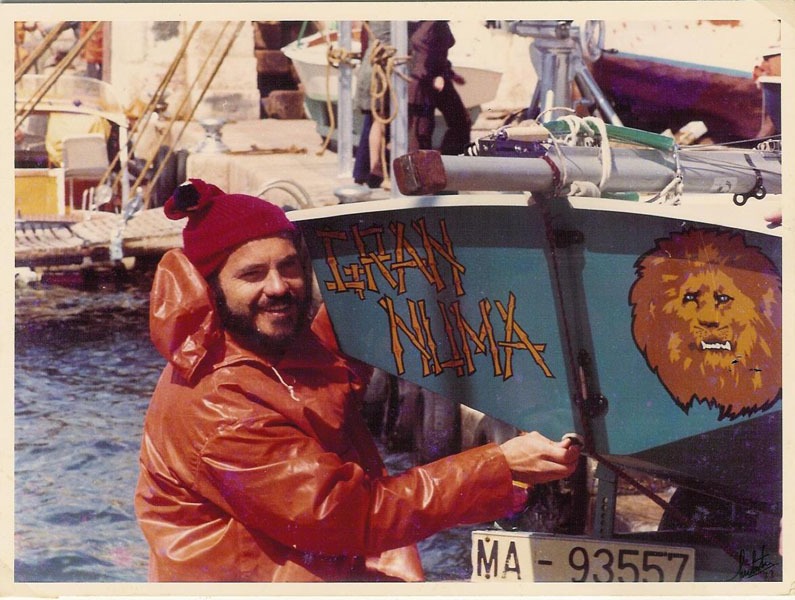
Gancedo is 33 years old, married and has two children. He manages the family department store in Malaga. Sailing for 18 years, he has participated in the Olympics, but is primarily a Snipe sailor. He finished 8th in the Worlds in Luanda and 3rd in the previous championship in Rio. Last year he won the European Championship in Oporto, Portugal. His boat is named GRAN NUMA after the big lion in Tarzan. After winning a race Felix manages a roar that would do credit to any lion.
The regatta was sponsored by the Spanish Yachting Federation and the Real Club Mediterraneo in Malaga. Everything was run efficiently and no problem was too large for them. The hotel was only two blocks from the club which was situated on the beautiful Mediterranean Sea. Launching facilities, boathouse, lockers and central regatta office were across the street on the well-protected harbor. The boathouse had a snack bar and the main dining room was in the clubhouse. The food was delicious and a band plus flamenco dancers provided entertainment every evening.
The races were held in the Mediterranean Sea on the Costa del Sol. The expected light to moderate conditions prevailed in only one race. Two races were held in 20 mph or better and two in 15 mph. Big swells accompanied all four of these races and proved to be a disadvantage to those unused to them.
The first race was started in winds of 12 mph but building. Gancedo got the start and took an early lead but lost it off the wind to Thorsell and U.S. champion Dave Ullman. The building winds favored the big Danes who were in the lead by the second windward mark. Elms showed his style by working his way to 2nd from 11th at the first turn. Gancedo was still in 3rd and this was the order of finish. The last beat produced a classic tacking duel between Elms and Gancedo. It was broken off just in time to keep Brazil’s Boris Ostergreen from taking them both.
The winds continued to build for the second race and again the Danes took the lead followed by Pierre Siegenthaler and Gancedo. The leeward mark was replaced by a boat with the “M” flag which most of the fleet passed without noticing to round a previous leeward mark. Thorsell had done his homework well, read the “M” flag, rounded the boat, and picked up a number of boats. Downwind, he displayed brilliant deceptive tactics by staying close to the fleet and breaking off at the last minute to round the “M” flag boat, which the leaders still had not recognized as the mark, and caught the rest of the fleet, holding them off on the final beat to win the race. Ostergreen was second followed by Penny Simmons of Bermuda. Since the leaders were closer to the wrong mark they were badly hurt, Brodsted finishing 12th and Gancedo 9th for his worst race of the series.
The second day’s races were called because of winds of 30 knots.
The third race was the lightest of the series with winds of 8-10 knots. Ullman, Paul Paradeda of Brazil and Gancedo all got good starts and proceeded to open a wide gap between themselves and the rest of the fleet. Light-weight Ullman led for most of the race but Paradeda caught him on the last beat to win. Gancedo was third. After four general recalls, the race committee abandoned all attempts to get in another race for the day.
On the fourth day the fleet assembled and all that appeared was rain — no wind at all.
The next day the rain had stopped but the wind was very light. A race was started but was called because of the time limit. In the second start, Gancedo got an early lead followed by Paradeda and Brodsted. This was the order of rounding at all windward marks as well as at the finish.
Quick thinking by the race committee enabled them to get in another race. They set up another course, using the adjusted finishing line as the starting line for the next race. With heavier winds, the Danes again took the lead with Gancedo not far behind. It was a battle between these two with Brodsted winning out. Sigenthaler finished third.
An attempt was made on the make-up day to get in the final two races. A start was made but the wind quit altogether and time ran out, thereby eliminating the possibility of a throw-out race. Thus the 26th World Championship ended and the roar from GRAN NUMA was barely audible, being drowned out by the cheers for the new champion.
Interesting note: A protest between a starboard-tack boat and a port-tack boat was resolved in favor of the former thanks to local TV footage; it was likely one of the first times television footage was used to decide a protest.
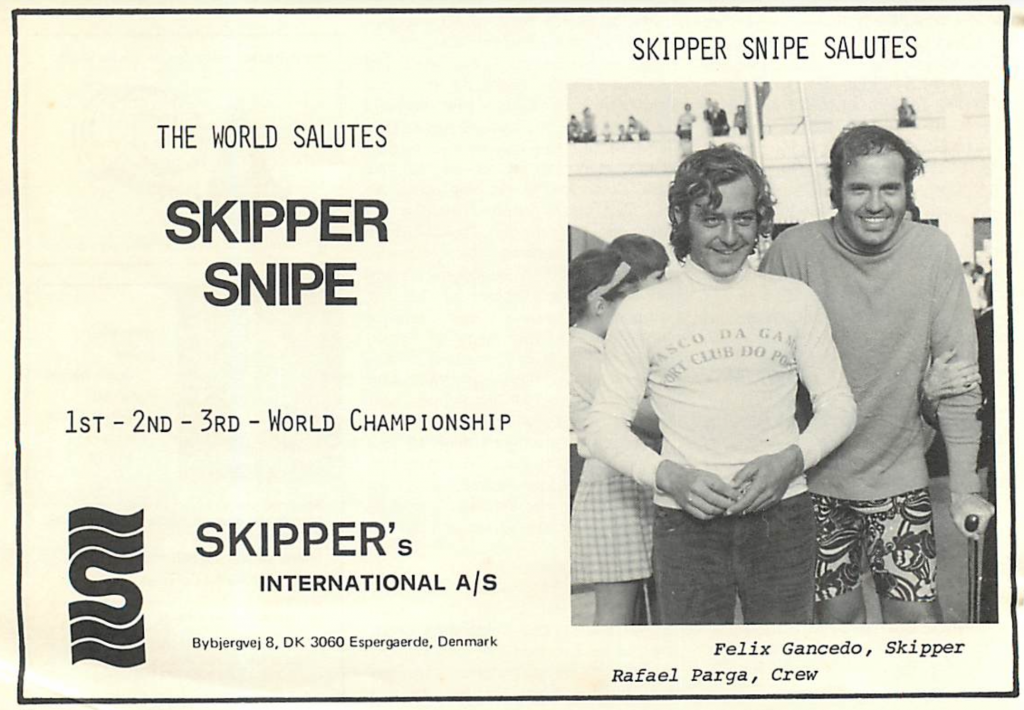
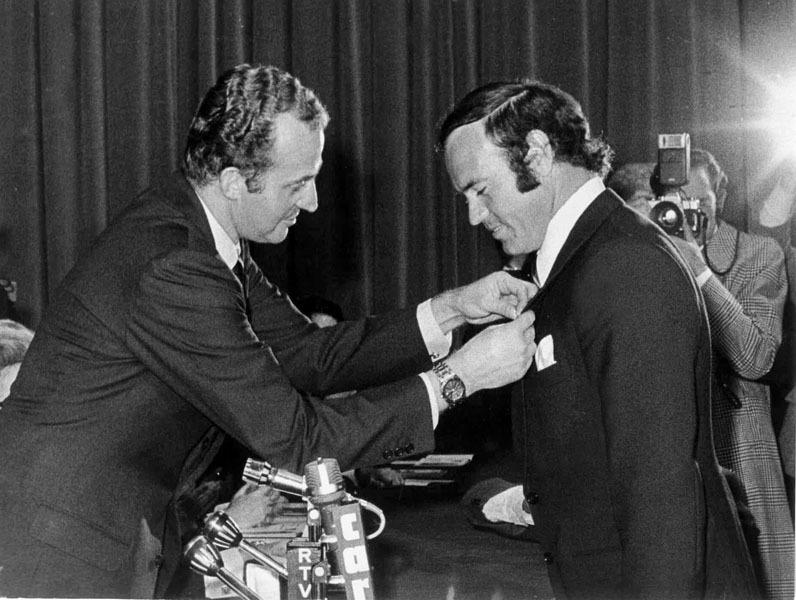
King Juan Carlos of Spain and Felix Gancedo
XXVII – Punta del Este, Uruguay, November 28-December 6, 1975
Spain’s Felix Gancedo Repeats As World Champion – From the Snipe Bulletin January 1976
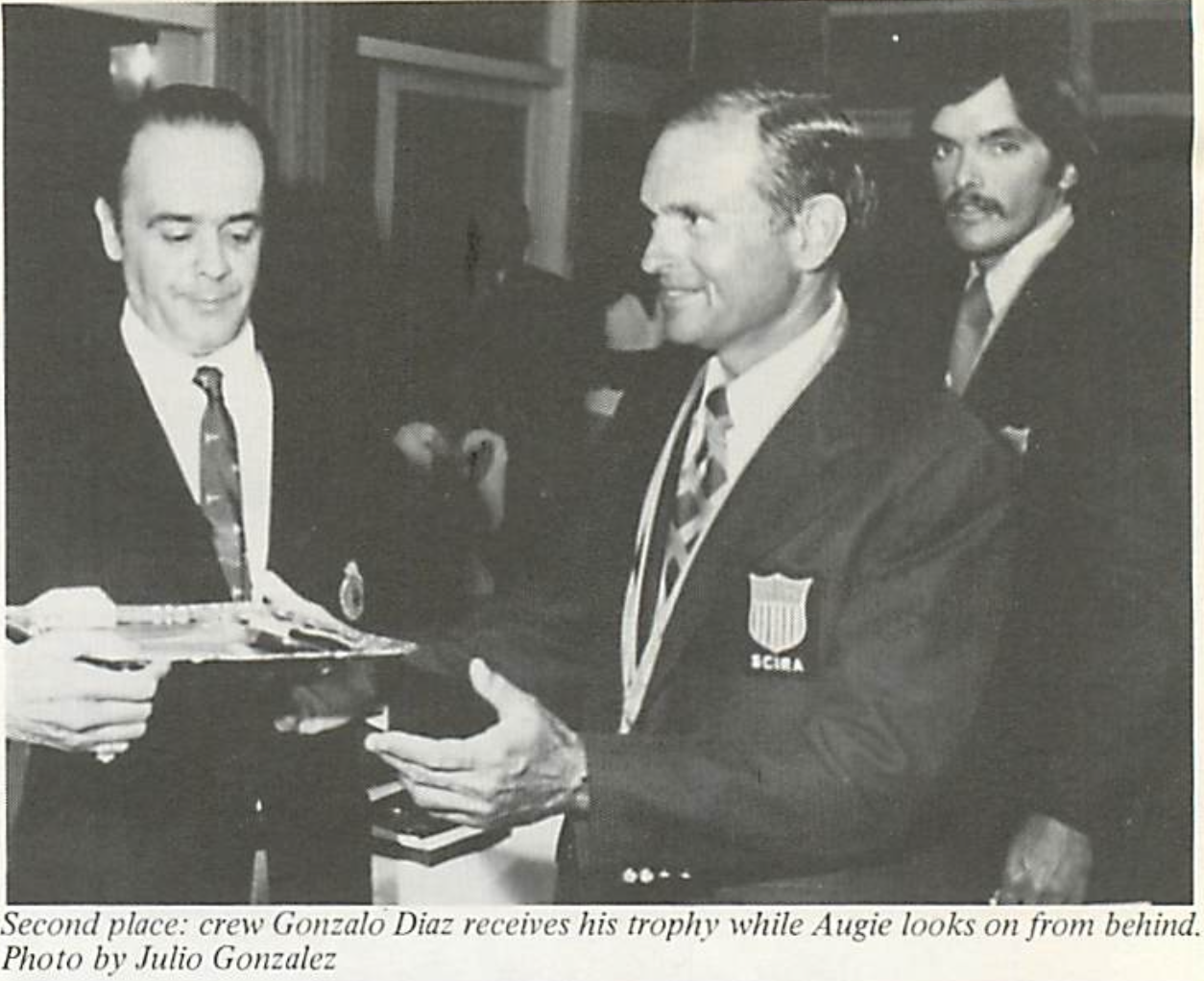
Felix Gancedo won his second world title with a remarkable score of 13.7 points. He and crew, Manuel Bernal established their lead after the second race and held it for the rest of the championship. Augie Diaz with father, Gonzalo, from the U. S. sailed a fine series to finish second.
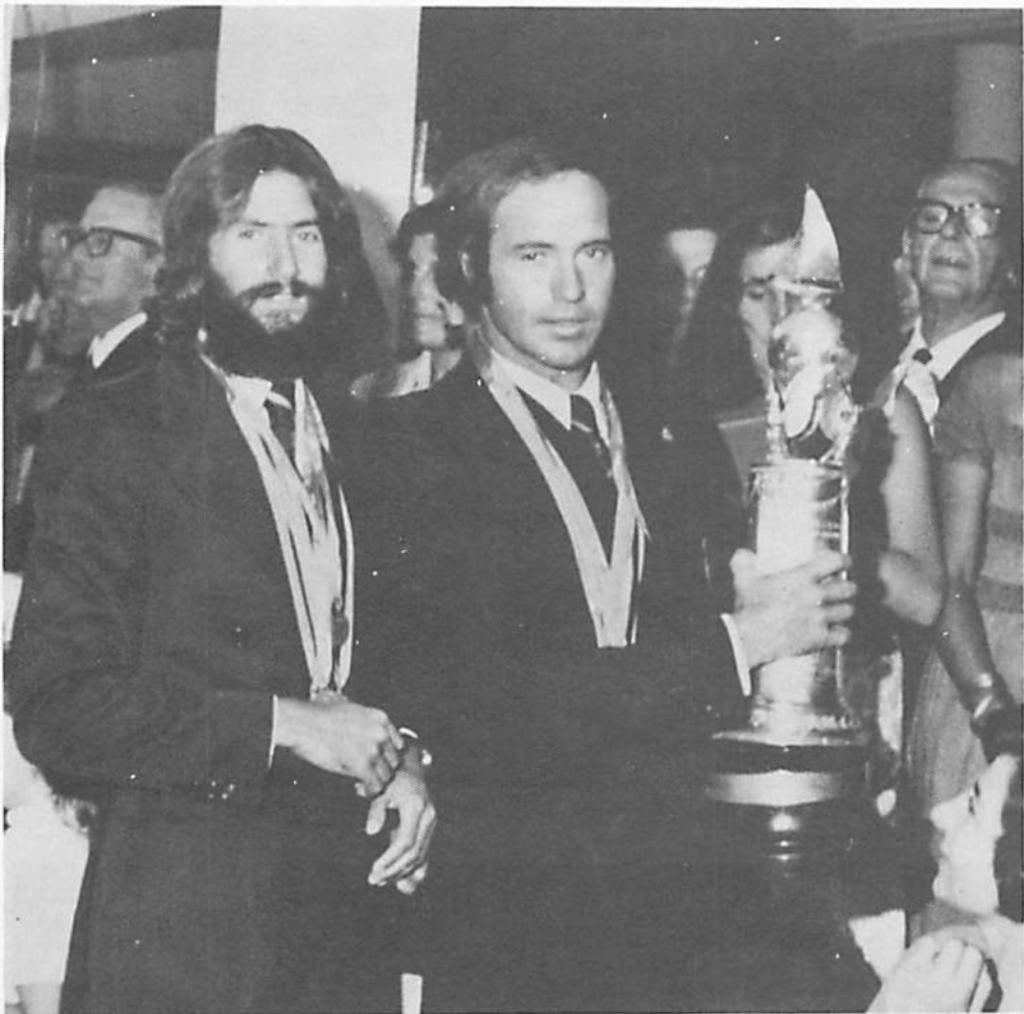
Above: Felix Gancedo holding the trophy; Manuel Bernal to his right
Felix Gancedo won his second world title with a remarkable score of 13.7 points. He and crew, Manuel Bernal established their lead after the second race and held it for the rest of the championship. Augie Diaz with father, Gonzalo, from the U. S. sailed a fine series to finish second. Their performance improved throughout the series, ending with a win in the final race.
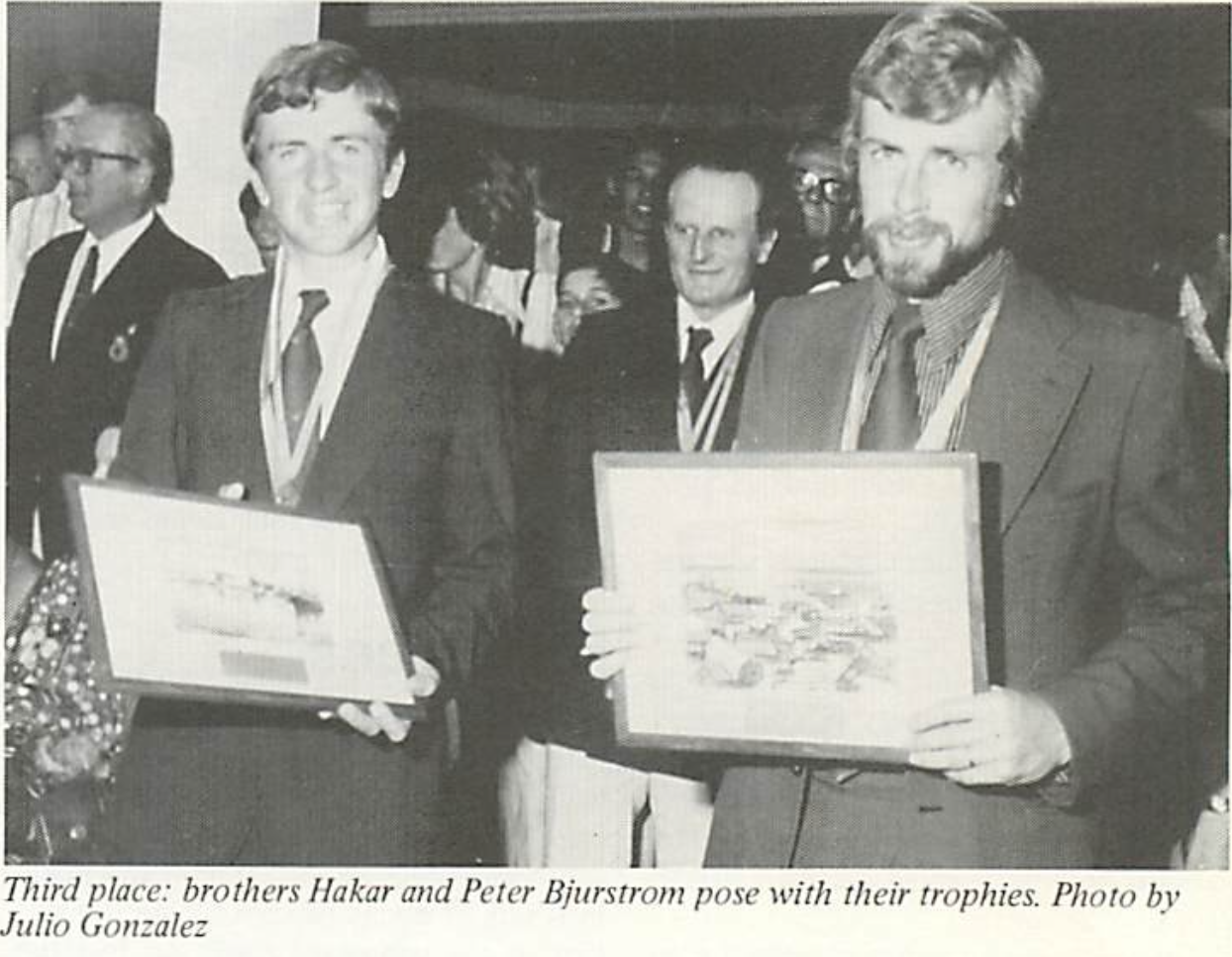
Brothers Peter and Hakan Bjurstrom from Finland sailed a wooden boat to third place. It is interesting to note that these two teams were second in last year’s championships — Diaz in the Western Hemisphere and Bjurstrom in the European Championships.
Horacio Garcia Pastori and Felix Leborgne, representing the locals, felt happy with their fourth, as they said, “… considering we are the oldest crew here.” Jeff Lenhart and Eric Krebs, sailing a borrowed boat finished fifth. The airlines lost all their sails except 1 main and they had to borrow “an off-the-shelf” jib. Marco Aurelio Paradeda and Danilo Grussner from Brazil were sailing well until they had bad luck, being over the line early in the fifth race and then capsizing in the last race. They rounded out the trophy winners with a sixth place.
The event was held November 28 through December 7 in Punta del Este, Uruguay. It was ideally situated in a resort area at the point where Rio de la Plata becomes the Atlantic Ocean and the sailing was in the semi-protected Bay of Maldonado. This is the site of another famous naval battle. The British defeated the German battleship Admiral Graf Spee in these waters in 1939.
The Yacht Club Punta del Este and the Snipe fleets of Uruguay sponsored the championship with able assistance of a number of Snipe sailors from Argentina and Brazil. Everything was well organized under the capable guidance of Horacio Garcia Pastori, the organization’s secretary and Jose Luis Murguia, SCIRA National Secretary and Chairman of the Race Committee.
Gancedo’s performance surpassed even that of two years ago, when he won on his home waters of Malaga, Spain. He now has a record of 8-3-1-1 in the last four world championships, plus two European Championships.
The scores do not reveal the whole story. During the practice race and the two races which were cancelled, Gancedo and Bernal’s performances left something to be desired. Felix kept mumbling about being the ex-champion. After the third race Felix stated, “Now I feel I can perhaps win again”. The feeling was valid — he won the next three races and the title.
However, the scores do not reveal the whole story. During the practice race and the two races which were cancelled, Gancedo and Bernal’s performances left something to be desired. Felix kept mumbling about being the ex-champion. After the third race Felix stated, “Now I feel I can perhaps win again”. The feeling was valid — he won the next three races and the title.
Gancedo is now 35 years old and says he may not make it to the next World Championship because of the time necessary to be away from family and business. However he does plan to make an attempt for the Olympics in Tempests. Perhaps he will be able to return and defend his title. Everyone hopes so as he is very popular.
The Races…
On Monday the wind was good at the first start but dropped and shifted so badly that the race was cancelled. Some four hours later the wind settled to the southeast and a second attempt was made in winds of about 10 knots. Gancedo was first at the windward mark but lost the lead on the next windward leg and finished fourth. Pedro Sisti and Julio Labandeira of Argentina won the race with the Kraft Brothers from Sweden in 2nd and Paradeda in 3rd.
Tuesday the winds were light and shifty and it was not until afternoon that a race could be started. However, the race ran over the time limit and had to be abandoned, with Lenhart leading. An interesting aside of this race was Lorenzo Depascale’s hitting the windward mark because of current. The wind died before he could re-round and he lost 15 places before he got back to the mark. It was a grueling experience to be in the hot sun for 10 hours, with no races completed.
Wednesday the wind had already settled into the normal easterly pattern and an early morning race was started in a 12 knot breeze. Lenhart took an early lead. Gancedo was fifth at the first windward mark and worked his way to second by the second windward mark. Garcia Pastori maintained third place throughout the race. On the final leg Gancedo engaged Lenhart in a tacking duel and caught him just before the finish. There were several other interesting things in the race. Tetsuoa Okimoto from Japan went from tenth place to second on one reaching leg but could not hold it when the wind increased to about 18 knots. Paradeda, as in the first race, sailed from the middle of the fleet to a final fifth. Svend Christiansen had the bad luck of the day. His boat was on top of a wave at the reaching mark and his rudder came completely out of the water. He lost control, hit another boat and had to drop out.
The third race was started at noon with about 15 knot winds and heavy seas. The wind increased but dropped to about 10 before the end. Paradeda immediately established a good lead and held it all through the race. Diaz was around the first mark in fifth, caught two boats on the next leg and moved into second by passing a boat with jib sheets under the bow. (It is nice to know even the best have these problems. The skipper got a bloody lip from the whisker pole so apparently justice was done.) Gancedo was eighth at the first mark, picked up a couple of boats on the next four legs and another one on the final beat to finish third. Lenhart was in ninth until the run when he moved into third. He had designs on winning until a shift dropped him into fifth just behind Garcia Pastori.
On Thursday, shifty winds prevented the start of the 4th race until afternoon, although an attempt had been made in the morning but resulted in cancellation because of the shifts. Bjurstrom took an early lead in the 6-8 knot winds but could not hold it against the onslaught of Gancedo’s GRAM NUMA. Garcia Pastori took a third followed by Diaz and Paradeda. Gancedo’s “feeling” was beginning to pay off and after this race it looked like he was a winner. The next spot was open to 4 boats: Paradeda, Diaz, Pastori and Bjurstrom. Lenhart had a bad first leg and finishing 12th, and appeared to be out of the running for second.
Gancedo took another first in fifth race, held in late afternoon, with winds about 15 knots. Gancedo was first around the windward mark followed by Diaz. These positions were maintained for the rest of the race. Bjurstrom took a third followed by Sisti and Lenhart. Paradeda was over the line early and it cost him. He was still in contention for second but was 8 points behind Diaz considering a throwout. Bjurstrom and Pastori were next with only a point difference.
On Friday the wind was from the east at 12, building to 15 by the end of the race. Gancedo took the lead at the first mark followed by Diaz. Diaz passed him on the next leg. A classic duel ensued but Gancedo emerged the winner. Lenhart was third followed by Per Brodsted and the Kraft brothers.
Gancedo’s win cinched the championship — he did not have to sail the last race since he could use it for a drop race. Diaz had only to finish better than seventh to maintain his overall second. But the last race would determine the third spot. Only 5 points separated the next 5 boats.
A pampero had been forecast for the afternoon and it was apparent it would hit. A pampero is a strong wind that originates in the pampas of Argentina.
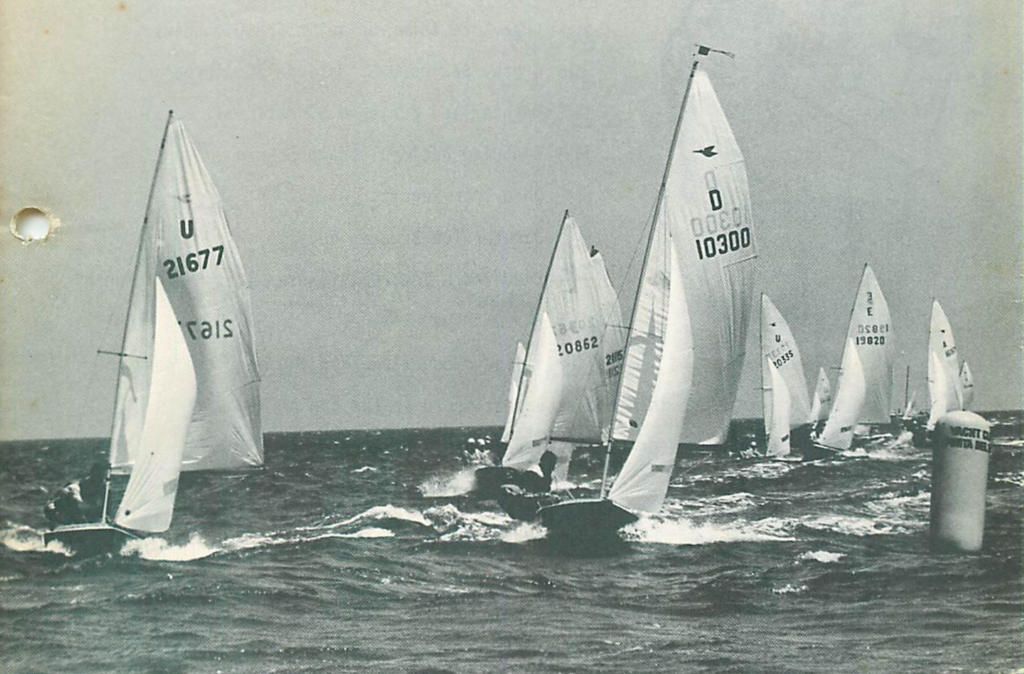
A pampero had been forecast for the afternoon and it was apparent it would hit. A pampero is a strong wind that originates in the pampas of Argentina. However, this one was forecast to be mild so a race was started in 15 knots of wind, but increasing. The race committee did post a 3 lap triangular course rather than the Olympic course.
Bjurstrom had the lead by the first mark followed by Diaz and Paradeda. The wind had increased to 18 knots for the first reaches. Diaz caught Bjurstrom on the second triangle in winds that had built to 22 knots. The boats were on screaming planes and presented a beautiful sight. The sailors must have had an exciting ride. Paradeda capsized while rounding a reaching mark. He managed to get back into the race but could only work up to 16th by the finish. His lucky elephant had finally left him. This was the only capsize.
Diaz maintained the lead to finish ahead of Bjurstrom followed by Brodsted, Garcia DeSoto and Pastori.
The winds proved good for most of the series. The normal winds were from the east and settled there about noon, generally in the 12-15 range. Races held before noon were usually light and shifty. The race committee chairman was Jose Murguia, National Secretary for Uruguay and the proud father of Carlos who finished 10th. The courses were well laid out and the lines were extremely good. Only one general recall was necessary during the series.
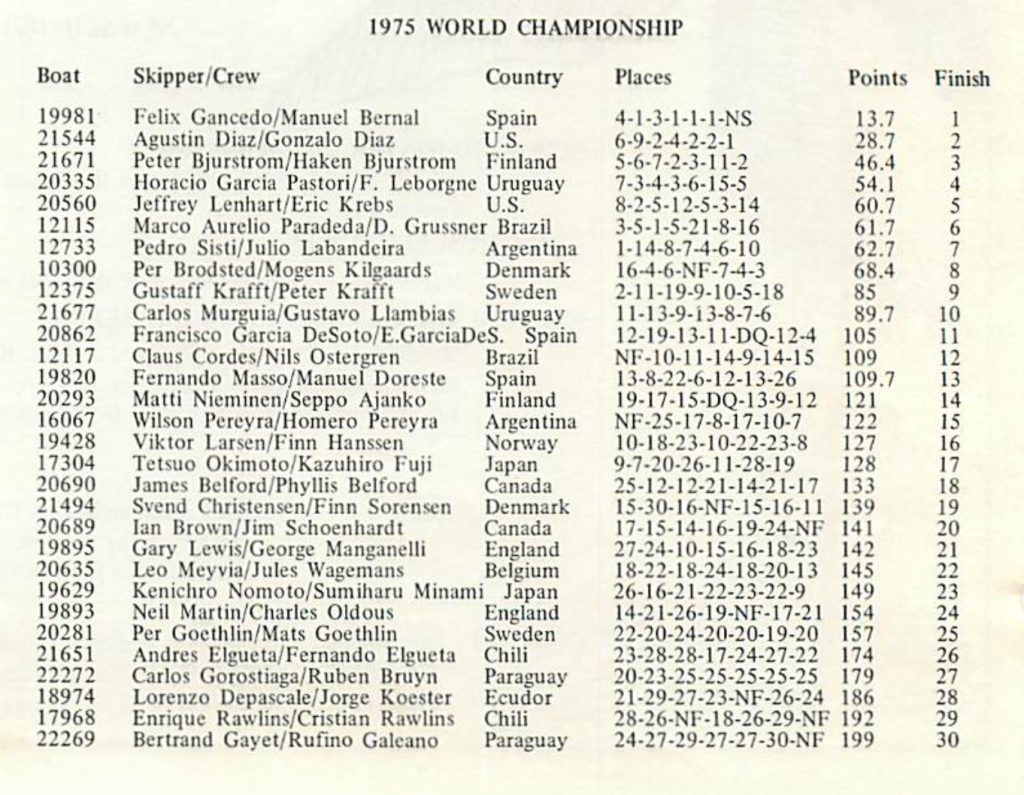
There were fewer competitors and countries represented as compared with two years ago. Economic conditions in general as well as the tremendous increase in cost of transportation were part of the cause. Additionally, the greater distance from Europe prevented many from attending. However, those who did were top sailors and there was plenty of competition. Everyone who attended had a good time and felt the championship was well organized and that the Uruguayians should be commended for their tremendous efforts.
XXVIII – Copenhagen, Denmark, August 21-28, 1977
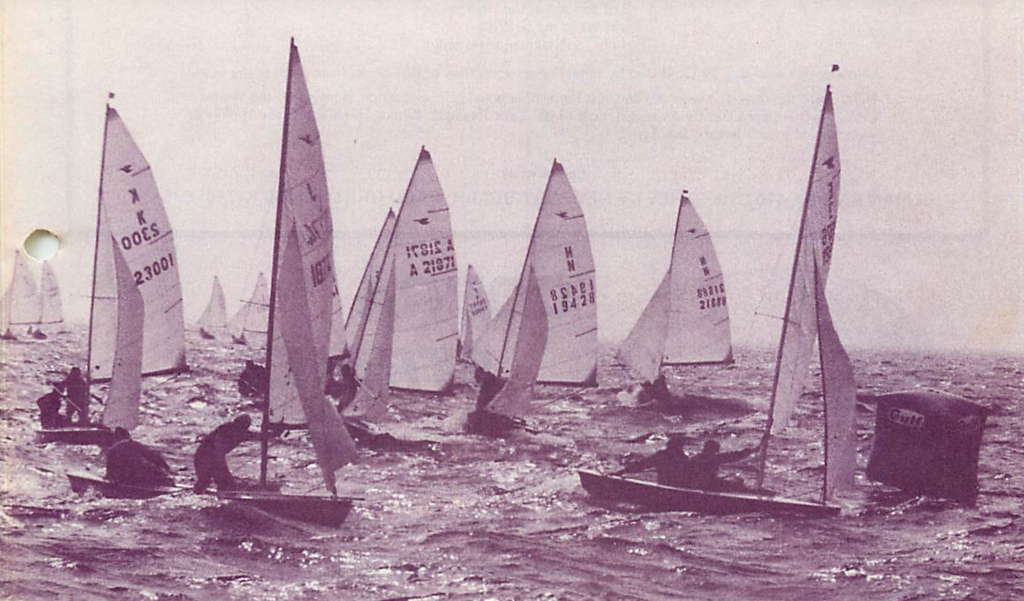
Above: Spain’s Pablo Zcndrera prepares to jibe in some of the heaviest weather of the series at the world championship regatta in Denmark. Japan will be next, but will England round before Argentina?
Boris Ostergren Scores Impressive Win Of World Title – Snipe Bulletin November 1977
Brazilian and United States teams win top three places.
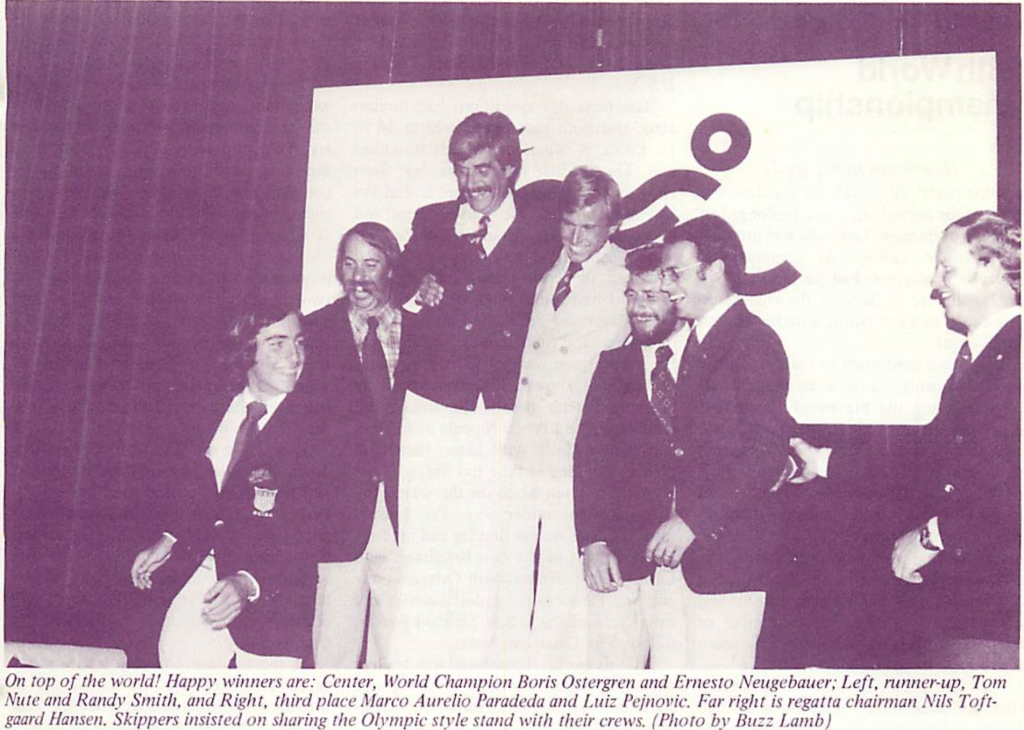
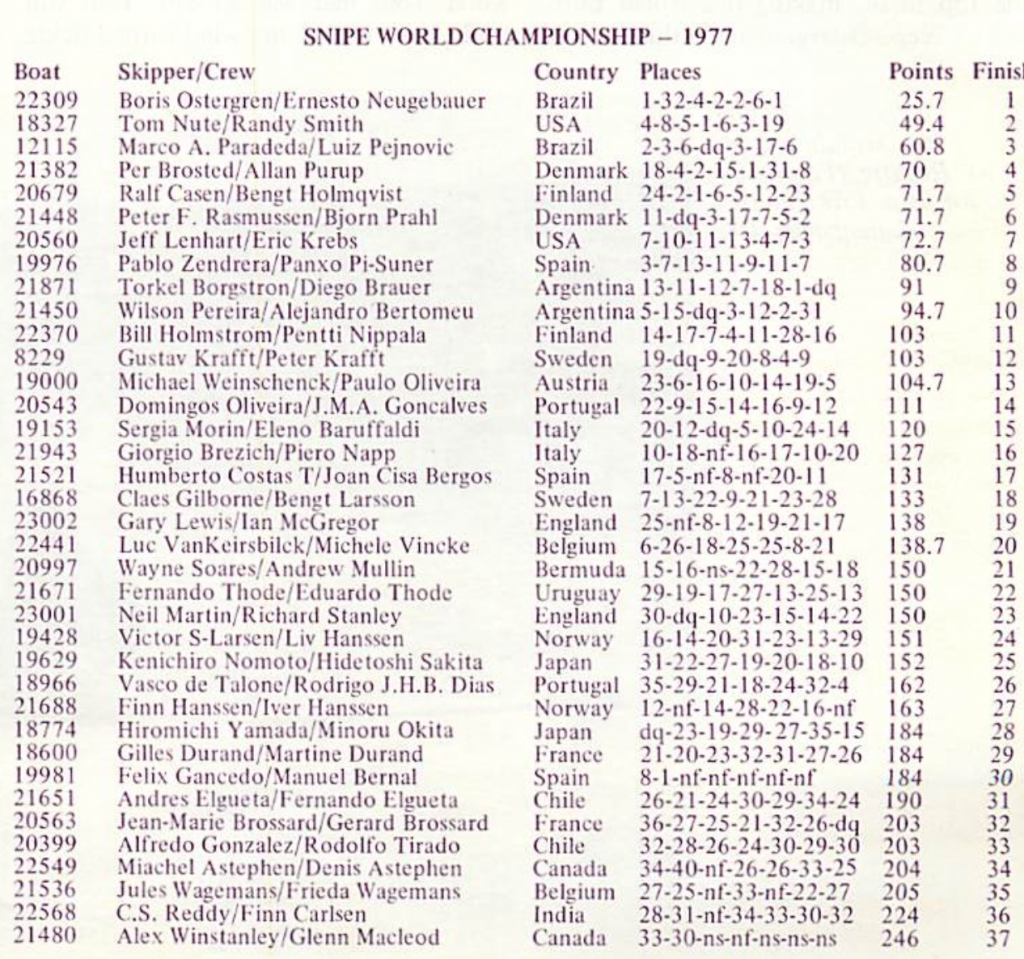
Boris Ostergren won the twenty-eighth World Championship with an impressive score of 25.7 points. He and crew, Ernesto Neuberger of Brazil sailed a good series to overcome a last-place-finish in the second race, the result of a capsize. Tom Nute and crew Randy Smith of the U.S.A. finished second, and Marco Aurelio Paradeda with crew Luiz Pejnovic of Brazil took the third place.
Per Brosted, Denmark, Ralf Casen, Finland, Peter Rasmussen, Denmark, and Jeff Lenhart, U.S.A., rounded out the top seven. The remarkable thing was that there was only 2.7 points separating these four crews.
The defending champion, Felix Gancedo, always a threat in any competition, ran into bad luck. He sustained an injury in the third race and was not able to continue racing. His eighth and first, plus his commanding lead in the race where he was injured, led to much speculation as to his eventual position had he been able to continue. It would have been a duel, no doubt, but the championship was still exciting.
The event was held August 21-28 at Skovshoved Sailing Club, near Copenhagen, Denmark. The sailing was on the narrow sound that separates Denmark and Sweden and the location of one of the most active sailing centers in the world. The wind is generally considered on the heavy side, but the Danes provided a variety of winds for the championship—everything from a drifter to very strong winds.
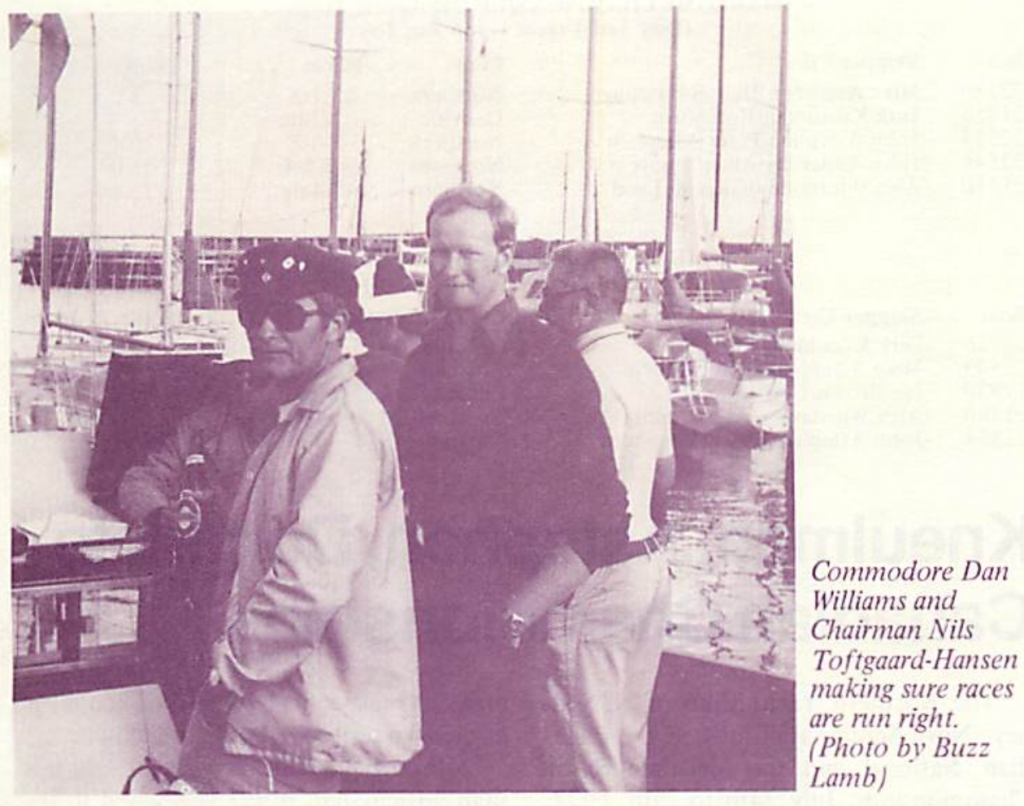
North European Secretary Nils Toftgaard-Hansen was the regatta chairman, as well as the race committee chairman. Nils is a tall, blond, soft-spoken Viking who has a number of years of sailing experience. His performance as head of both of these committees was superb, and SCIRA is indeed indebted to him for a fine championship.
The entire week was filled with parties of one sort or another. In fact, it is amazing that the contestants were able to attend the social functions and also sail. There were many cocktail parties with tables loaded with Danish delicacies; a visit and dinner at the Tuborg Brewery; and a wonderful prizegiving dinner to top it all off. All who attended will remember this as an outstanding championship.
The wind was light and shifty at the scheduled time of the first race, and the postponement flag flew for nearly two hours. When the wind had apparently settled down, blowing about 4 knots from a westerly direction, the first start was made. Most of the fleet held to the starboard side of the course. One of those holding to the port side, Boris Ostergren and crew Ernesto Neuberger from Brazil, rounded the windward mark in first place, and held the lead for the rest of the race. Marco Aurelio Paradeda and Luiz Pejnovic, also from Brazil, rounded second followed by the Spaniards Pablo Zendrera and Panxo Pi-Suner. These two fought throughout the race but finished in the order they rounded the first mark.
The wind dropped to next to nothing at times and the race was within a few minutes of being called on account of time when the first boat finished. The wind also became very shifty, forcing the race committee to shift marks. On the third leg, the wind shifted requiring a new windward mark. The race committee worked very efficiently, stationing an auxiliary boat flying the “Charlie” flag (course change) and “M” flag, which means “round me.” This provided a “gate” and eliminating looping the mark as well as confusion. This procedure was included in the sailing instructions, and the race committee handled it as if it were an every day occurrence.
The second day was just what the heavy-weather types were looking for. The race was started on time in 16-18 knots of wind, which continued to build. The defending champion, Felix Gancedo and crew, Manuel Bernal from Spain, got off to a good start, and powered around the course in their usual style, never threatened. Weighing in at about 350 pounds certainly helped, but they had real class in this type winds, with very close and heavy seas. Bobbi Casen and crew Bengt Holmqvist from Finland, also very good heavy-weather sailors, finished second followed by Marco Aurelio Paradeda.
It was in this race that Boris Ostergren did his death roll and capsize. Although he righted his boat, it took time, and he had to settle for a last boat to finish—thirty-fourth place. Asked how it happened, Boris said it was very simple, “Whoops, whoops, whooooops!” A perfect description for a very simple maneuver.
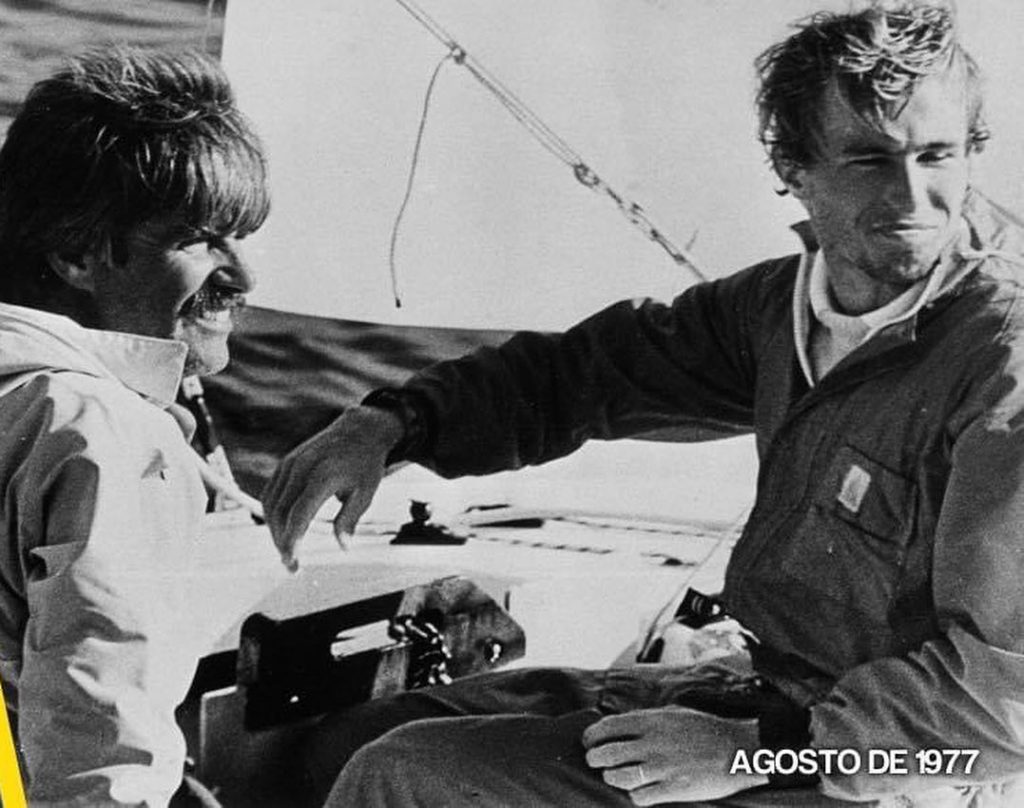
It was in this race that Boris Ostergren did his death roll and capsize. Although he righted his boat, it took time, and he had to settle for a last boat to finish—thirty-fourth place. Asked how it happened, Boris said it was very simple, “Whoops, whoops, whooooops!” A perfect description for a very simple maneuver.
Marco Aurelio Paradeda was sailing his “Twelve Thousand” boat and proved in this race that the boat is still fast, in spite of its being 18 years old. He did feel that it is not as good on a plane as some boats.
Between the two races of the day, the race committee had their only problem. The anchor on the starting line mark would not hold. After a grueling delay that must have seemed an eternity to the sailors, the race committee had to use 2 anchors on the mark. Incidentally, the marks were extremely large inflatibles and very visible.
Gancedo had a good lead when he had the accident that put him out of the championship. As he was about to round the downwind mark, he reached back to adjust his traveler. In the process of doing so, he pulled his shoulder out of joint.
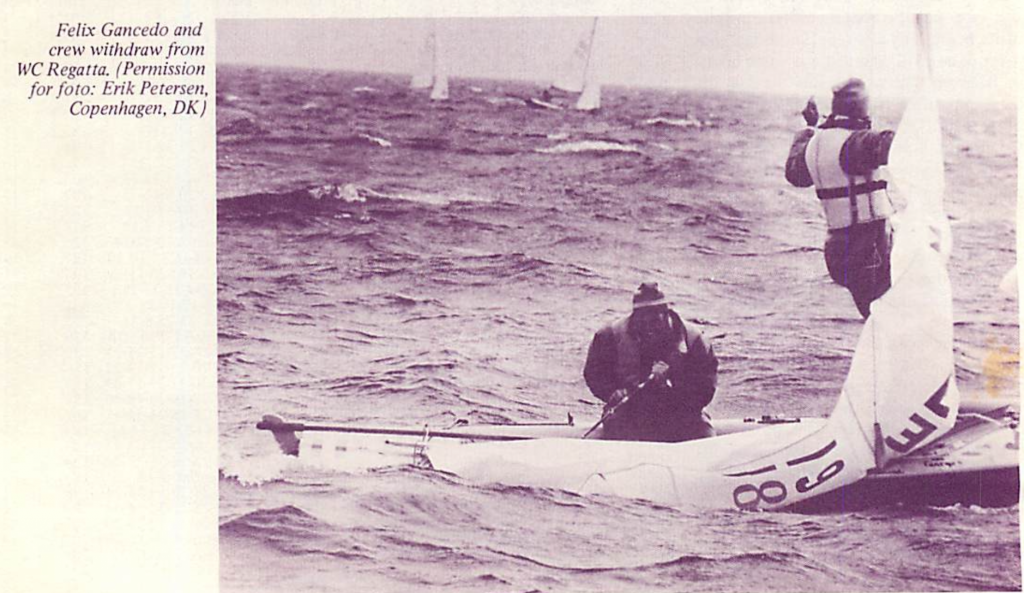
When the third race was finally started, the wind had built to 22 knots with 6 to 8 foot seas. Gancedo and Casen got off to another good start. Gancedo had a good lead when he had the accident that put him out of the championship. As he was about to round the downwind mark, he reached back to adjust his traveler. In the process of doing so, he pulled his shoulder out of joint. His excruciating pain is evident in the photograph that was taken shortly after the accident. After a speedy trip to the doctor, Gancedo was feeling sufficiently well to attend the evening party. Although the accident was not serious enough to cause prolonged or permanent damage, Gancedo was not able to continue sailing. As someone remarked, it was too bad he didn’t break his leg instead—he won the championship four years ago sailing with his broken leg in a cast.
The wind continued to build to a little over 25 knots, with a strong current accompanying the big waves. A number of boats hit the windward mark while rounding, in spite of giving what appeared to be plenty of room. In rounding, a big wave caught Michael Weinschenck and Paulo Oliveira, Austria, picking them up and depositing them almost on top of the mark. During the ensuing capsize, the crew was blown away from the boat, but the skipper was able to pick him up and continue racing. They lost a number of boats, but still finished sixteenth. It was a real display of seamanship.
At the finish, Bobbi Casen arrived first, followed by Per Brosted and Allan Purup of Denmark. Peter Rasmussen and Bjorn Prahl, also Denmark, rounded out the top three, making it a North European sweep. Ostergren used this race to prove he could sail in the heavy weather by finishing fourth. He was followed by Tom Nute and Randy Smith of the U.S.A.
The next day conditions had moderated, and both races were held in 14 to 16 knots of wind, and much smoother seas. On the first race of the day, Tom Nute detected that the leeward end of the line was favored. He started there and immediately jumped out to a three boat length lead, tacked and crossed the fleet, and lead the entire race, finishing first.
Wilson Pereira and Alejandro Bertomeu from Argentina established an early second place and held it most of the way. Boris Ostergren was not among the early leaders, but showed his great speed by catching Pereira before the finish. Bill Holmstrom and Pentti Nippala of Finland and Sergio Morin with Eleno Baruffaldi of Italy rounded out the top five.
After a quick lunch on the water, the fifth race got under way. Per Brosted took the lead on the first leg and held off the onslaught of the two Brazilians, who finished right behind, with Ostergren second and Paradeda third. Jeff Lenhart and Eric Krebs of the U.S.A. finished fourth, followed by Casen and Nute.
At this point, Tom Nute was leading with 43.7 points against Boris Ostergren’s 52 points, assuming no throw-out. However, if at least one more race was held, Boris could throw out a 32nd and the worst Tom had was an 8th. Tom still could have won if the wind turned fickle and no more races could be held, or if Boris had another bad race. It was a long shot, but stranger things have happened.
The forecast for the next day was light wind and rain. After a shoreside delay, the race committee decided to give it a try. The wind was about 3 to 5 knots, so the race committee set a short 5 mile course. The committee boat end was slightly favored until just before the start, at which time it became heavily favored. This held until shortly after the start. It produced such an unusual situation that two of the boats which were over early and had to re-start, arrived at the windward mark in second and fourth positions. The wind clocking back about half way up the first leg contributed to this situation, dumping all those that held to the port side of the course.
It was a great day for the boats from down Argentine way. Torkel Borgstrom and crew Diego Brauer, followed by Pereira arrived at the first mark with a good lead. They held their positions throughout the race finishing first and second. Incidentally, Borgstrom is the reigning World Junior Champion, and certainly showed his abilities in this championship.
It rained hard for about half of the race, and then the wind lightened to drifting conditions shortly after the leaders finished. Tom Nute, one of those who had to re-start, finished third followed by the Krafft brothers from Sweden and Peter Rasmussen. One of the remarkable shows of sailing during the championship was demonstrated by Ostergren. Caught on the wrong side of the course on the first leg, and rounding the mark in eighteenth place, he proceeded to work his way up the fleet to finish sixth; remarkable, considering the caliber of sailors in this championship.
After the rain set in again, the wind did not return, and the race committee decided to call it quits for the day.
The championship thus went into the final day, which was reserved for make-up races. It was warm and sunny, but there was very little wind, and the current was running very strong. After nearly 4 hours and many aborted attempts to set a line, the race committee finally got a start. However, the wind shifted so badly right after the start, the race committee had to call the fleet back.
The committee re-set the line and started another race. By then the wind had dropped considerably and the current was against the line. The first boat crossed the line 3 minutes and 20 seconds after the start. At 5 minutes after the start, no boat was across the line, so the committee abandoned the race.
The decision had been made that 3PM was the deadline for a race start. The wind shifted again and picked up to 8 knots and a starting gun was fired 5 minutes before the deadline. Peter Rasmussen got the start and was in the lead at the windward mark. Ostergren did not have a good start and held to the unfavored port side of the course. However, showing his phenomenal speed, he took over the lead on the second leg. On the second windward leg, Boris again held to the port side and lost three places. He was able to catch all but Rasmussen before he got almost to the finish line. Going into the finish Ostergren, to leeward of Rasmussen, tacked to go behind. A slight windshift favoring Ostergren put him over the line a split second ahead of Rasmussen.
Exactly the same thing happened to the third and fourth boats. Vasco de Talone with crew Rodrigo Dias from Portugal, sailing their best race of the series, were in third with Lenhart to leeward. Lenhart tacked and went behind. Talone covered, but Lenhart crossed just ahead. The maneuver was almost like an instant replay. Tom Nute tried for a long shot that didn’t work out and had his worst race.
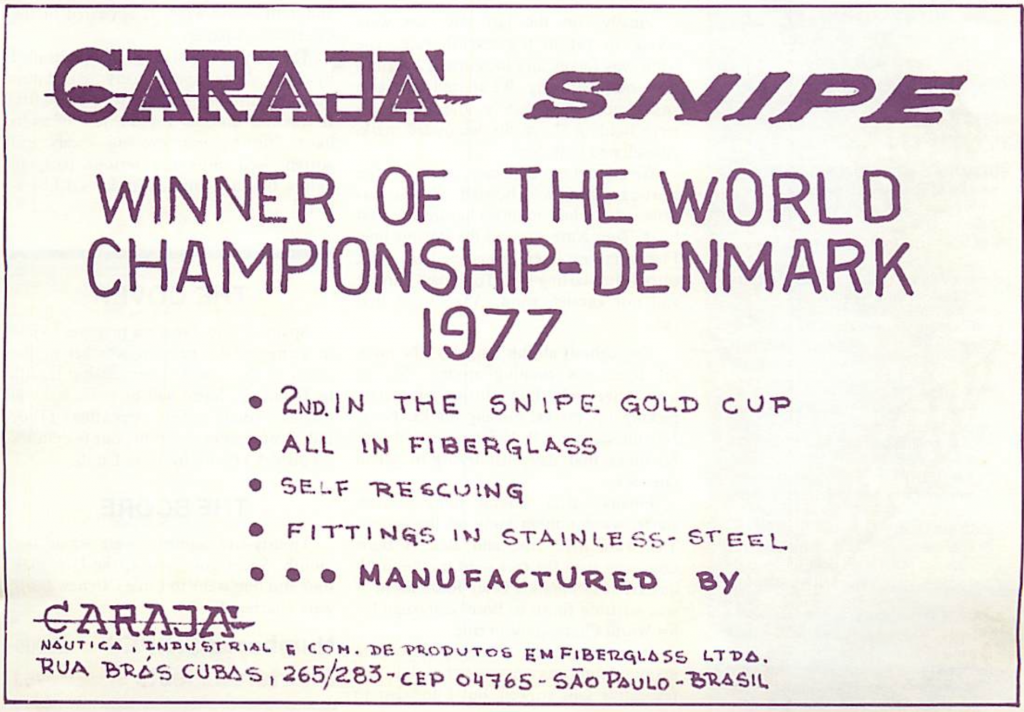
And so the championship ended with the winners taking the Hub Isaac trophy back to Brazil—the first time in 10 years that the excellent sailors from that country were able to take the top spot.
Commodore Dan Williams wrote in the Bulletin: “I’m still on the subject of the 28th. Snipe World Championship in Skovshoved, Denmark, and, specifically, the race committee. Several times during the one race when our course was close to the heavily traveled sea lane between Denmark and Sweden, the race committee was able to divert large freighters and car ferries from our area. This is a tribute both to their radio communications and to the high esteem in which sailing is held in Scandinavia.”
XXIX – North Sydney, Nova Scotia, Canada, August 12-19, 1979
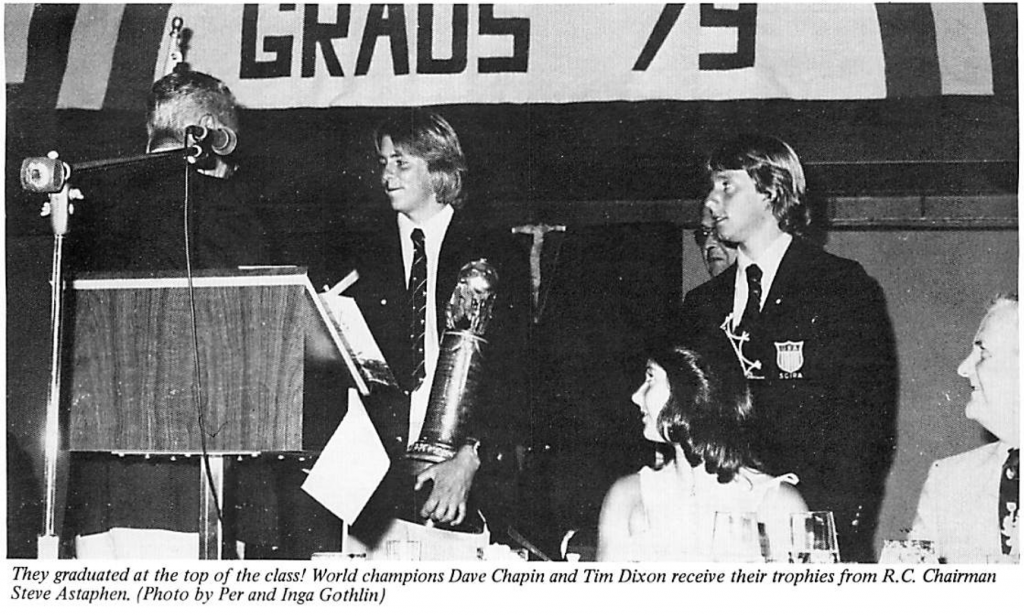
20-year-old U. S. National Champion David Chapin defeated the Goliaths.
Chapin Has The Worlds In His Hands! – Snipe Bulletin November 1979
Mark Reynolds battles to second place in hot competition at Sydney Harbor
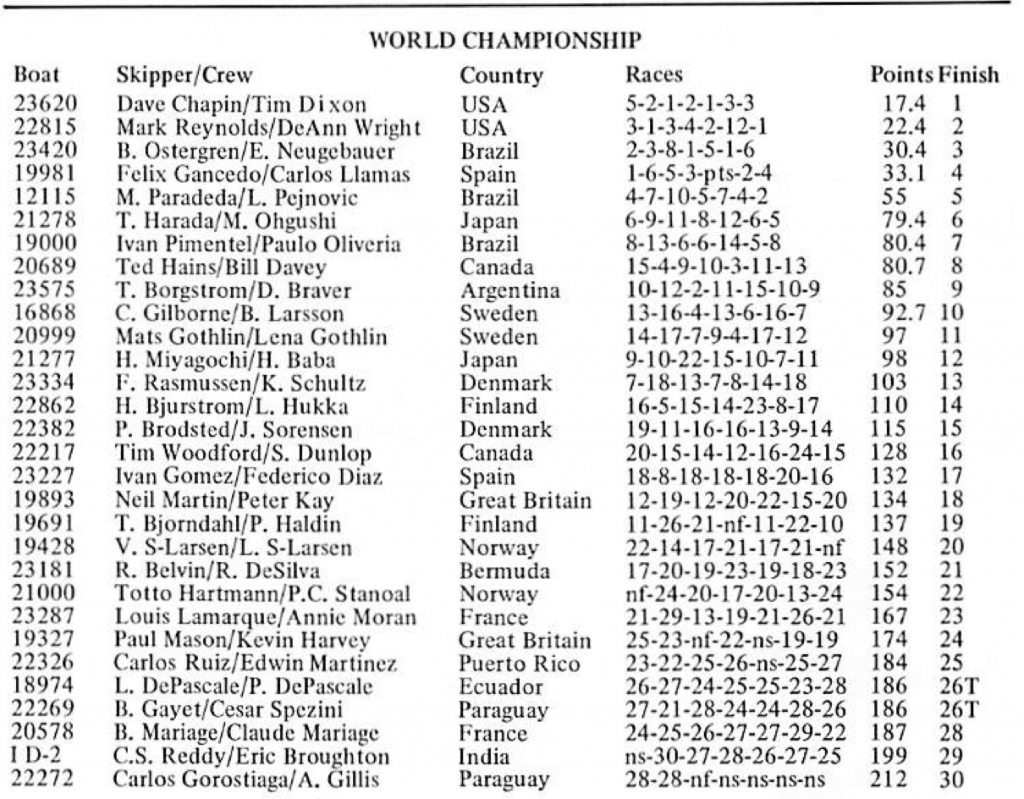
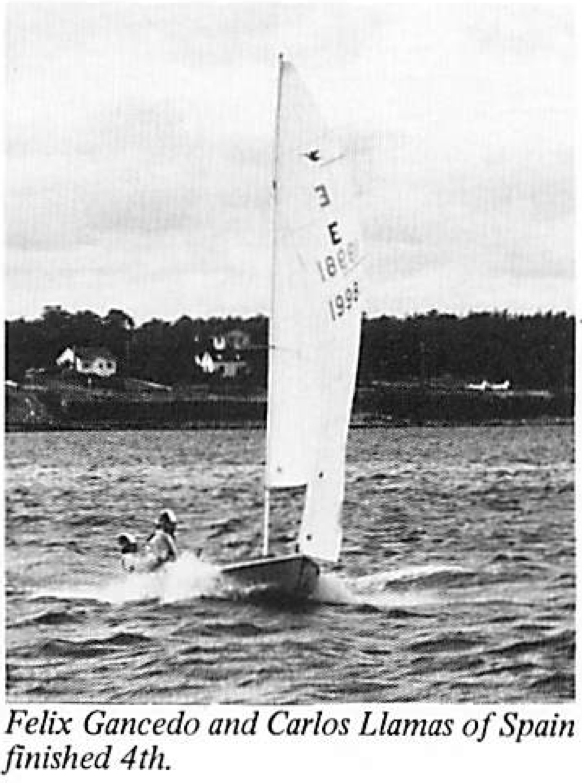
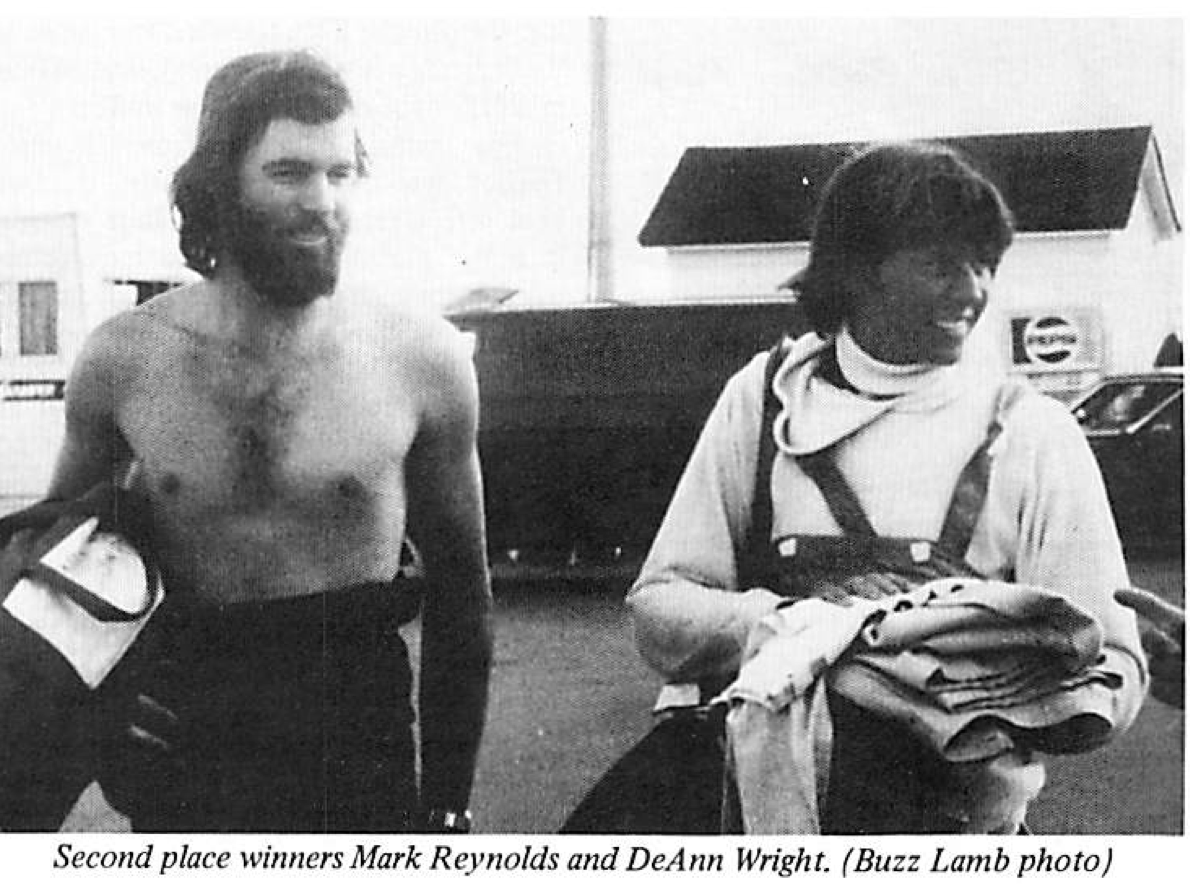
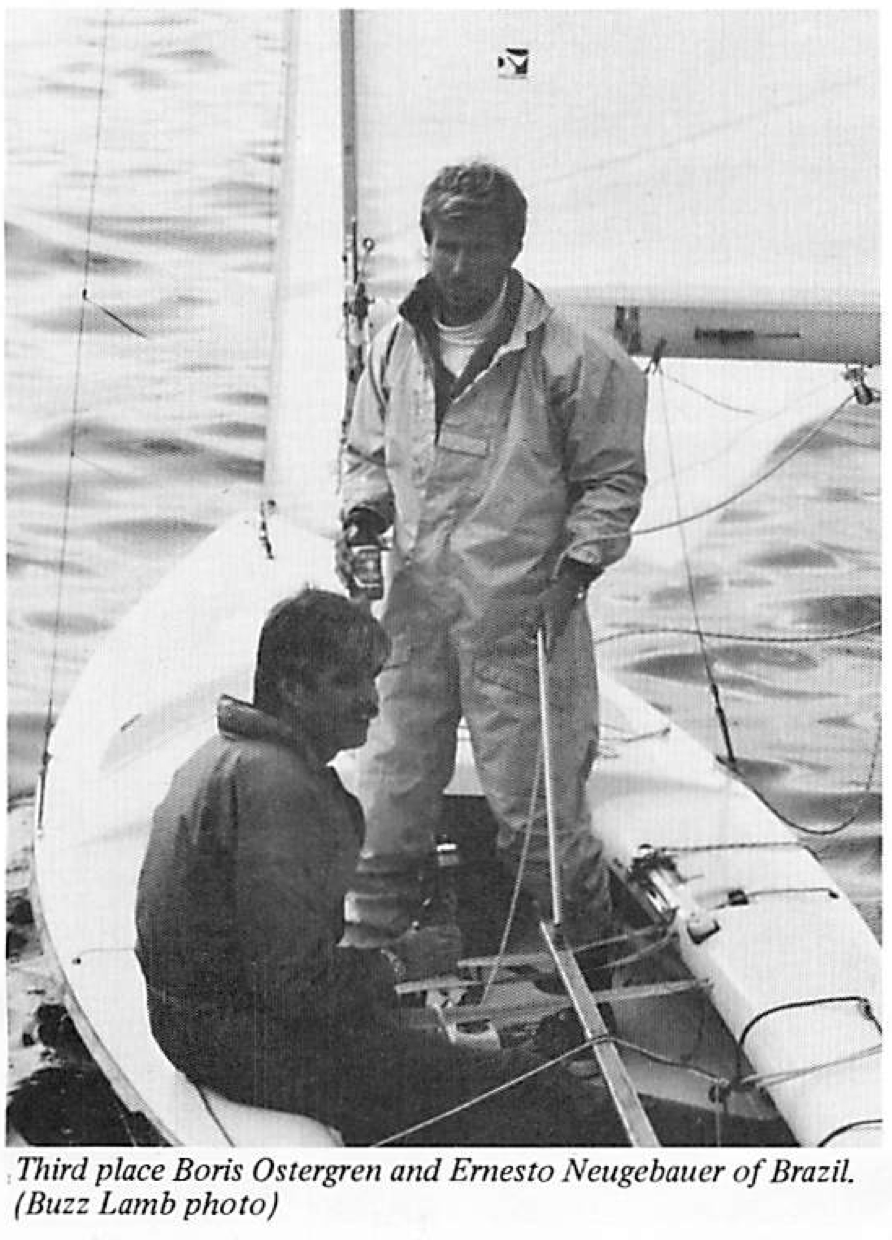
20-year-old U. S. National Champion David Chapin defeated the Goliaths of the Snipe World Championship on Sydney Harbor, North Sydney, Nova Scotia, August 14-18, with 17.4 points; 5 points better than Mark Reynolds and DeAnn Wright, who were also second to Dave at the U.S. Nationals 3 weeks earlier. Chapin and his crew Tim Dixon, both from Island Bay Yacht Club, Springfield, IL, displayed flawless tacking techniques, good boat speed, and cool poise in the face of competition from 4 continents, including the defending champions Boris Ostergren and Ernesto Neugebauer, Brazil, who finished third, and twice-champion Felix Gancedo and Carlos Llamas of Spain in 4th. Marco Aurelio Paradeda and Luiz Pejnovic, Brazil, completed the top five of 30 contestants.
Conditions were mostly moderate, but varied to both extremes for the seven race series, with the first race delayed by heavy winds and seas, and the last day’s morning race threatening to drift past the time limit.
The Western Hemisphere won in their traditional Snipe class rivalry with Europe, taking 8 of the top ten places, including Takayaki Harada and Manabu Ohgushi, Japan, 6th, (Occidental by choice), Ivan Pimentel and Paulo Oliveria, Brazil 7th, Ted Hains and Bill Davey of the host country 8th, and Torkel Borgstrom and Diego Brauer, Argentina 9th. Claes Gilborne and Bengt Larsson of Sweden in 10th place, made Europe’s second best showing.
A massive storm front passed over the eastern U. S. and Canadian coasts during the 2 days before the start of the regatta, with high winds and a deluge of rain. The practice race was stormed out, as winds on the bay were in excess of 30 mph.
FIRST RACE
The start of the first race was delayed as left-over wind and waves from the storm made the bay unfit for racing. With a start finally posted for 4:15, and winds down to 16 to 18, lighter crews were still having trouble getting to the race course.
Norway’s Hartmann lost his rudder on an anchor line as he left the dock, but was in luck as it was picked up and returned by a motor boat. However, damage to the fitting prevented his finishing the race. C. S. Reddy of India and crew Eric Broughton capsized on the way to the start and had trouble righting the boat and did not start the race.
Defending champion Boris Ostergren led most of the first race, but Felix Gancedo, rounding the leeward mark in fifth, got a lift off the bank, which took him into the lead going into the finish. Boris, covering Mark Reynolds in a tacking duel to the finish, was 2nd, and Mark 3rd. Marco Paradeda and Dave Chapin also covered each other tack for tack to the finish, and finished with Marco 4th, and Dave 5th, his worst race for the series. Both Japanese boats finished well with Harada 6th, and Miyagochi 9th. Rasmussen of Denmark was 7th, and Pimentel, Brazil 8th. Argentina’s Torkel Borgstrom was 10th.
SECOND RACE
On Wednesday morning it was raining again, but the sun was out before the start of the race. With shifty winds of 18 to 22, the fleet was eager, and a general recall was the result. Another shift resulted in a second recall and the shifting of the entire race course. By the time the race started, the wind was down to 12 or so, and dropping.
Mark Reynolds led this race all the way, with Ted Hains dropping from 2nd on the first beat to 5th on the second beat, but finishing a strong 4th for Canada. Dave Chapin finished 2nd, and Boris 3rd. Bjurstrom of Finland was 5th, Felix 6th, and Marco 7th.
THIRD RACE
Although the wind had dropped, the race committee decided to attempt a second race for the day, with a start at about 5:50.
The wind continued to drop as the race progressed, with Torkel Borgstrom of Argentina leading at the reaching mark. By the end of the second beat, Dave Chapin had worked into a 30 second lead over Mats Gothlin of Sweden, with Borgstrom in third, and Mark Reynolds, series leader at this point, in 4th place.
A HUGE wind shift on this leg turned the race in progress into a guessing game for the committee, the contestants, and the spectators, as the wind shifted all the way first 90 degrees; then 180; so that the run became a beat; then 270; and finally; as the first boats were ready to round right back to its original course. Steve Astaphen and his committee held steady, and rather than changing the course prematurely, were able to continue the race, as it started, without changing any marks. Whew!
Chapin finished the race in first, with Borgstrom second, Reynolds 3rd, Sweden’s Claes Gilborn 4th, and Felix 5th. Both Boris in 8th, and Marco in 10th, had their worst race of the series. At this point Reynolds was the leader without a throw-out figured in scoring.
FOURTH RACE
Thursday’s race start was scheduled for one thirty and started under cloudy skies, with winds 14 to 18. At the first windward mark the “top 5” of Boris, Marco, Mark, Dave and Felix rounded in that order, and continued that parade past the reaching mark. They continued the march around the course, only mixing their order occasionally, and finished with Boris in first, followed by Dave (now the series leader), Felix 3rd, Mark 4th, and Marco 5th.
FIFTH RACE
Thursday’s second race started in winds 15 plus, with heavy seas running and the course for this race set where the beat was across part of the bay used by Sydney’s ship traffic.
As the race progressed, the wind dropped, and Dave Chapin worked out an impressive 49 second lead by the leeward mark. He was followed by the two Swedish boats, the Dane, Rasmussen, and Canada’s Ted Hains. The finish went to Dave Chapin, with a 1 minute 48 second lead. Mark Reynolds nipped Ted Hains at the finish for second place. Mats Gothlin was 4th, followed by Boris. Felix finished 9th.
On the second beat a large ship crossed the course, coming out of Sydney Harbor. Felix protested the race, and after a lengthy protest hearing, the decision was to give him redress for any prejudice to his position, in the form of average points for the series for this race position. No other competitors claimed prejudice of their positions by the ship. The average points calculated at the end of the series gave Felix 6.4 points, and did not change any of the over all standings.
SIXTH RACE
The Committee scheduled a morning race to start at 10:00 on Friday, but a light and shifting wind forced a postponement, to wait for steadier winds, with the race finally starting at about 11:05.
Dave Chapin, trying for the port end, was “buried” on the start, and in trying to cross the course to the other series leaders, was forced by starboard tack boats to tack back time and time again. His flawless tacking teamwork with his crew Tim, kept the boat moving, and they pulled into third place by the windward mark, as the wind lightened.
This was the lightest wind race of the entire series, and the boats spread out as the winds diminished. At the second windward mark Marco was first followed by Dave, with Felix and Boris next. Marco and Dave split with Felix and Boris, and went too far to the right. Boris, sailing the rhumb line, rounded the leeward mark first, with Felix second, and Marco in third, right on top of Dave in 4th.
The wind, coming from Sydney Harbor, was threatening to turn the last beat into a reach, and Dave kept tacking into the harbor, with Marco tacking on top of him with every attempt Dave made to get away. Finally, Marco decided to sail for the finish, letting Dave go. This proved a mistake, and Dave came out of the Harbor finally, with a lift to the finish, to take the third place, behind Boris and Felix, leaving Marco in 4th place for the race. Mark Reynolds had been caught in one of the earlier holes as the wind lightened, and had his worst race, finishing in 12th place.
SEVENTH RACE
After a lunch break, the competitors were back on the course, with Dave Chapin the man to beat, and Boris Ostergren the only one who could do it. With an 8th place to throw out, if Boris should win the race, with Dave 4th or worse, Boris would win the series.
By the end of the second beat, Dave was in first place and Boris in 6th, and an upset by the young man from Illinois seemed assured.
As the race continued, Dave, sailing a conservative race, finished in third place, with Mark Reynolds in first, and Marco Paradeda in second. Felix finished 4th, with Boris holding the sixth spot, behind Harada of Japan.
ORGANIZATION AND ENTERTAINMENT
The organization of this regatta began 3 years ago. Fired by the enthusiasm left over from the successfully-run Western Hemisphere Championship of 1976, the Northern Yacht Club recruited help from Sydney’s Royal Cape Breton Club, and eventually most of the government of Cape Breton and Nova Scotia to bid for the World Championship at the Board of Governors meeting in Denmark in 1977.
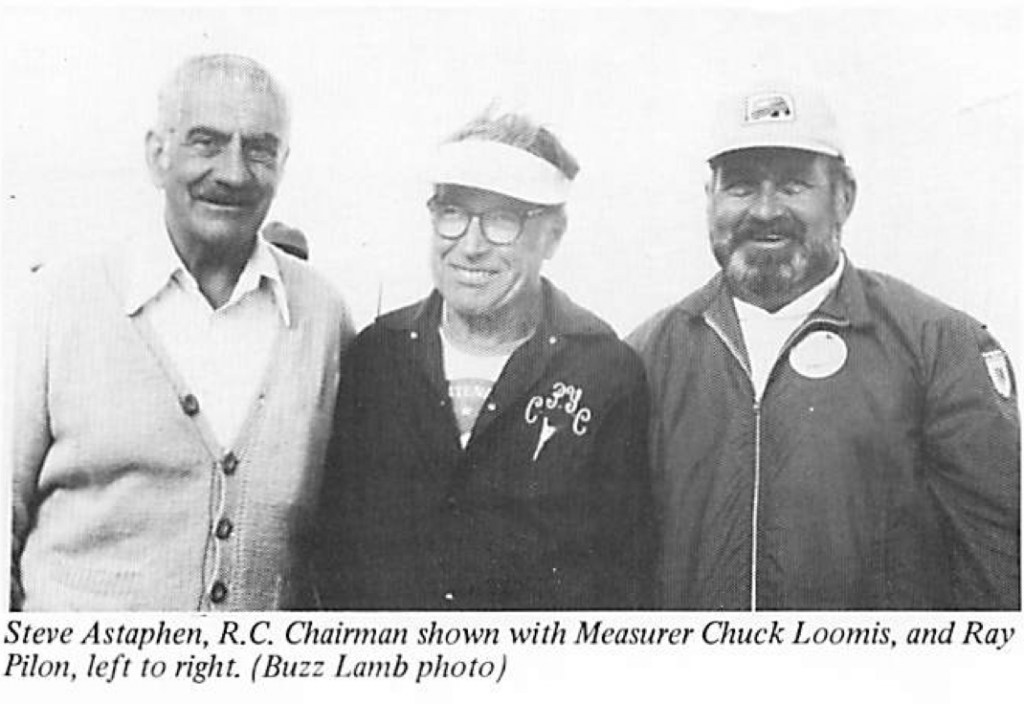
Steve Astaphen and John Brennan shared the duties with club members, their wives, and local Mayor Tom Young in planning all the facilities for housing, feeding, and entertaining the champions from around the world, as well as National Secretaries, and SCIRA officials.
New facilities were being completed even as the first arrivals appeared on the scene, lending a special flavor of suspense to the occasion. Would it be finished on time? Would the Mexican Mariachi Band arrive? Would the Blue Nose Scooner really appear to take guests for harbor cruises?
Not only were most things completed; the Blue Nose was there, and so was the Canadian Navy ship Algonquin. And the Mariachi Band? They completed a week’s entertainment by swapping duties with the high school Bagpipers at the gala final banquet.
A special event was the dedication of the Don McNeil Memorial Building, named for the 1976 Northern Yacht Club Commodore, who worked tirelessly toward making this championship a reality.
Ron “Bomber” Andrea was the man to see around the club house in getting anything done, or finding anything that was lost, or entertaining everyone. His motto: “Handle it”!
The ladies of the yacht club entertained the hungry hordes every day with soup, sandwiches, cookies, and milk—this not only for lunch, but whenever anyone was hungry.
The U. S. had promised help for the regatta, and provided it in the persons of Chuck Loomis, who oversaw the measuring, SCIRA representative Ralph Swanson, and Berta Swanson, who did her usual job as super competent scorer/checker for the race committee.
Rear Commodore Paul Festersen presided as SCIRA Flag Officer in the absence of the Commodore, and Buzz Lamb was chairman of the protest committee.
XXX – Long Beach, California, USA, September 7-12, 1981
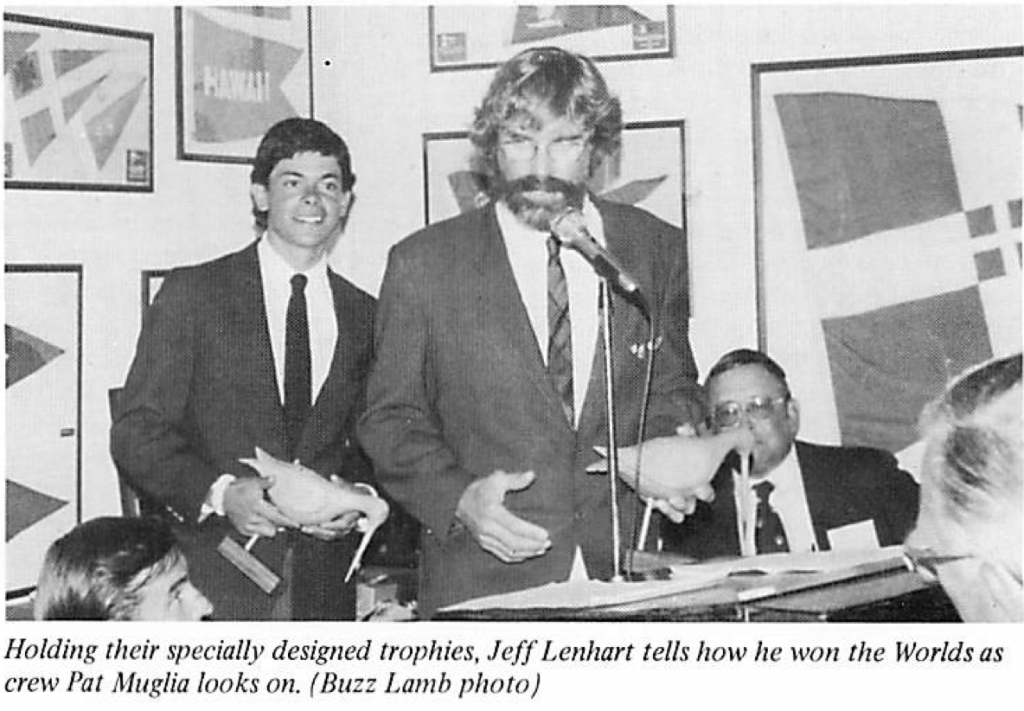
Jeff won the title without having to sail the last race. He elected to watch the last race from a spectator boat.
50th SCIRA birthday party
Lenhart Is Champ At 50th Anniversary Worlds – Snipe Bulletin November 1981
Top three finishers represent three continents
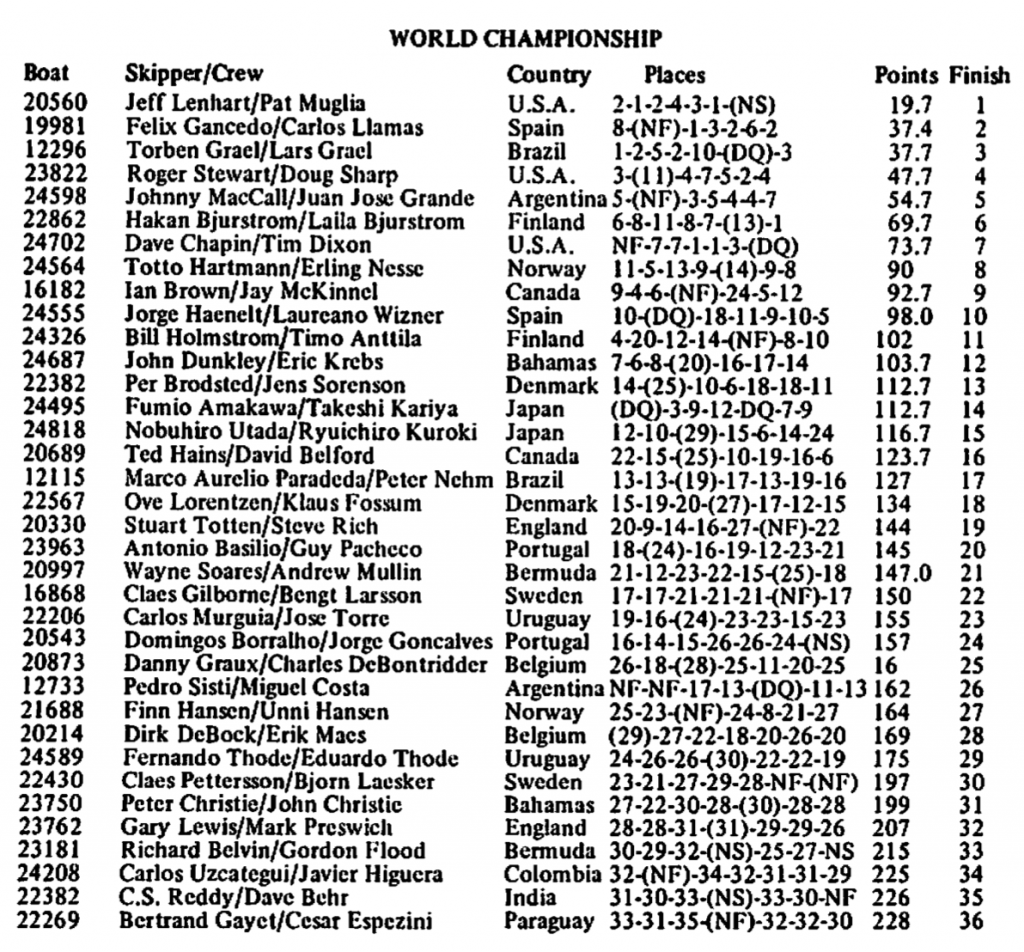
Jeff Lenhart, winner and new Snipe world champion, dominated the 50th Anniversary Championship sailed on the Pacific Ocean at Alamitos Bay Yacht Club, Long Beach, California, September 7th through 12th. Jeff adds this title to an impressive array of wins which include a past U.S. National Championship, a Western Hemisphere title, and a Pan-American gold medal. Pat Muglia was Jeff’s winning crew. Their worst finish for the series was a 4th place. They chose not to sail the last race. Jeff, a sailmaker, is District 6 governor.
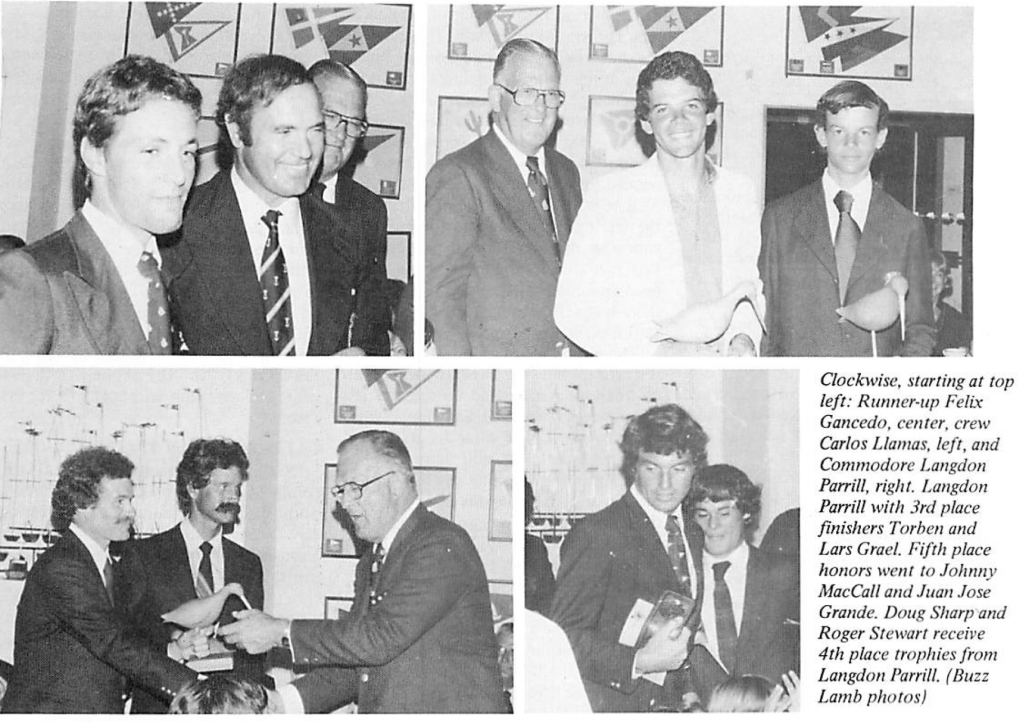
Felix Gancedo, Spain’s two-time world champion with crew Carlos Llamas, finished second. He saw his hopes for a comeback severely hampered by a rudder failure which caused his withdrawal from the second race. He was in second place at the time of that disaster.
Brazil’s young Torben Grael, with his brother Lars as crew, mounted the strongest challenge to Jeff’s domination of the series. Torben, former Junior World Champion, had a disqualification, and a 10th place finish in the light air race but otherwise showed almost flawless form. He was sailing one of the famous 12,000 boats, which he has modified with the latest in rigging innovations. Torben and Lars are nephews of the Schmidt twins who dominated the class in the 1960s.
Brazil’s young Torben Grael, with his brother Lars as crew, mounted the strongest challenge to Jeff’s domination of the series. Torben, former Junior World Champion, had a disqualification, and a 10th place finish in the light air race but otherwise showed almost flawless form. He was sailing one of the famous 12,000 boats, which he has modified with the latest in rigging innovations. Torben and Lars are nephews of the Schmidt twins who dominated the class in the 1960s.
Roger Stewart and Doug Sharp, in fourth place, had a few bad breaks, but showed impressive speed, and flawless starts. Argentina’s Johnny MacCall and Juan Jose Grande, in 5th place, might have finished higher without their capsize (in third place) at the jibe mark in the heavy wind of the second race.
The husband and wife team of Hakan and Laila Bjurstrom of Finland finished sixth; winning the last race. Defending champions Dave Chapin and Tim Dixon finished a disappointing 7th. They never recovered from the gear failure which caused their drop out from the first race. Totto Hartmann and Erling Nesse, Norway, were 8th, Ian Brown and Jay McKinnel of Canada 9th, and Jorge Haenelt and Laureano Wizner, Spain, rounded out the top ten.
Strong and impressive competition throughout the Snipe world was evident, as the top three finishers represented three continents. The 36 boats from 19 countries battled each other in near perfect conditions on the courses laid out in the Pacific Ocean, just off Alamitos Bay, by race committee chairman Langdon Parrill. This site will be the scene of the 1984 Olympic sailing events.
The weather co-operated so outstandingly that all races were sailed according to the schedule, with only one 5 minute postponement. The lines were so well set that there was only one general recall for the entire series.
FIRST RACE
With winds 15 to 18 and moderate seas, Langdon Parrill, race committee nonpariel, set the course for “outside” in the Pacific Ocean. He also set a precedent for no general recalls as the fleet got away on the first start.
Local knowledge insisted that the starboard side of the course was the imperative choice for the first beat, and California’s Roger Stewart went right and led at the first mark. However, Fumio Amakawa, Japan, chose the port side, and rounded right behind Roger. Torben Grael of Brazil was 3rd. Defending champion Dave Chapin had gear failure; a broken tiller; at this mark, and was forced to retire. Jeff Lenhart was back in the pack, but had worked into 7th place by the second mark. Torben had taken the lead at this mark, and maintained it to the finish.
By the last beat Jeff had worked into second place. Roger, back in 4th place at the turning mark, took Fumio at the finish line. Fumio was disqualified in this race, giving the 4th place position to Bill Holmstrom of Finland. Johnny MacCall of Argentina got the 5th.
SECOND RACE
Since the winds and seas had gradually increased, Commodore Parrill chose the two triangle option for the second race.
Again the fleet got away clean. Roger had a good start; Torben was way back; and Dave Chapin was in the running again. Pedro Sisti dropped out because of a port/starboard foul shortly after the start. Local knowledge again called for playing the starboard side of the course, but Fumio of Japan again chose the port side, and was first at the 1st mark. Norway’s Totto Hartman was second, and Johnny MacCall was 3rd. Roger Stewart suffered a double disaster at this mark, first losing his crew overboard, and then, having recovered without losing a boat, hit the mark. On re-rounding he went from 4th to 24th, and never recovered the distance. Jeff was 5th, and Felix Gancedo was 6th.
Johnny MacCall, in the third place, capsized at the jibe mark. The board fell through the slot and the boat could not be righted to continue. On the last reach Gancedo dropped out with a rudder failure, having been second at the time. The only other casualty for this race in rough conditions was Carlos Uzcategui of Columbia, with a capsize at the windward mark.
Jeff had taken the lead by the second windward mark, and held it to the finish, followed across the line by Torben, Fumio, and Ian Brown of Canada, with Totto Hartman 5th.
To this point in heavy wind and seas, boat speed over tactics had been the determining factor. Roger Stewart described the action as “like draggin.”
RACE THREE
Wednesday was a clone of Tuesday, as perfect California weather brought winds of 15 to 18 for race three of the series.
England’s Stuart Totten led at the first mark with Felix Gancedo, Johnny MacCall, and Totto Hartman close behind, as boats on the right side of the course again had a big advantage at the first mark. Totten lost out on the planning conditions on the two reaches. Gancedo took and extended the lead, with Lenhart moving to second. MacCall was third, and Dave Chapin 4th, at the end of the first triangle.
Felix won, followed by Jeff, Johnny, Roger, and Torben. Ian Brown finished in sixth, just ahead of Dave Chapin.
The two reaches brought better planing conditions, and the question of how much kinetic activity is required to make a Snipe fly was tested by the contestants. During the second beat the committee chose to change the course to the two triangle option, rather than send the contestants directly down wind. Torben Grael was first up with his “magic whisker pole” which helped bring him into second place at the end of the next reach. Dave Chapin was the leader.
RACE FOUR
The wind had increased during the lunch break and continued to shift to the west. Finn Hansen of Norway had a halyard failure, but capsized the boat and managed a temporary repair between races. India capsized just before the start, and Paraguay also retired from the race shortly after the start.
Johnny MacCall led at the first mark, with Per Brodsted, now sailing his own boat, which had been delayed in shipping, second. Torben was third and Dave Chapin 4th, with the other two U.S. boats just behind him.
The two reaches brought better planing conditions, and the question of how much kinetic activity is required to make a Snipe fly was tested by the contestants. During the second beat the committee chose to change the course to the two triangle option, rather than send the contestants directly down wind. Torben Grael was first up with his “magic whisker pole” which helped bring him into second place at the end of the next reach. Dave Chapin was the leader.
At the finish Dave Chapin had a huge lead, with Felix Gancedo almost driving over Torben at the finish line, but Torben got the second. Jeff was 4th.
With a race dropped, Jeff and Torben were now tied for first place.
RACE FIVE
Race brought much less wind, 6 to 8 m.p.h., and provided the sailors with a different sort of challenge.
Roger Stewart got the start at the pin end, and crossed the fleet on port. Jeff was in the middle of the line, and tacked over later. At the first mark Roger led, with Japan’s Amakawa, again working the port side of the course, in second. Jeff was in 6th place. Torben, having trouble in the lighter wind, pointing much lower than the other boats, was in 24th place at the mark.
By the end of the triangle Fumio Amakawa led, with Roger second. Jeff was still in 6th, but Torben was now in 13th.
Fumio held his lead to the finish, but Dave Chapin gained 2nd place, Felix was third, and Jeff finished 4th. Torben had his worst race, finishing 11th. Fumio was later disqualified from this race, moving each of the other boats up one place.
SIXTH RACE
The wind had picked up to the usual 12 to 15, gradually building throughout this crucial race. Jeff and Torben were right together at the first rounding, Jeff in 5th, Torben 6th. Both went high on the reach and were second and third behind Felix Gancedo at the jibe mark. Jeff took the lead before the end of the triangle, and held it to the finish, keeping a loose cover on Torben, while keeping the middle of the course as much as possible to hold the rest of the fleet. Roger took Torben on the second beat, with Dave Chapin in 4th place.
Going to the finish it was Jeff in first, with Roger still in second. Dave Chapin came in from the right side of the course, and Torben from the left. They crossed the line overlapped, but Torben fouled Dave at the finish line ending the fight for the championship without question. Jeff won the title without having to sail the last race. At this point Torben still held second place, and other positions remained to be decided.
RACE SEVEN
Jeff elected to watch the last race from a spectator boat, and with the championship already decided, this race for second place should have been an anticlimax – but as it turned out there was action enough left in the bag of surprises for every one.
The winds were a mild 12 to 14 for the start, and an anxious fleet overcrowded the starting line, causing the first general recall, to spoil Langdon Parrill’s perfect record. The second start proved good, and the fleet split as in previous races, again showing that the left side of the course, rather than the locally favored right side was the way to go. Roger and Felix were at the pin end, and soon Roger tacked to cross the fleet on port, looking golden. Felix continued left, and at the first mark it was Felix, Jorge Haenelt of Spain, Finland’s Bjurstrom, etc. with Roger back in the pack.
On the reach Hakan Bjurstrom took the lead and held it to the end of the triangle with Felix in second.
By this time the wind was piping up, and the committee was considering the two triangle course. Two of the competitors, Chapin and MacCall, were warned of too much kinetic activity on the planing legs. The battle between Gancedo and Bjurstrom continued around the course, with Bjurstrom’s red bow crossing the finish line with about a foot of advantage. Felix’s second place in the race assured him of second overall by .3 over Torben, who finished the race and the series in 3rd place. Roger was 4th, and also finished 4th in the standings. Haenelt had 5th for his best race of the regatta. Ian Brown was 6th and Dave Chapin had his 3rd, not-so-lucky 7th. The committee filed a protest leaving him with a D.S.Q. for the race.
CALIFORNIA HOSPITALITY
Native American entertainment California Style was the theme of SCIRA’s 50th birthday celebration at Alamitos Bay Yacht Club: Disneyland, a burger bash with country and western entertainment, a luau and an EARTHQUAKE (just a little one) to impress the visitors.
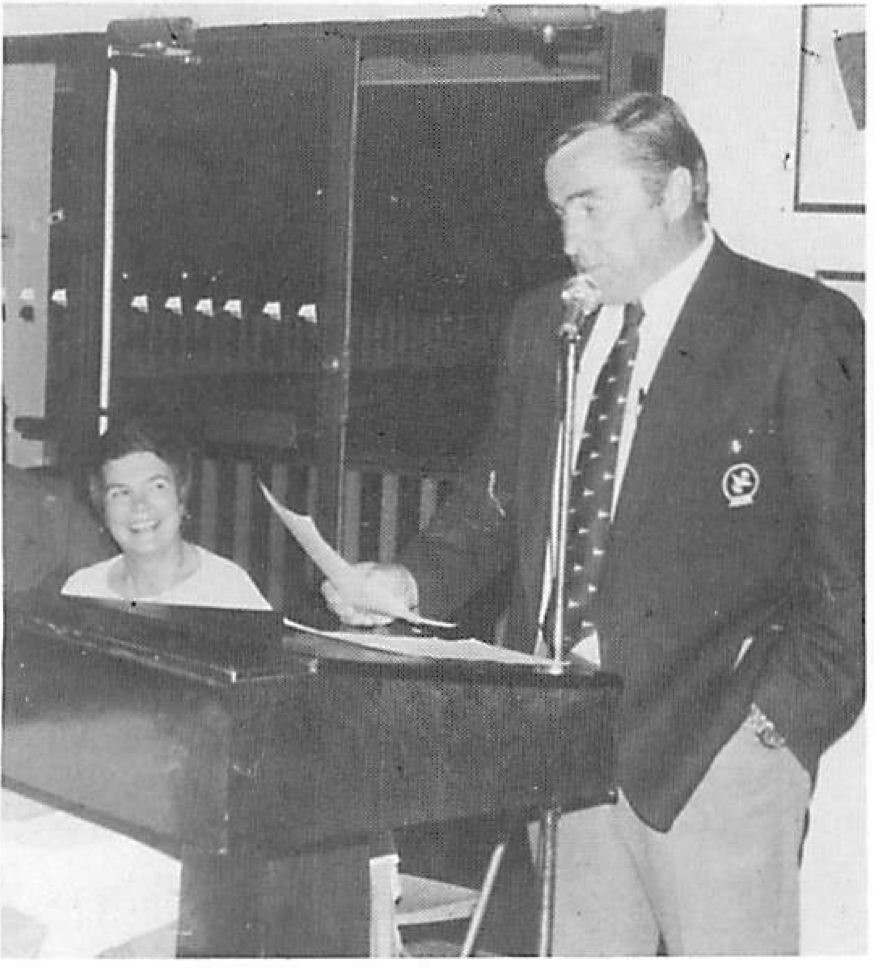
Sherwood and Marietta Jones and their committees organized not only Alamitos Bay Yacht Club’s Snipe fleet, officers, board, and membership, but most of Long Beach, Naples, and Orange County, to insure our welcome.
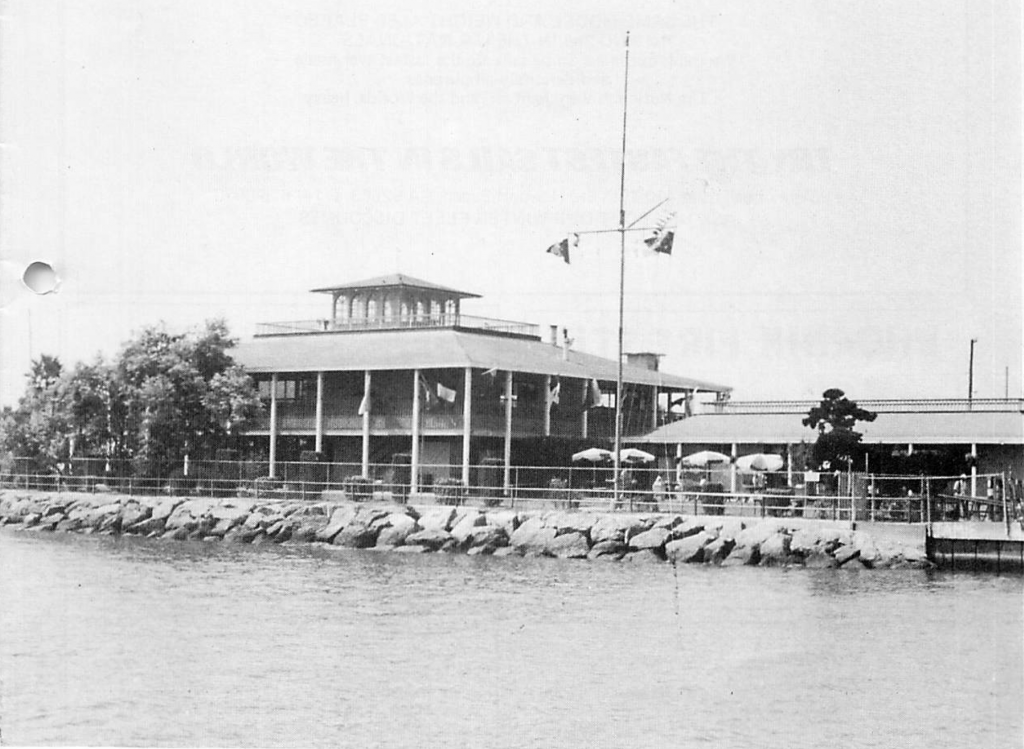
Arrangements were made by Norma Clapp and Sherwood and Marietta to house over 100 contestants and national secretaries, with families of yacht club members and friends. Special parties were planned for each national delegation by their hosts, some of whom became totally involved with the progress of their teams on the race course. Chief Scorer Dorothy Hill was trying to keep score while having her fingers crossed for her Argentines.
The Club’s annual Labor Day Regatta the weekend before the championship was turned into a warm-up for those contestants who wanted to test the water, the conditions, and borrowed equipment. A great deal of casual dropping in and out of races was graciously permitted in the spirit of getting acquainted.
The regatta party, a California/Hawaii luau, gave the visitors a taste of a different kind of native American entertainment. First, lovely traditional dances were performed by graceful dancers in polynesian costume… then the world’s most incredible hula was performed by 15 beautifully costumed and choreographed imposters – impersonators is too strong a word – with appropriate balloons and coconuts. The hookilua will never be the same.
The traditional and stirring flag raising ceremony was the formal opening of the World Championship, with each team presenting its national colors. Flags raised for the occasion were flown throughout the week from staffs attached to the upper deck of the club house. In typical fashion, Marietta Jones quickly stitched up a flag for the one team whose flag was not available for the ceremony. The A.B.Y.C. Blue Gavel provided refreshments for the cocktail party following the ceremony.
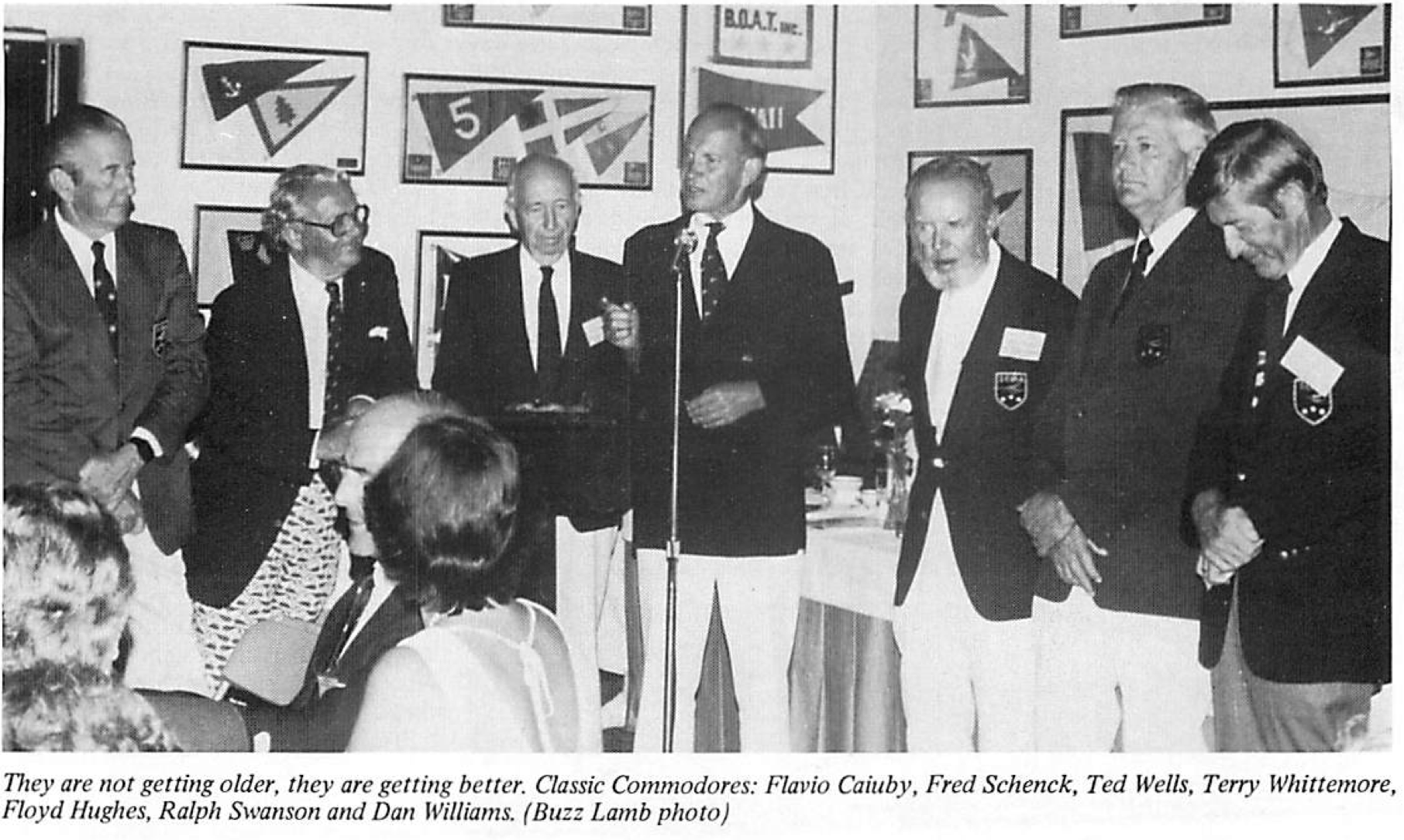
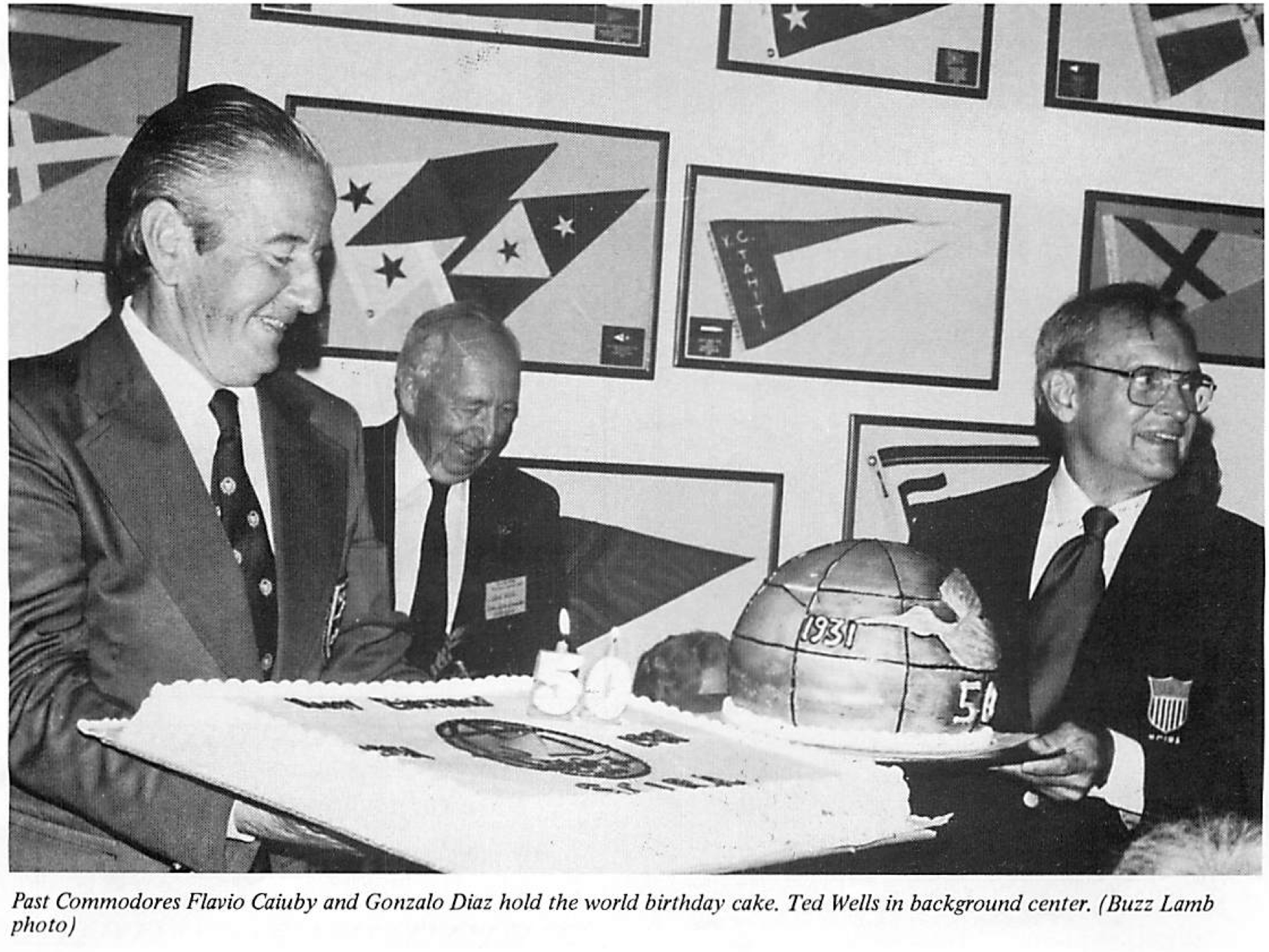
SCIRA’s 50th Birthday party, highlight of the week, was made gala by old and new friends from far and near who were able to attend, and only made a bit nostalgic by those who sent regrets. Stories were told, laughs exchanged, and a thoroughly good time was had by all. Commodores Diaz and Caiuby brought forward the beautiful globe-shaped golden birthday cake topped with a blue Snipe, the candles were blown out, and the cake was shared by all. Afterward, young and old alike danced the night away to the music of the band. It ain’t all bad being a golden oldie – particularly if you are also a CLASSIC.
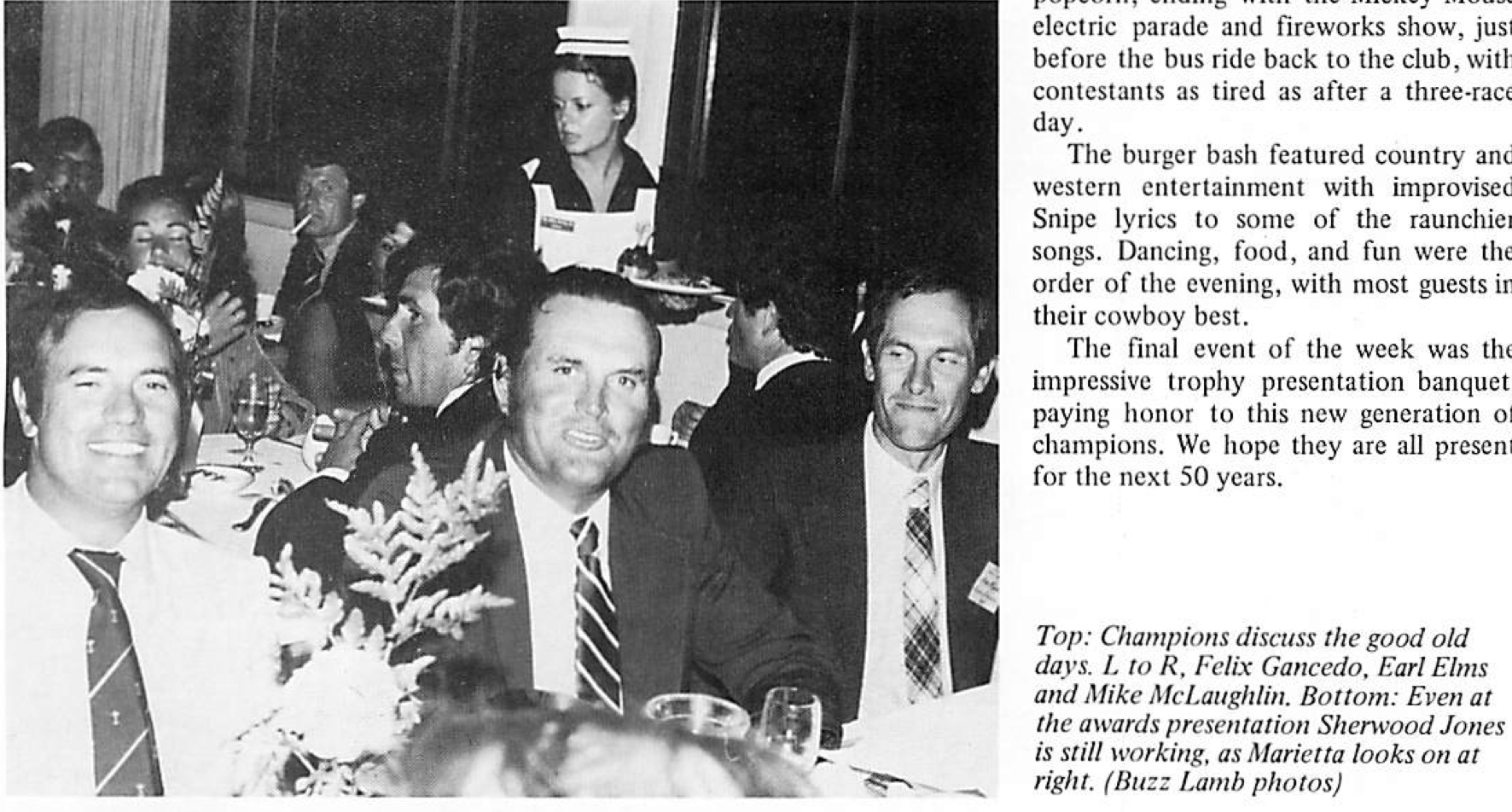
Thursday’s layday was celebrated with the whole works at Disneyland: everything from the Thunder Mountain railway to the Jungle Safari, Doc Severenson’s music and Dixieland show, hot dogs and popcorn, ending with the Mickey Mouse electric parade and fireworks show, just before the bus ride back to the club, with contestants as tired as after a three-race day.
The burger bash featured country and western entertainment with improvised Snipe lyrics to some of the raunchier songs. Dancing, food, and fun were the order of the evening, with most guests in their cowboy best.
The final event of the week was the impressive trophy presentation banquet, paying honor to this new generation of champions. We hope they are all present for the next 50 years.

XXVI – Malaga, Spain, October 12-20, 1973
- Felix Gancedo and Rafael Parga, Spain
- Per Brodsted and Steen Brodsted, Denmark
- Erik Thorsell and Claes Nordwall, Sweden
- Earl Elms and Donnie Bedford, USA
- Paulo R. Paradeda and Carlos Goncalves, Brazil
Sailed on the Mediterranean Sea, 22 nations, 43 starters
XXVII – Punta del Este, Uruguay, November 28-December 6, 1975
- Felix Gancedo and Manuel Bernal, Spain
- Agustin Diaz and Gonzalo Diaz, Sr., USA
- Peter Bjurstrom and Hakan Bjurstrom, Finland
- Horacio Garcia Pastori and Felix Leborgne, Uruguay
- Jeff Lenhart and Eric Krebs, USA
Sailed on Maldonado Bay, 16 nations, 31 starters
XXVIII – Copenhagen, Denmark, August 21-28, 1977
- Boris Ostergren and Ernesto Neugebauer, Brazil
- Tom Nute and Randy Smith, USA
- Marco Aurelio Paradeda and Luiz Pejnovic, Brazil
- Per Brodsted and Alan Purup, Denmark
- Ralf Casen and Bengt Holmqvist, Finland
Sailed on Oresund, 20 nations, 36 starters
XXIX – North Sydney, Nova Scotia, Canada, August 12-19, 1979
- Dave Chapin and Tim Dixon, USA
- Mark Reynolds and DeAnn Wright, USA
- Boris Ostergren and Ernesto Neugbauer, Brazil
- Felix Gancedo and Carlos Llamas, Spain
- Marco Aurelio Paradeda and Luiz Pejnovic, Brasil
Sailed on Sydney Harbor, 18 nations, 30 starters
XXX – Long Beach, California, USA, September 7-12, 1981
- Jeff Lenhart and Pat Muglia, USA
- Felix Gancedo and Carlos Llamas, Spain
- Torben Grael and Lars Grael, Spain
- Roger Stewart and Doug Sharp, USA
- Johnny MacCall and Juan Grande, Argentina
Sailed on the Pacific Ocean, 21 nations, 36 starters
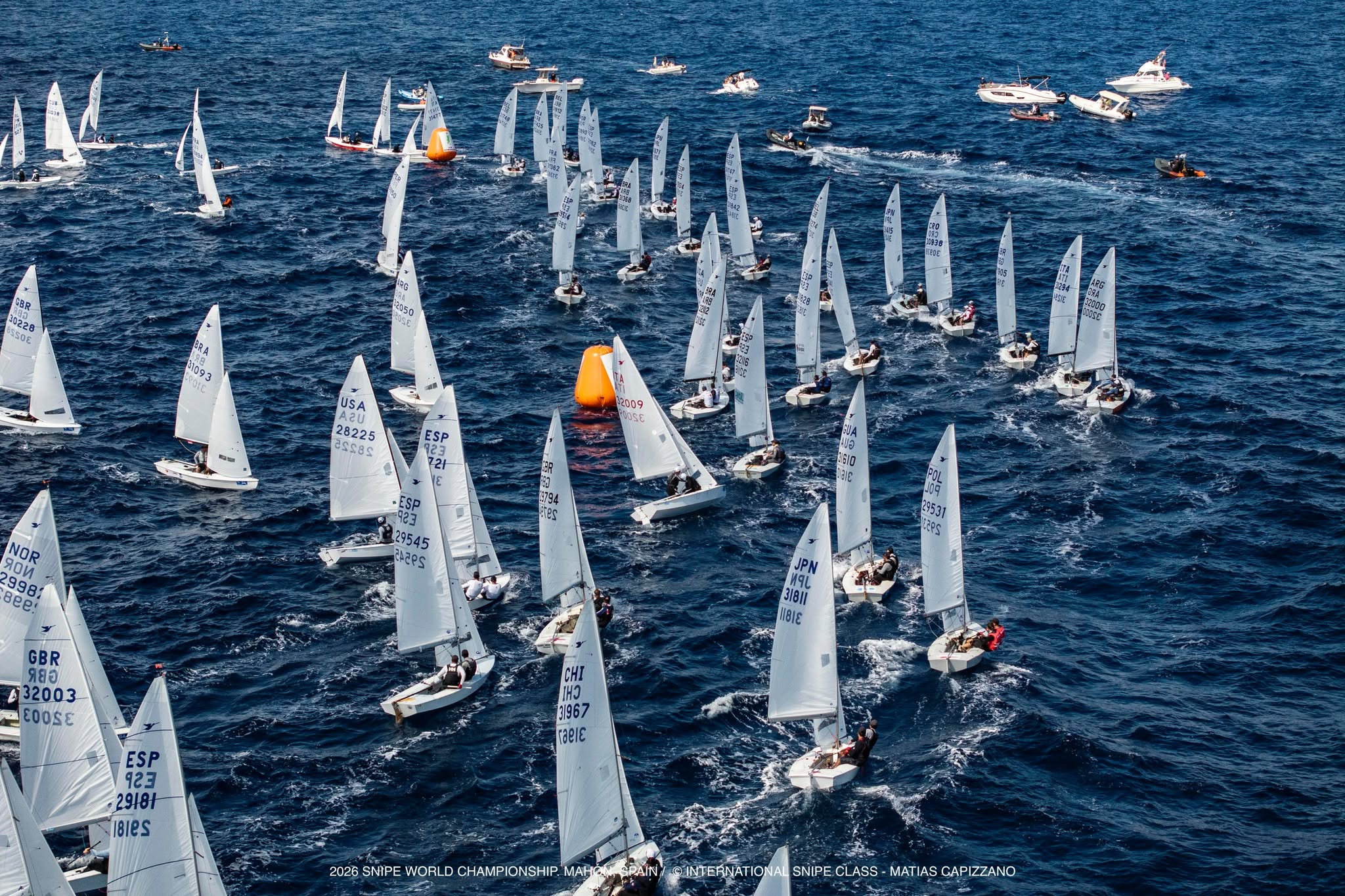
About the 2026 Snipe Worlds:
Mahon, Menorca, Spain, September 19-26, 2026
Leave a reply
Your email address will not be published. Your comment will be revised by the site if needed.

0 comments