
Snipe Worlds – Plotting the Course – Episode 3
From the Origins to Mahon
From the Origins to Mahon
We continue our story on the Snipe World Championship following the first and the second episode published this week.
In this episode, we will cover the World Championships held after World War II up to 1951. It will not be a historical account of every single regatta, but rather a story told through personal perspectives.
And what personal perspectives they are! None other than that of Bill Crosby, creator of the Snipe Class, alongside insights gathered from the biography of Ted Wells—a prominent figure in our Class, SCIRA Commodore in 1954, for years Chairman of the SCIRA Rules Committee, and Snipe World Champion in 1947 and 1949.
The Yachting Magazine 1953
THE SNIPE STORY
A World Organization Now Includes Nearly 10,000 of the 15½-ft. Sloops
By WILLIAM F. CROSBY
BACK IN 1931, when the Snipe was first introduced to the public, little did any of us think that it would develop into a truly worldwide organization with not far from 10,000 numbered boats and more than 350 fleets in some 30-odd countries. Frankly, if this little 15½-footer had to be designed over again, there would be some extensive changes made not only in the lines but also in the construction, to simplify the work and to make it easier for amateurs to build their own boats. But don’t think that the amateurs have not built Snipes anyway. A conservative estimate would indicate that probably close to half of the existing boats have been built by their owners, both here and abroad. Building a fleet of Snipes, as a club project for the winter months, seems to be a favorite pastime and innumerable clubs have done it.
In a short subject such as this, it is not the intent to go into the history of the class and its phenomenal growth both before, during, and after World War II. Actually Spain built and raced some 800-odd Snipes during the late fracas and, for that matter, is still building them.
1946 Internationals – Lake Chautauqua Yacht Club in western New York state
The big surprise came when it was discovered that for the first time the “internationals” were really going to be international in scope.
But, let’s go back to just after the war, in the summer of 1946, to be exact. At that time the so-called international championships were to be held by Lake Chautauqua Yacht Club in western New York state and, as was usual at that time, entries were confined to exactly one member from any given fleet. The big surprise came when it was discovered that for the first time the “internationals” were really going to be international in scope. Everyone was surprised when we found an entry coming in from Geneva, Switzerland. Then came Rio de Janeiro in Brazil, Portugal and Newfoundland. Boats were loaned to the entries from Portugal and Switzerland, but the others brought their own Snipes, Brazil by an army airplane.
During this regatta one of these entries made a remark about not realizing that he had to race against the entire United States in a regatta of this type so the Governors immediately took steps to avoid such a situation, with possible international ill-feeling, the following year.
At the annual meeting that winter it was decided to retain the original trophy which had been presented by Dr. Hub E. Isaacks, of Fort Worth, back in 1934. A new deed of gift designated it as truly for the international championship, with but one entry for any one nation. In the meantime, the then commodore of the association, Charles Heinzerling, decided that it would be a smart idea to have a new trophy just for the U.S. national championships. Consequently, he designed and had made a special trophy which has been raced for, ever since, only in the United States.
1947 World Championship – Lake Leman at Geneva, Switzerland
The nations represented included Argentina, Norway, Italy, Switzerland, Portugal, Spain, Canada, France, Brazil, Great Britain, Belgium, Hungary, and the US. Boats were supplied by the host fleet and were drawn previous to each race.
The idea of an international championship really took hold and the following summer, 1947, 13 nations raced for the cup on Lake Leman at Geneva, Switzerland. The nations represented included Argentina, Norway, Italy, Switzerland, Portugal, Spain, Canada, France, Brazil, Great Britain, Belgium, Hungary, and the US. Boats were supplied by the host fleet and were drawn previous to each race. This series, of course, set all of Europe to talking about Snipe racing with the result that there were numerous new fleets and boats built during the year.
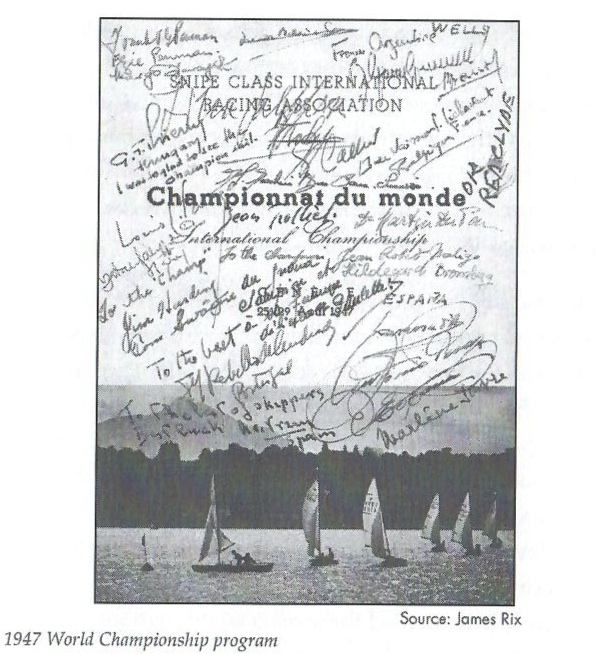
In 1947, the first world championship was held in Geneva, Switzerland, and it was quite an event. Europe was still recovering from the war, and the Geneva Snipe Fleet had gotten ahold of a small in out in the country a few miles farther out from Geneva than the yacht club was and had opened it to house the contestants. The inn had been closed all during the war and was completed unfurnished. At the time that Margie (editor’s notes: Ted’s wife) arrived, the inn had been furnished – with Swiss Army hospital cots – period. No drapes, carpets, chairs – nothing.
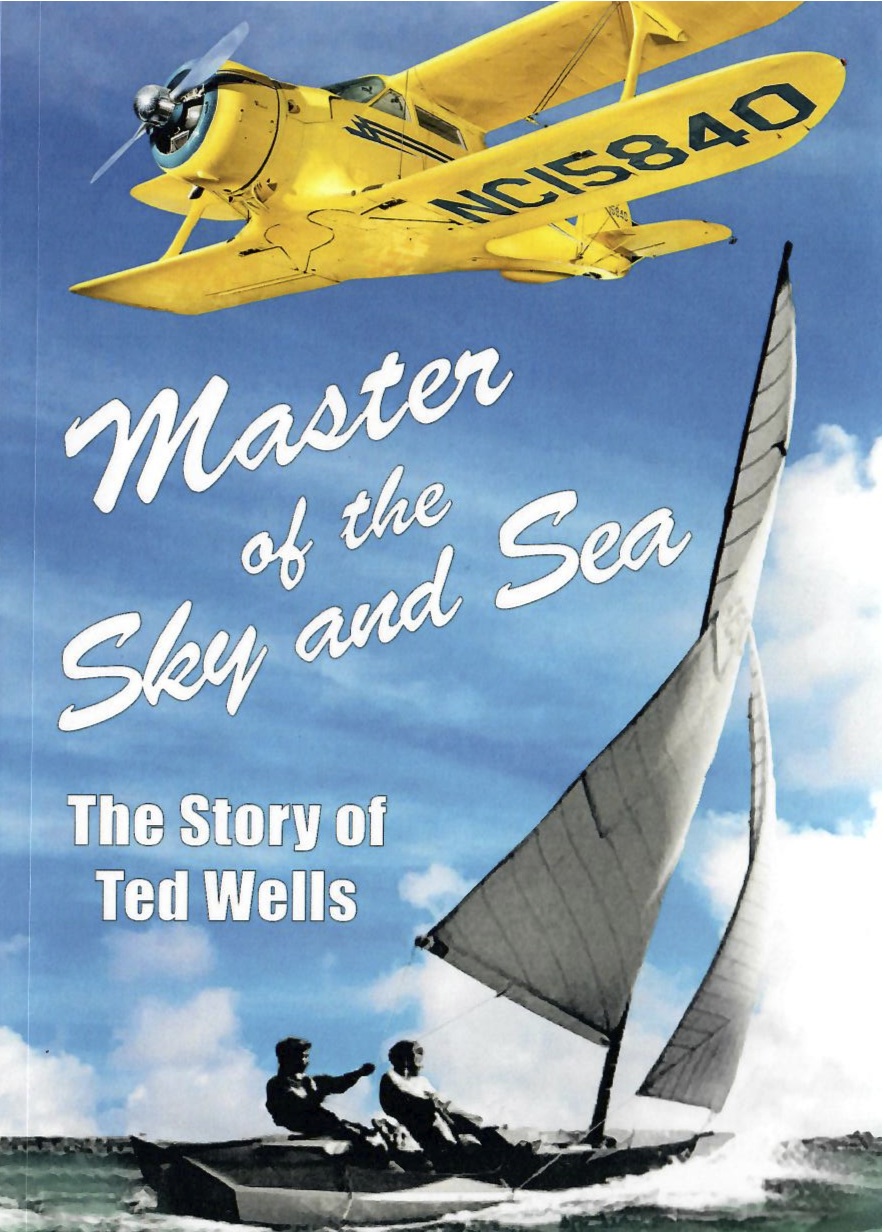
We pause the story of Bill Crosby for the moment to share an excerpt from the book Master of the Sky and Sea – The Story of Ted Wells by James Rix, which recounts the World Championship in Switzerland:
From the book “Master of the Sky and Sea – The Story of Ted Wells” by James Rix
A few regattas in the early ’40s had participants from other countries making them informal international regattas including one in 1946 at Lake Chautauqua, New York. Sailors from Brazil, Newfoundland, Portugal, and Switzerland participated as well as many from USA fleets. Dr. Martin Dupan, representing Switzerland, was so impressed with the regatta at Chautauqua, New York, that he became the initiator for the first world championship to be held outside of the US in Geneva, Switzerland in 1947.
This was the first invitational contest just between the national champions from different countries. Since Ted had won the US National regatta, he qualified as the United States representative to the World Championships.
In Ted’s words, “In 1947, the first world championship was held in Geneva, Switzerland, and it was quite an event. Europe was still recovering from the war, and the Geneva Snipe Fleet had gotten ahold of a small in out in the country a few miles farther out from Geneva than the yacht club was and had opened it to house the contestants. The inn had been closed all during the war and was completed unfurnished. At the time that Margie (editor’s notes: Ted’s wife) arrived, the inn had been furnished – with Swiss Army hospital cots – period. No drapes, carpets, chairs – nothing.
We were the first ones there and possibly by virtue of that, we had what must have been the deluxe accommodations. The “deluxe” part consisted of having a washbasin with cold running water in the room. The rest of the facilities were in a little room down at the end of the hall, one per floor. I think Marge was taking a pretty dim view of the whole situation when we first arrived, but when everybody showed up, it turned out to be a lot of fun.
In the days before the regatta started, we became aware of the fact that normal wind in Geneva is zero with light puffs, and the boats were rigged accordingly. The natives told us, however, that once in a while “La Bise” would show up. “La Bise” was a north wind which would start out about 30 mph for the first day, would blow for three days at a minimum, and if it were still blowing on the third day, it would blow for three more days with steadily decreasing velocities each day.
The boats were all borrowed, and we used the same boats throughout. I immediately moved the mast forward on the boat about 8 inches and slacked off the rigging, much to the disgust of the owner who advised me that the boat was perfectly rigged when I picked it up. We had been very friendly up until that time, but then he became noticeably cool.
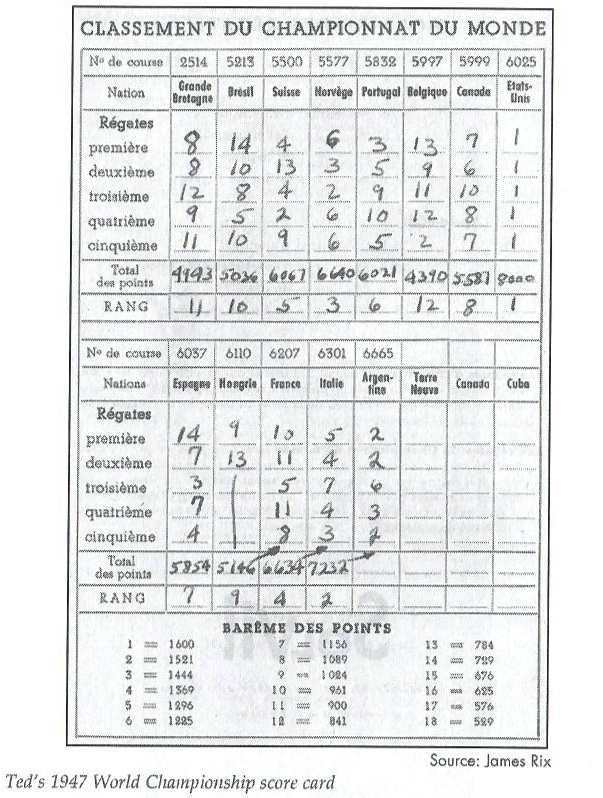
“La Bise” showed up the day the regatta started, and I started winning races. When I had taken first places in all the races, he was very friendly again until the ceremony of turning the boats back in which was to be preceded by putting all the rigging back the way it was when we picked the boats up. This I did in accordance with the instructions and then the owner got really mad.”
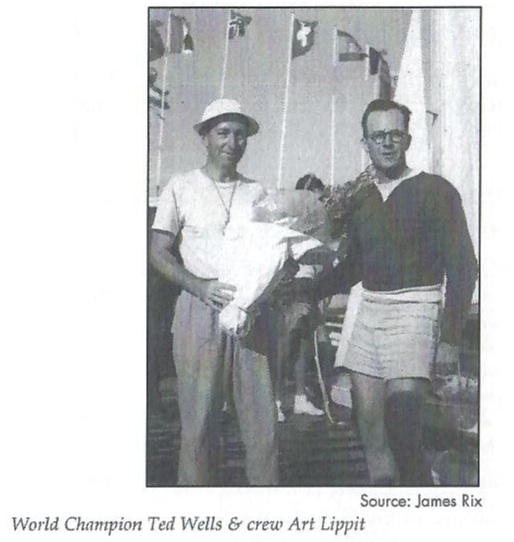
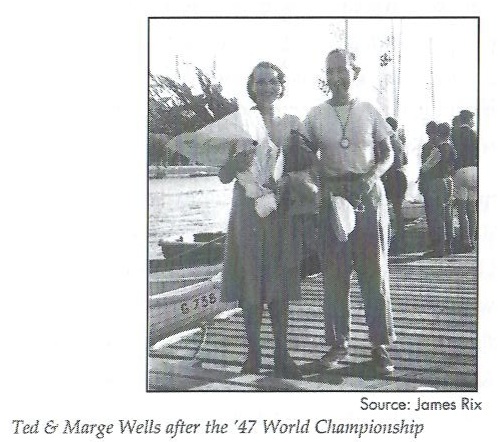
Ted beat national champions from 13 countries and won every race. He returned in Wichita as a hero.
Let us now resume Bill Crosby’s narrative:
1948 World Championship – Palma de Mallorca, off the eastern coast of Spain
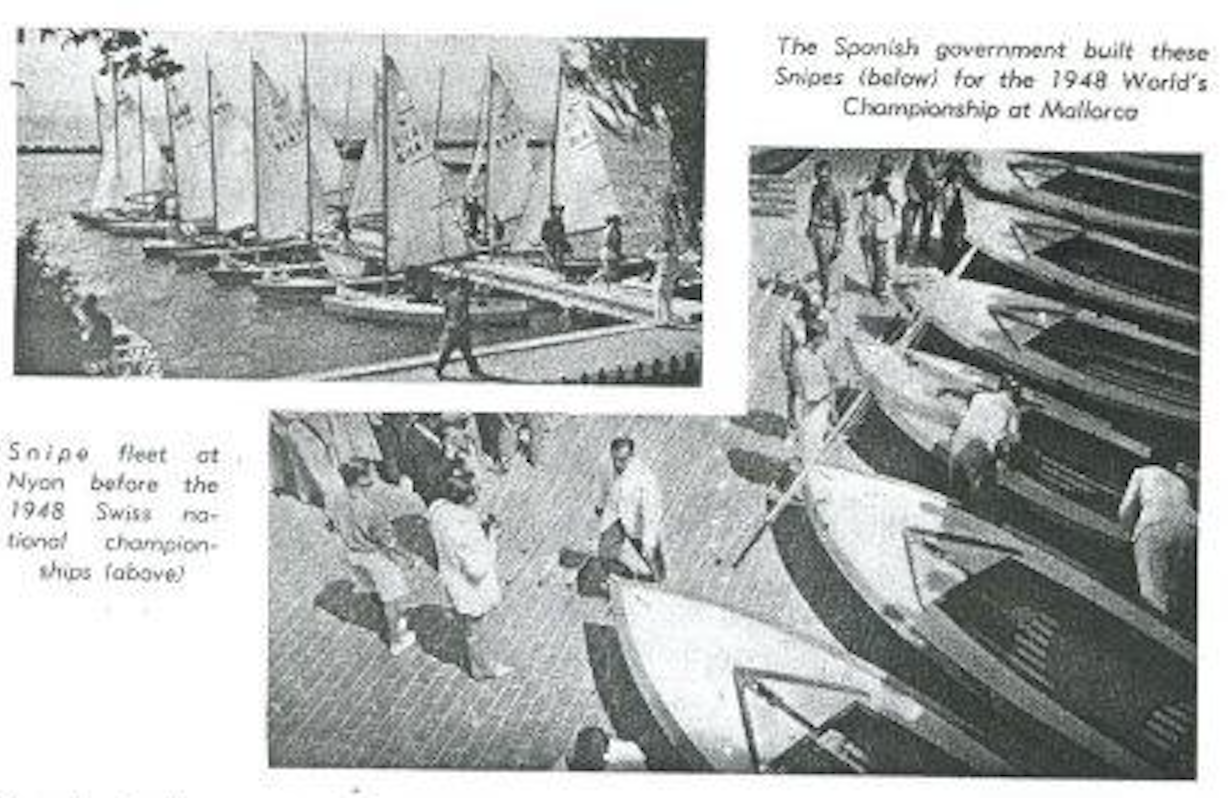
The Spanish Government built a special fleet of Snipes for this regatta—15 of them, all exactly alike. All skippers, crews and national secretaries were guests of the Snipe Federation and Franco himself gave the main prize to be held for permanent possession. Fiesta lasted for days at Palma, according to those who were present.
In 1948 the internationals, or, as they were now called, the world’s championships, were held under the Spanish Snipe Federation at Palma de Mallorca, off the eastern coast of Spain. This federation, by the way, represented nearly 1,000 boats now with fleets scattered in nearly every important town on the Spanish peninsula as well as across the straits in North Africa. The Spanish Government built a special fleet of Snipes for this regatta—15 of them, all exactly alike. All skippers, crews and national secretaries were guests of the Snipe Federation and Franco himself gave the main prize to be held for permanent possession. Fiesta lasted for days at Palma, according to those who were present. For the first time, the trophy was won outside the United States and the brothers Jorge and Carlos Vilar Castex, of Argentina, took it back to South America. This gave Sniping a big boost in South America.
At each of these meets a considerable number of national secretaries were present and meetings were held at which just about everything was suggested, from requiring all Snipes to carry oars and oarlocks to completely rerigging and changing the original design. Like the United Nations, everyone had a different pet idea.
1949 World Championship – Larchmont (N.Y.) Yacht Club
To reduce somewhat the expense of holding these regattas, and in order for some of our friends to the south and east to get straightened out a little after the series, it was decided at this time to limit the holding of the World’s Championships to every other year.
In 1949, the World’s Championships were held at the Larchmont (N.Y.) Yacht Club with nine nations sending representatives. Ted Wells, the “Wizard of Wichita,” won the series for the second time (he had won in Switzerland in 1947). Countries competing this time were Argentina, Brazil, Canada, Cuba, England, Norway, Spain, Switzerland, and the United States. In point of number of nations entered it was, so far as we can determine, the largest international regatta ever held in the United States.
To reduce somewhat the expense of holding these regattas, and in order for some of our friends to the south and east to get straightened out a little after the series, it was decided at this time to limit the holding of the World’s Championships to every other year. Everyone seemed to be in favor of this and it still holds true today. At the same time, it was decided to open up a little on the U.S. National Championships by allowing more than one boat from a fleet to enter. The new rule, and one still in force, limits the entries to one boat for every five active boats in any given fleet. This brought more than 50 U.S. Snipes to the National Championships in 1952.
On the even-numbered years between the World’s Championships, Europe had its own championship regatta and a special trophy was given for the new Western Hemisphere Championship. The first regatta for this John T. Hayward Trophy was held at Havana, Cuba, and much to the joy of the Cubans their own Dr. Clemente Inclan was the winner. Because only five nations were eligible to compete at that time, the entry list was raised to two from each.
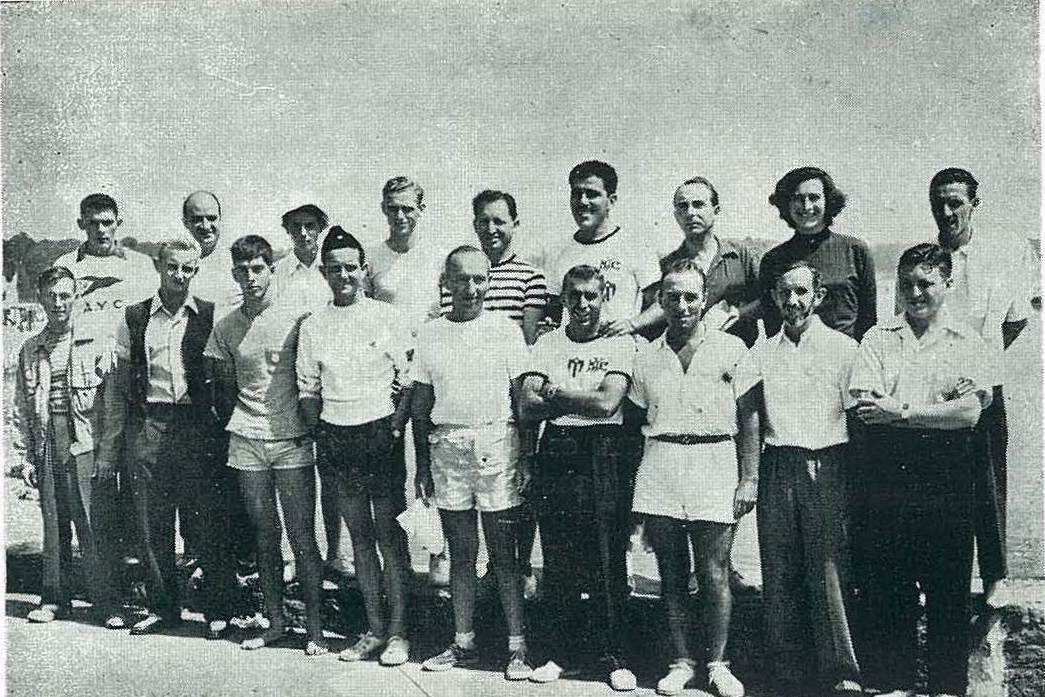
Gastão Hugh Pullen Pereira de Souza, from Brazil, sailed the 1949 Snipe World Championship in Larchmont, NY, USA. Here some photos from him and an article this great regatta:
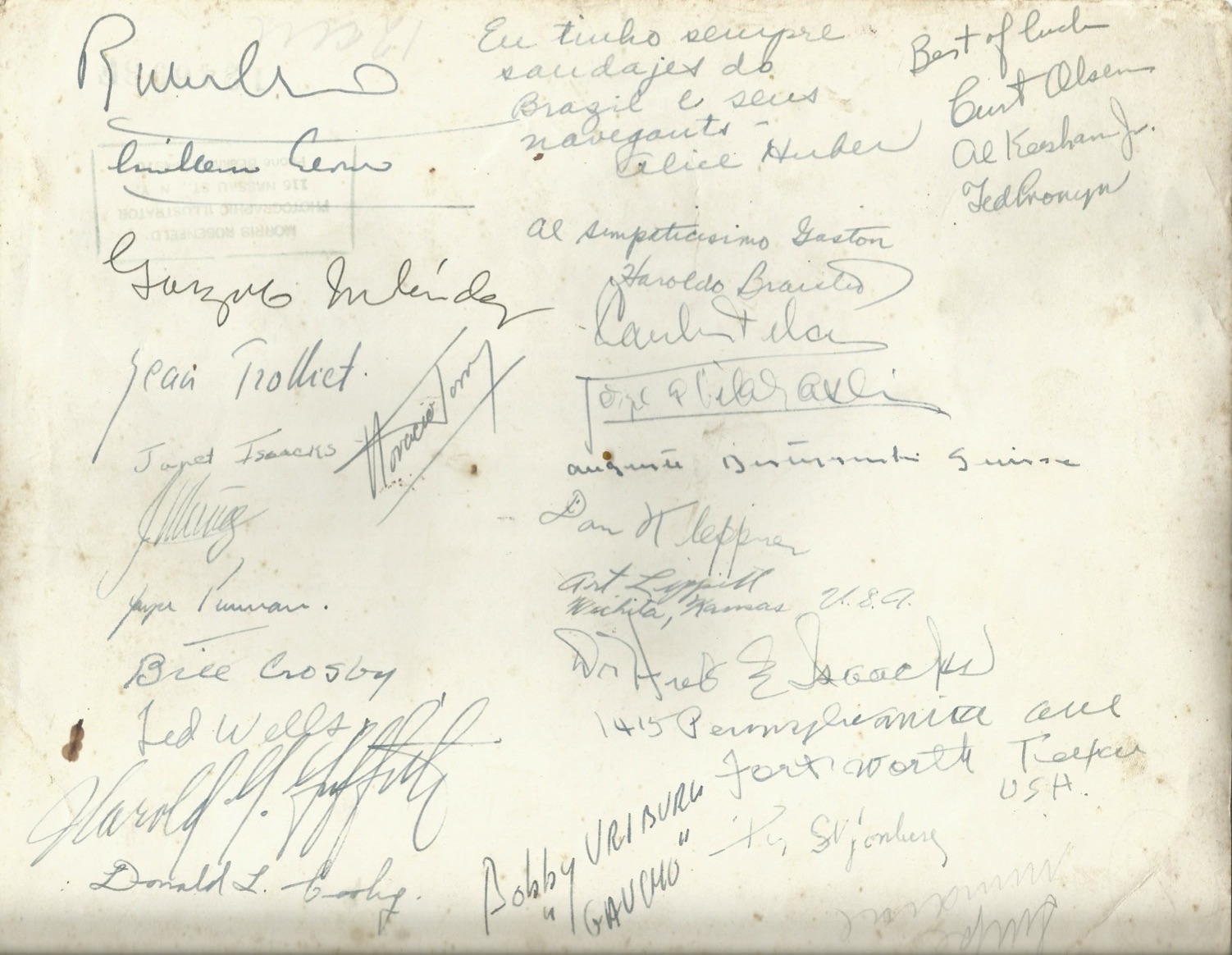
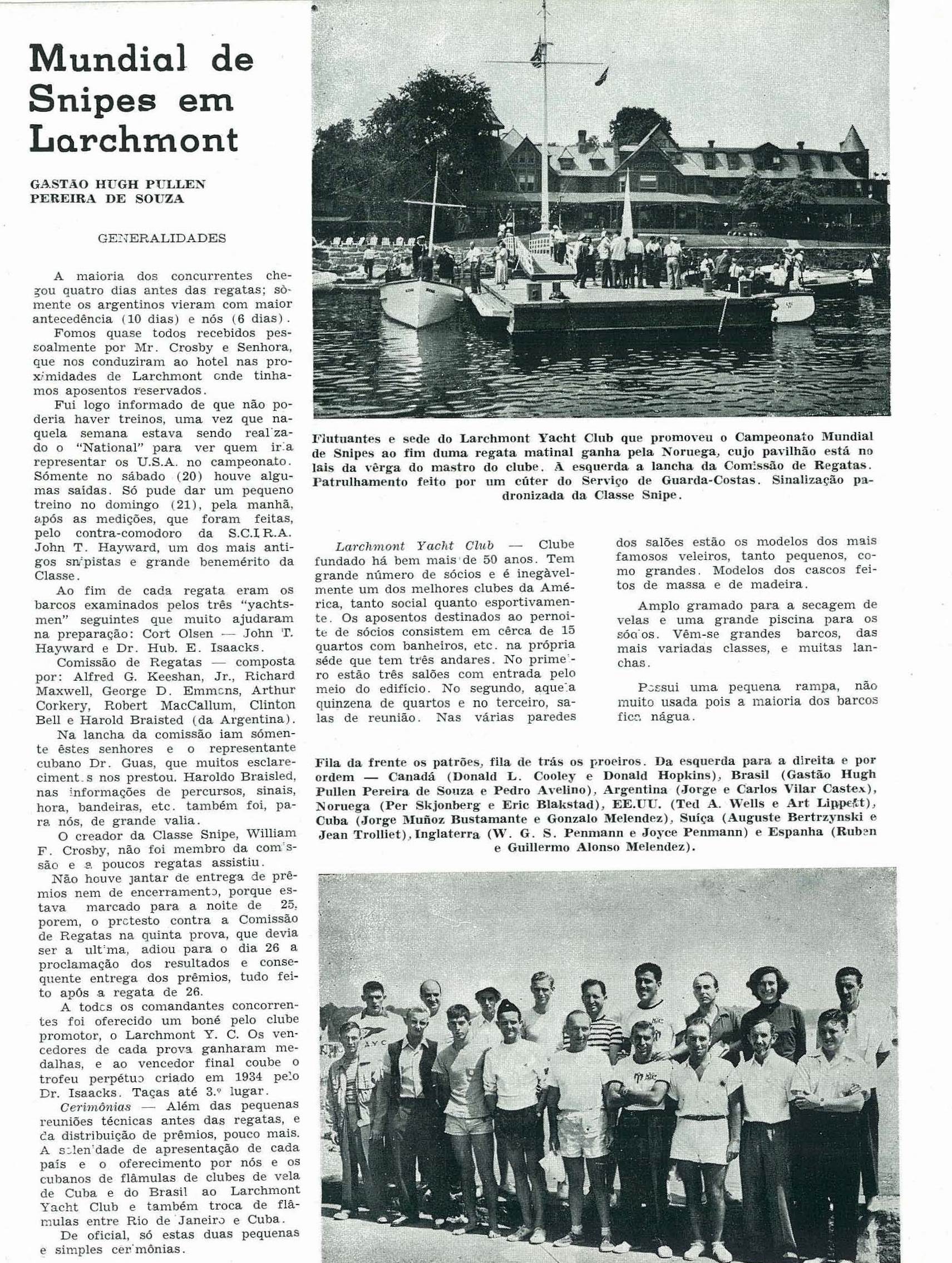
Bill Crosby’s story:
1951 World Championship – Havana, Cuba
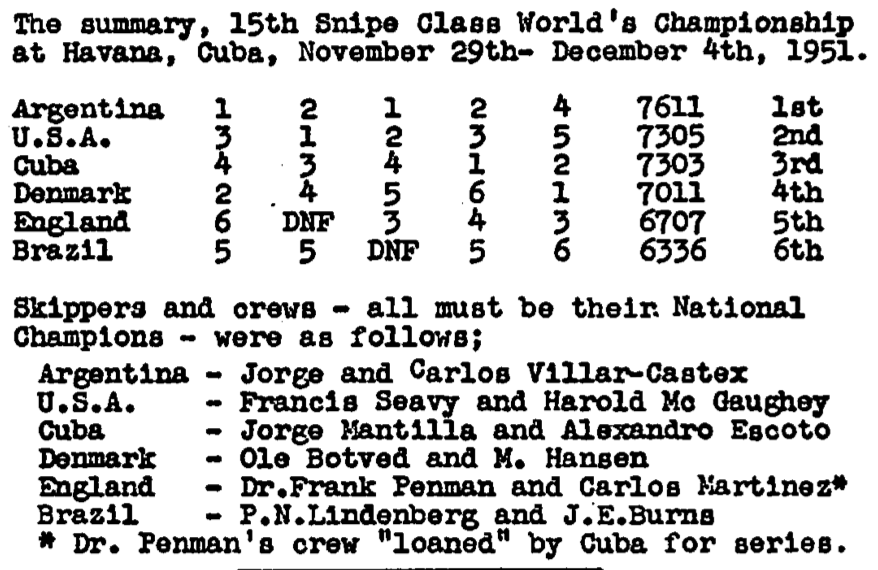
In 1951, the boys having had such a good time in Havana the year before, the same fleets, headed by Commodore Rafael Posso, asked for and held the World’s Championships. Jorge and Carlos Vilar Castex again walked off with the trophy and once more Argentina got a big kick out of it. The U.S. entry was second and Denmark third.
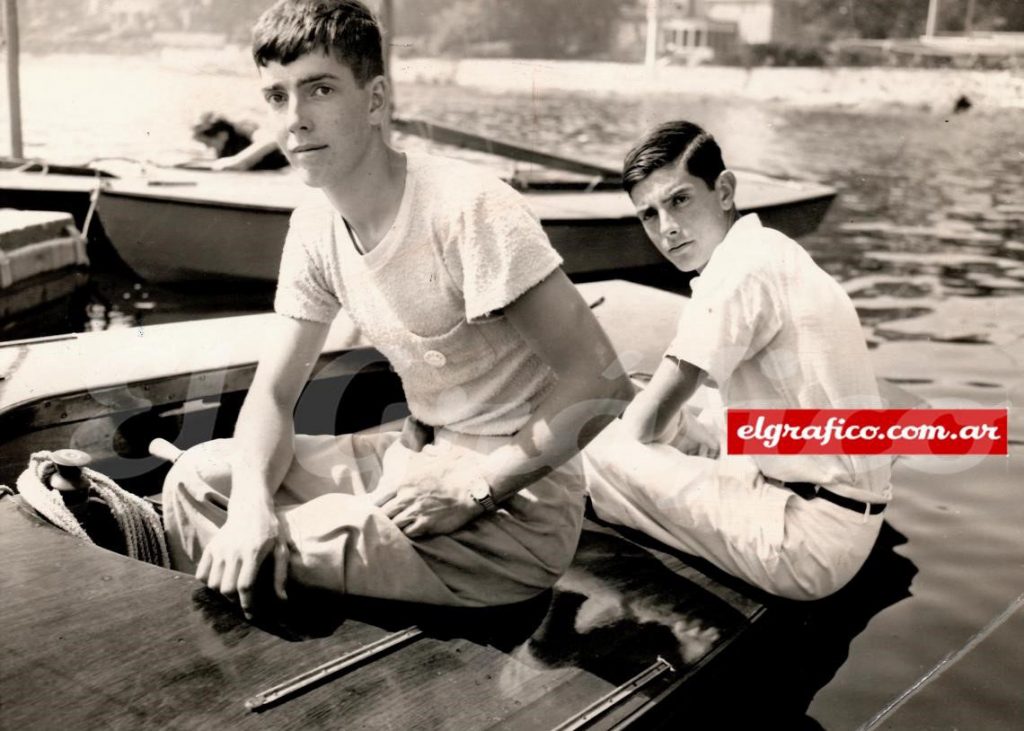
Above: Jorge and Carlos Vilar Castex
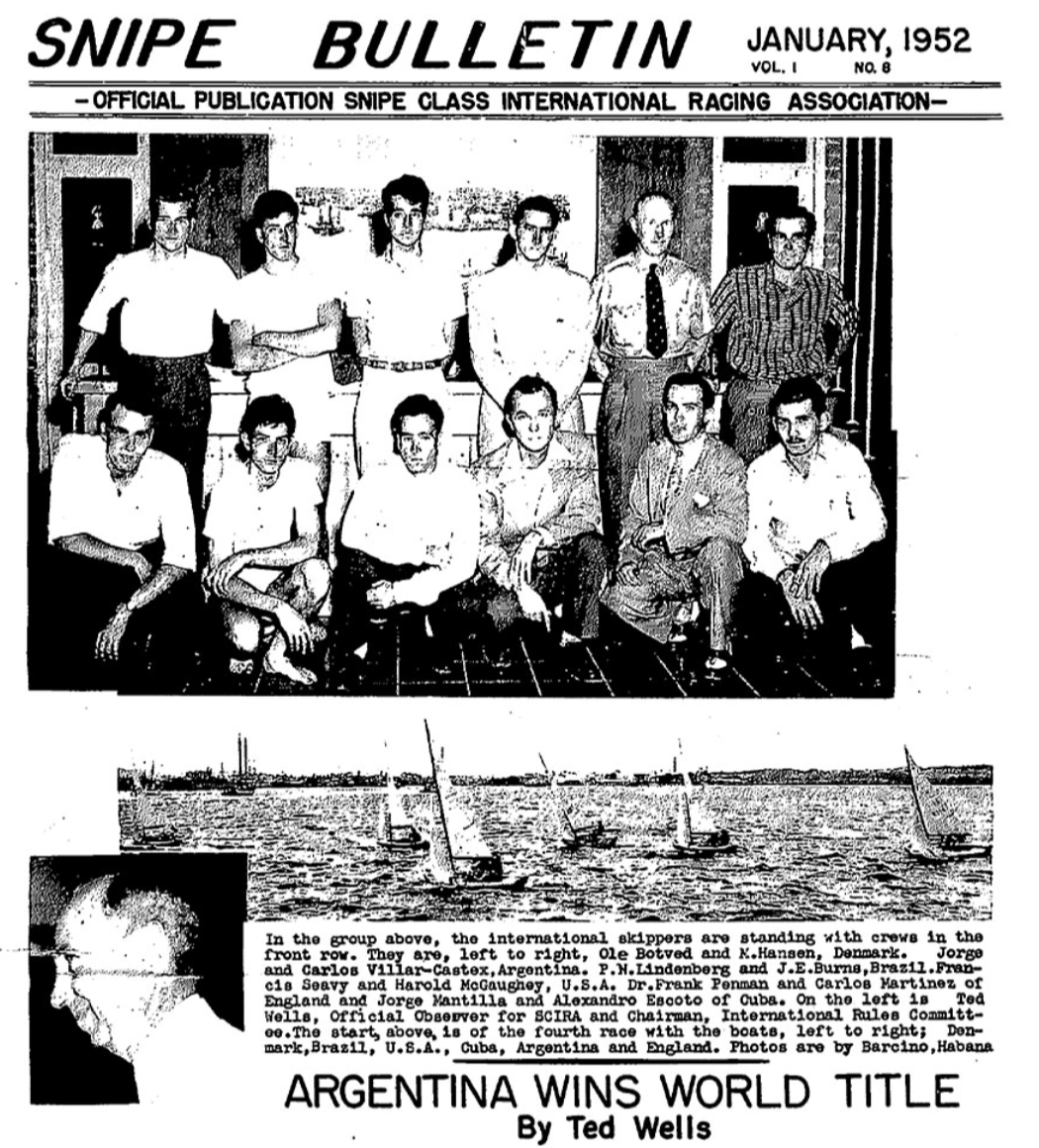
Snipe Bulletin January 1952
Argentina Wins World Title [1951 – Havana] – by Ted Wells
Commodore Rafael Posso, Gonzalo Melendez, and all the Snipe enthusiasts of Havana put on the regatta for the Snipe World’s Championships in better fashion than the Western Hemisphere Champs of 1950. Which is going some. Even the weather cooperated, after toying with the idea of bringing in a norther after the first race, and the harbor was entirely free of ships instead of presenting the usual obstacle race course.
The first race was triangular with a 12-15 mph wind at the start, freshening to around 20. The Danish boat lead most of the way on the first lap, followed by the Argentines and U.S. Near the end of the first lap, the Argentines picked up a good puff, hiked out and planed past the Danes to windward. The Danes protested that their luffing rights were curtailed by the Argentines passing so close to them. The Committee did not sustain the protest as they were watching the incident and did not see Denmark make any effort to luff. The race ended with no further change in position; Argentina, first; Denmark, second; U.S.A., third.
In the second race, which was also a triangle, the wind averaged 20 mph and Dr. Frank Penman, England’s hope, provided a bit of excitement by doing a quarter of a snap roll on encountering the stern wave of another boat while planing with the board up and the whisker pole out. Frank landed in the mainsail and the boat swamped before it could be righted. Cuba led at the first mark, followed closely by Argentina, Denmark and U.S. On the reach U.S. pulled up to second with Argentina in first. Cuba slipped back to third and Denmark to fourth. On the second beat, Seavy, U.S., passed the Argentines and held his lead to the finish. A stay parted on the Cuban boat on the last reach but there was no break and the mast stayed put. They finished in third place.
Because of the possibility of a lack of cooperation from the weather, the third and fourth scheduled races were both held on Saturday, (Dec. 1st), one in the morning and the other in the afternoon. The morning race was started in a 15 mph. southeast wind necessitating a triangular, starboard course. The wind dropped to around 10 mph. most of the time and the Argentines lead by a comfortable margin almost from the start. The Brazilians broke a jib sheet just after the start and dropped out. Second place developed into quite a fight between Cuba, England and U.S. with positions changing frequently. Seavy finally acquired a slight lead over Penman, and held it to the finish.
The wind obligingly shifted to the north east for the fourth race, permitting a good windward-leeward course in the harbor, with the wind holding at about 20 mph. Cuba’s Mantilla led most of the first lap, followed by Seavy and the Villars-Castex boys. At the start of the second lap, Mantilla had trouble for a short while with his main sheet bridle, putting him behind Seavy but ahead of Argentina. A finish in this order would, of course, have tied the series, but Seavy, naturally, devoted his attention to the Argentines and Mantilla again took the lead. About a hundred feet from the finish line Seavy and Villar-Castex jibed and a puff moved the Argentine ahead of Seavy by about three feet at the finish line. The same shift moved Penman from sixth to fourth, and put Brazil ahead of Denmark by inches.
The fifth and final race on Sunday was the only one to be held on the Gulf. After a postponement because of lack of wind, a breeze came up from the northeast and a windward-leeward course was laid. Shortly after the start, the wind picked up to around 15 mph. or more, and the boys with full sails had their hands full. Denmark took a long tack along the shore after the start and picked up a lead that was never threatened, even though he and the three next boats set a course approximately for Corpus Christi, over in Texas, instead of the Bacardi sign, which they should have aimed for on the run. England and Brazil cut across and made up most of the ground they lost on the first beat. The Argentines, of course, sat right on top of the U.S. throughout the race, with the result that Cuba took second and very nearly won second for the series. England was third; Argentina fourth and the US boat was fifth.
Prizes for first, second and third place in each race were awarded at the finish dinner, and medals for the first three places in the Championship as well as the Hub Isaacks Trophy to Jorge and Carlos Villar-Castex, making the second time they have had the trophy, taking it the first time in 1948 in Palma de Mallorca when Carlos was skipper. The boys were consistently good and their teamwork was a pleasure to watch.
The summary, 15th Snipe Class World’s Championship at Havana, Cuba, November 29th December 4th, 1951:
The Snipe Story – by Bill Crosby: While the following does not directly concern the history of the World Championships, we nevertheless feel that the next sections of Bill Crosby’s article are crucial to understanding the overall history and evolution of the Class. Here, then, is how the article continues:
This past year [1952] the Western Hemispheres again came to the front, this time at Clearwater Yacht Club, in Florida. Ten skippers competed from five nations—Canada, Bermuda, U.S., Cuba, Brazil. There were two skippers from each and boats were loaned by the host club and drawn for just previous to each race. Once more Ted Wells was the winner but Dr. Inclan, of Cuba, was not far behind. In order to be eligible to compete here, Wells and the other U.S. skipper, Morris Whitney, of Clearwater, had soundly drubbed some 50 other Snipes at the National Championships at Green Lake, Wis.
And while the Western Hemisphere Championships were going on, the Skovshoved Yacht Club, near Copenhagen, Denmark, was holding the European Championships. Ten nations each sent one skipper, complete with boat, sails and crew. This was the first time this had happened. According to the data on this regatta there were more nations represented at this Snipe regatta than at any of the sailing events at the Olympics in nearby Finland. Eric Barford, of Norway, won the series. In order, the other nations were, France, Italy, Spain, England, Sweden, Denmark, Finland, Switzerland, and Belgium. Even the staid British yachting magazines admitted that it was quite an affair, especially when, in one race, four or five boats crossed the finish line in less than 30 seconds. The outstanding point here is that each of these boats had been built in a different country by different builders. It was stated that, despite this, the boats were extremely evenly matched.
According to the data on this regatta there were more nations represented at this Snipe regatta than at any of the sailing events at the Olympics in nearby Finland.
Now everyone is looking forward to the 1953 World’s Championships which will be held starting Sept. 5, 1953, at Monte Carlo, with racing on the open Mediterranean. As in 1953, each nation will hold national championships and the winner will become his nation’s representative. From present indications, it will no doubt be the largest in point of nations ever held by any class. At the European Championships last fall the skippers present voted to bring their own boats for the 1953 event and this has been approved by the Board of Governors in recent meeting. This will mean some extremely hot competition but it will be quite expensive for Western Hemisphere nations to send skipper, crew, and boat. However, plans are already on foot to at least help defray the cost so far as the U.S. entry is concerned. It is planned, at the National Championships in 1953, to have each entry chip in with a certain entrance fee. All the money so raised is to be turned over to the winner and based on the entry list of the last year or so, the winner should receive a tidy sum. Not enough to cover the trip, but something to get started with.
Of course, the language difficulty still plays a part in international affairs of this scope, but usually the national secretary of each country is someone who can at least understand English. In most countries the parent Association supplies a small number of rule and record books which are translated into French, Spanish, Norwegian, or Portuguese, and then given out to the local fleets. In most countries, also, the restriction and measurement sheets are translated, but Ted Wells, who is chairman of the International Rules Committee, has had his hands full trying to explain in three or four languages just how the restrictions should be handled. During the past year a number of Snipes were built professionally in both Italy and France and measurers began peppering Mr. Wells with queries regarding stem dimensions and measurement. Someone had discovered that a little extra waterline length made quite an improvement in speed and, with competition running high in Europe, each nation has been doing everything possible to take every advantage allowed in the restrictions. However, Mr. Wells has handled it all in a masterful manner and if he keeps on, he will, no doubt, shortly be named to assist Mr. Dulles!
In most countries the parent Association supplies a small number of rule and record books which are translated into French, Spanish, Norwegian, or Portuguese, and then given out to the local fleets. In most countries, also, the restriction and measurement sheets are translated, but Ted Wells, who is chairman of the International Rules Committee, has had his hands full trying to explain in three or four languages just how the restrictions should be handled.
The Snipe Class International Racing Assn. has not been slow in recognizing the importance of the international aspects of the class and officers have leaned over backward to create and maintain interest. In the past few years a few honorary vice-commodores have been appointed among foreign yachtsmen who should be so honored but at the annual meeting in New York in January, the Board of Governors voted to go one step further. During the coming year each of the national secretaries will be asked to hold an election among his nationals to determine some outstanding Snipe worker who would be accepted as a full-fledged member of the Board of Governors next January.
This is decidedly not an “honorary” position but a working job for someone who can give the time necessary. A small executive committee will handle the usual run of business to come up, but when important decisions are to be made each member will be polled by mail.
This is decidedly not an “honorary” position but a working job for someone who can give the time necessary. A small executive committee will handle the usual run of business to come up, but when important decisions are to be made each member will be polled by mail. This will mean, of course, that each nation will fit more closely into the Snipe picture and each will have a definite say in the policies of the Association. It is believed and hoped that this is a step in the right direction and beyond this we can visualize, in a few years’ time, meetings of perhaps the Board or a small committee held yearly in Europe, South America, or North America.
The international aspect is not to be lost sight of and everything possible is being done to give Snipe skippers from far off Mozambique, Japan, and Nova Scotia every possible opportunity to take part actively in the organization. In this respect the Snipe Assn. has even printed an eight-page monthly bulletin which is sent to skippers here in the States but also to most of the countries in Europe and in South America. Although it is printed in English, it is truly amazing how someone always manages to get vital parts of it translated into his native tongue.
There are active Snipe fleets in such places as the Canary Islands; Teneriffe; Algiers; Lourenço Marques; Lima, Peru; Agadir, Morocco; Luanda, Angola; Balearic Islands; several fleets in Japan and a great many others. While the U.S. still leads in number of fleets and boats, Europe is fast catching up and while no actual count is possible we would guess that there are around 1000 Snipes in Spain, 500 in France, 600 in Italy, 200 in Portugal and probably another 300 in the Scandinavian countries. Britain has around 200, including the fleets in Northern Island and Scotland. In South America, Brazil is the most active country, but recently Chile, Peru, and Uruguay have caught the fever badly. Argentina has its own troubles but Snipe racing continues, more or less isolated.
A number of years ago, the Strangford Lough Yacht Club, about 12 miles from Belfast in Northern Ireland, sent out an invitation to Snipes in Great Britain for a championship of the British Isles. In winding up, we would like to quote directly from this invitation:
“There are no hotels near Whiterock, so unless you bring your own car, when it will be possible for you to stay in Belfast and motor up and down for the racing, you and your crew will have to put up with the Irish hospitality of our members. If you don’t know what this is—come and find out. It has been favorably reported on by such English Snipe owners as have strayed to our waters. If you can come we will make every effort to give you a good time. Weather permitting, the Celtic twilight will be turned on at 11:00 p.m. each evening, and the local Banshee is a very fine mezzo-soprano. Apart from local color we have many interesting and primitive customs; some of us sail our Snipes sharp end first, as we think they go faster that way; and others find the metal centerplate so handy for cutting other people’s moorings that they carry it down even when going to windward. All our protests are, of course, settled with shillelaghs in front of the clubhouse, but visitors will be given choice of weapons, and their Executors may appeal to the Y.R.A.”
Read also:
XI – Lake Chautauqua, NY, USA, August 21-23, 1946
- Bob Davis, Balboa, California
- Victor Larson, Lake Chautauqua
- Bob Carrick, Lake Merritt, California
Sailed on Lake Chautauqua, 37 starters, 5 nations
XII – Geneve, Switzerland, August 26-29, 1947
- Ted A. Wells, USA
- Jorge E. Brauer, Argentina
- Felix V. Roznieki, Norway
Sailed on Lake Leman, 13 nations
XIII – Palma de Mallorca, Spain, August 30-September 4, 1948
- Carlos Vilar Castex, Argentina
- Antonio Perez Rodriguez, Spain
- Antonio Jose Vilardebo, Portugal
Sailed on Mediterranean Sea, 10 nations
XIV – Larchmont Yacht Club, NY, USA, August 22-26, 1949
- Ted A. Wells, USA
- Jorge Vilar Castex, Argentina
- Per Skjonberg, Norway
Sailed on Long Island Sound, 9 nations
XV – Havana, Cuba, November 29-December 4, 1951
- Jorge Vilar Castex, Argentina
- Francis Seavy, USA
- Jorge Mantilla, Cuba
Sailed in Havana Harbor, 6 nations
About the 2026 Snipe Worlds:
Mahon, Menorca, Spain, September 19-26, 2026
Leave a reply
Your email address will not be published. Your comment will be revised by the site if needed.
0 comments