
On Board with Vice Commodore Paola Prada
A conversation on governance, global growth, and the enduring spirit of the Snipe Class with Vice Commodore Paola Prada
Introduction & Background
To start, could you introduce yourself to the members who might not know you personally? Where do you live, what is your professional background, and how do you balance your career with your commitment to the Snipe Class?
My name is Paola Prada, and I am Brazilian, from São Paulo. My professional background is in marketing and business administration, with most of my career in the cosmetics and fragrance industry.Beyond my professional life, volunteer work and governance have always been important to me. I serve on the advisory board of a social assistance NGO, on the board of Colégio Dante Alighieri, an Italian school in São Paulo, and on the board of Yacht Club Paulista.I also enjoy hands-on volunteer work whenever possible, whether that means delivering food to shelters, helping with annual charity fairs whose proceeds support multiple social assistance organizations, or simply stepping in wherever help is needed during sailing events at Guarapiranga Lake in São Paulo.
Balancing professional responsibilities, volunteer commitments, and SCIRA work requires organization and passion, but sailing has always been a meaningful part of my life. When something truly matters to you, you make it part of your life.
When did you first step into a Snipe, and what was it about this specific boat or community that made you stay for the long haul?
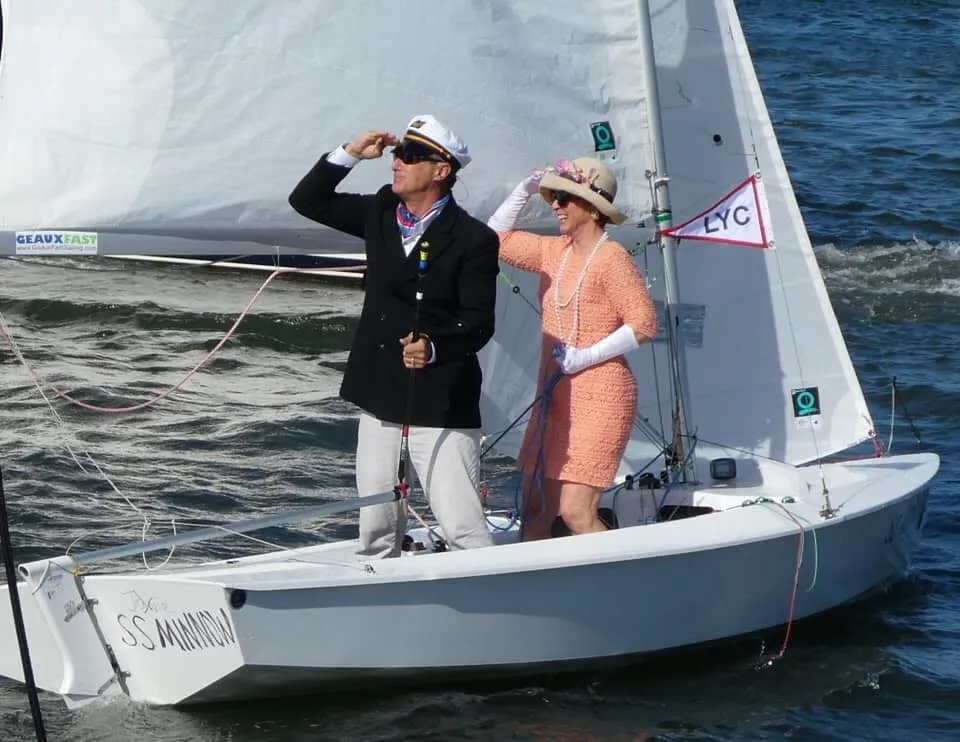
The first time I stepped into a Snipe was around 1986. My brother lent his boat to me and Daniela Poladian, a friend from the Optimist fleet. We had both been sailing single-handed boats, so discovering the experience of sailing together was really exciting.
We came from a very large Optimist fleet, but by the time we were 16, we were the only girls that chose the Snipe. For about five years, we were the only all-women team in our local fleet, which was something quite unusual at the time.
Then life happened, as it often does, and sailing no longer fit into my routine. In 1993, I sold my Snipe.
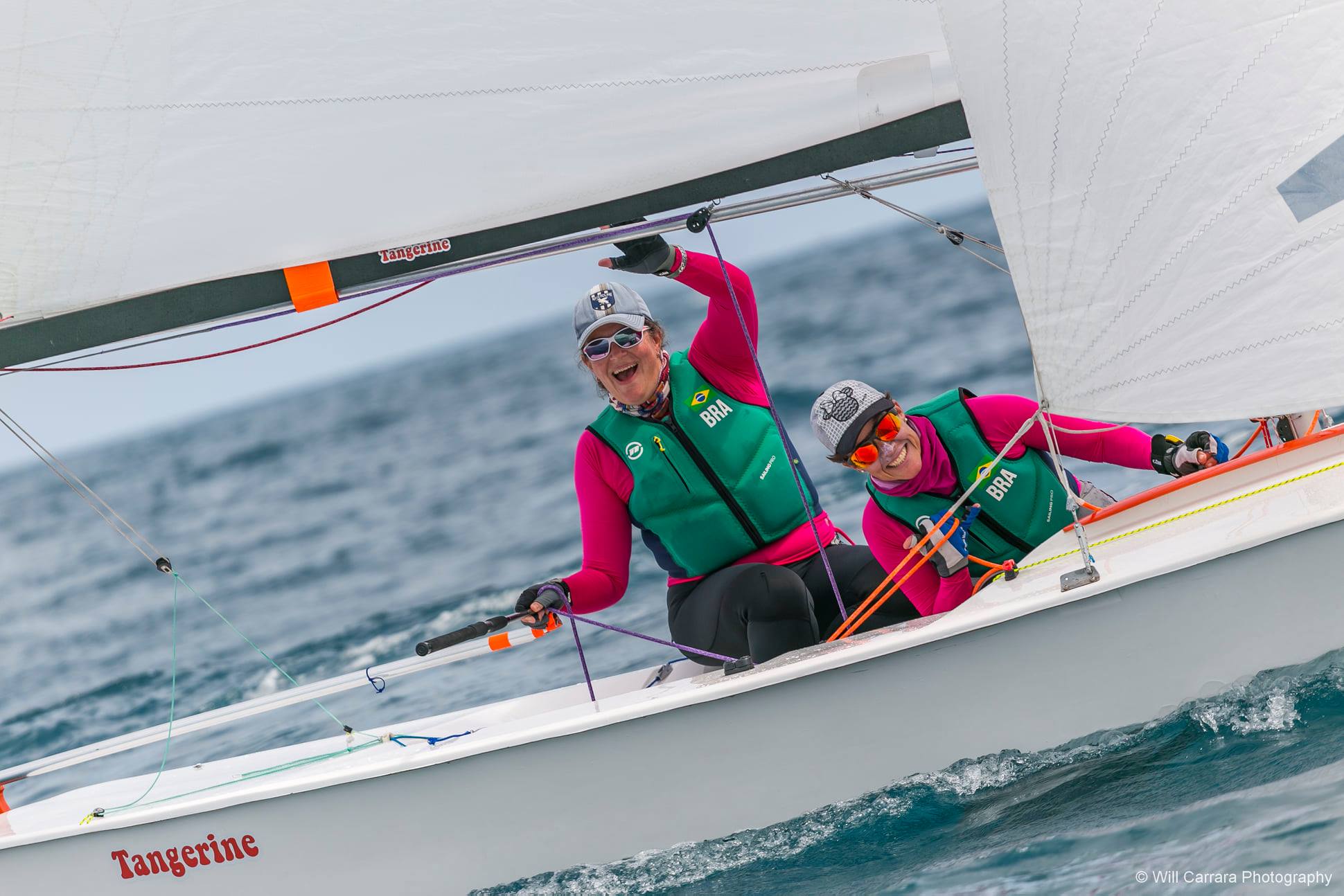
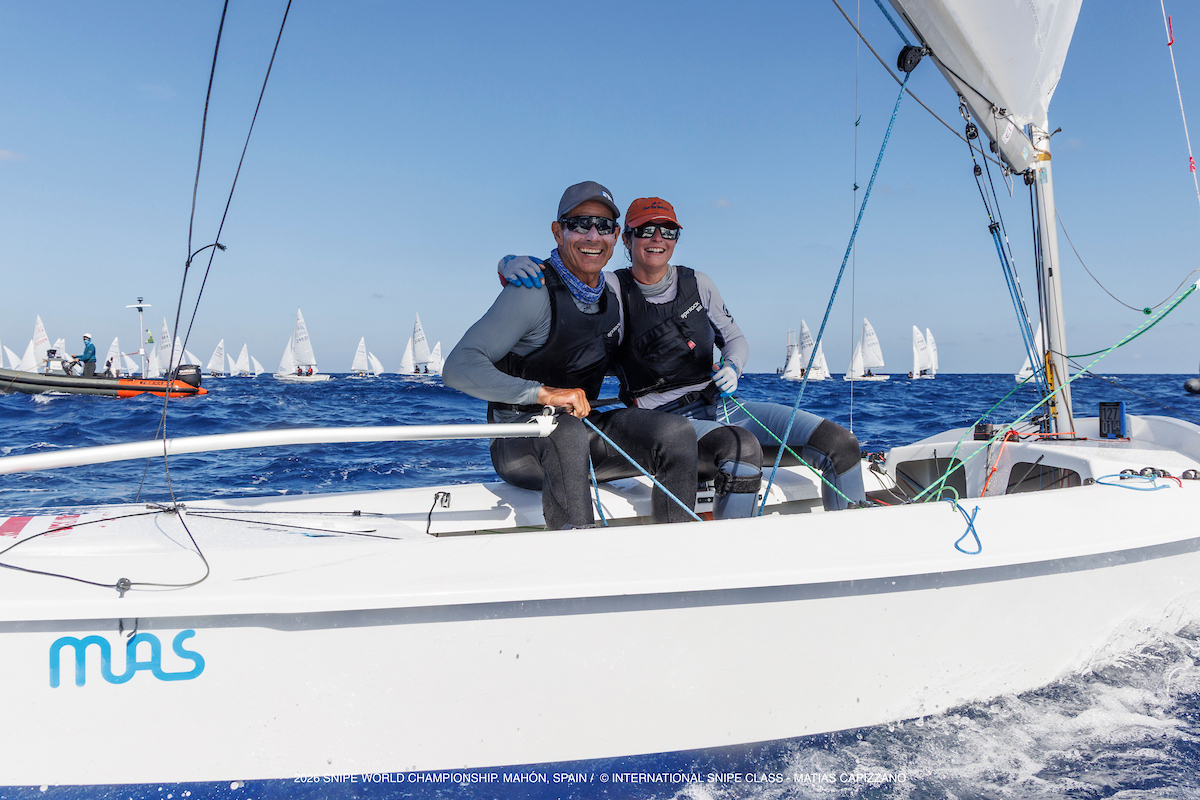
Fast forward to 2015: I found a beautiful Thor Snipe and returned to the class, this time sailing with my 12-year-old son. After a year, he moved on to sail with my dear and much-missed friend Luis Borba, and later I teamed up with Georgia Bruder to form another all-women crew. We have been sailing together ever since.
What made me stay is a combination of things: the technical challenge of the boat, the tactical depth of the racing, and above all, the people. The Snipe community has a very special spirit.
You’ve traveled extensively as both a sailor and a SCIRA Officer. How has seeing different SCIRA Countries and local fleets influenced your vision for the Class?
As someone who loves both people and travel, I found the perfect combination in Snipe sailing.
Over the past several years, my involvement in international championships has become much more intense, both as a sailor and as a SCIRA representative. That has given me the privilege of seeing very different fleets, organizational cultures, and sailing realities.
What stands out everywhere is that the Snipe spirit is remarkably consistent: strong friendships, competitive sailing, and a real sense of belonging.
At the same time, traveling teaches humility. Every country faces different realities—economic, logistical, cultural—and there is no one-size-fits-all solution for growth. That has shaped my vision significantly: protect the core identity of the class, while remaining flexible and supportive enough to help different fleets thrive in their own way.
Before becoming Vice Commodore, what were your previous organizational or administrative roles within SCIRA (or other sailing organizations), and how did they prepare you for your current responsibilities?
My introduction to sailing organization began very early. As an Optimist sailor, I watched my parents—especially my mother—organize our club’s Optimist fleet with extraordinary success. What impressed me most was her personal approach: making people feel included and valued.
Later, when my son reached sailing age, I became deeply involved again: organizing sailing camps, helping reactivate the sailing school with Renata Bellotti, serving as Optimist fleet captain, reviving the OptiBra website, and creating a São Paulo regional website designed to be sustainable for future generations of sailing parents.
I also developed an interest in race management and rules, studying to become a race officer in Brazil and volunteering as a judge in protest hearings during sailing events at Guarapiranga Lake in São Paulo. That experience gave me a broader perspective on fair competition, governance, and event organization.
My involvement naturally expanded into organizing major events. I personally organized the Brazilian Snipe National Championship at Guarapiranga Lake, was directly responsible for organizing the 2021 Snipe Women’s World Championship there, and also helped in the organization of the 2019 Snipe World Championship in Ilhabela.
At Yacht Club Paulista, I served on the Deliberative Council, as Vice Commodore for two terms, and as Sailing Director for two terms.
Within SCIRA, I became Brazil’s National Secretary in 2019. One of my priorities was organization and accessibility of information. Together with Alonso Lopez, we had already started building the Snipe Brazil website, and I expanded that work by organizing historical records, minutes, and key decisions so sailors could easily access the class’s institutional memory.
All of these experiences taught me that successful leadership is a combination of organization, communication, continuity, and personal connection.
The Role of the Vice Commodore
According to the SCIRA Constitution, the Vice Commodore has specific duties. Beyond the formal “Articles,” how would you describe your day-to-day contribution to the Board?
Formally, the Board holds monthly meetings to review ongoing matters, decisions, events, and strategic priorities.
In reality, the work is much more continuous than that.
As Vice Commodore, I am regularly in contact with National Secretaries, sailors, organizers, and fellow Board members. That includes suggestions, questions, ideas, practical challenges, and yes—occasionally complaints, which are also part of healthy governance.
A significant part of the role is listening, helping connect people, and ensuring concerns or opportunities are brought into productive discussion.
How does the Board interact behind the scenes? Could you walk us through the “method of work” regarding meetings, decision-making processes, and how you maintain a cohesive relationship with the Commodore and other Board members?
The Board works collaboratively and continuously.
While formal meetings happen monthly, communication between Board members and with the Executive Director is ongoing. Some matters require quick practical decisions; others involve deeper discussion and multiple perspectives.
Healthy governance depends on trust, openness, and respect. Not everyone always begins with the same viewpoint, and that is actually valuable. Constructive debate generally leads to stronger decisions.
Our relationship works because everyone is committed to the same goal: the long-term health of the Snipe Class.
As the Vice Commodore is traditionally the “Commodore-in-waiting,” how are you using this term to prepare for future leadership while supporting the current administration’s goals?
Preparation comes from participation.
This role gives me the opportunity to understand the class at a global level, not only from the perspective of sailors, but also from governance, event organization, national fleet development, and institutional continuity.
At the same time, this is not about preparing in isolation—it is about supporting the current administration fully while learning through active contribution.
International travel, meetings with different fleets, and direct interaction with sailors and National Secretaries have been invaluable in building that perspective.
The Promotion Committee: Function & Vision
You have a significant role regarding the Promotion Committee. For the average member, what is the primary function of this committee, and who currently composes this team?
Over the past three years, the Board itself has effectively taken on the role of the Promotion Committee.
The core mission is simple: help the class grow, remain relevant, and support both emerging and established fleets.
Promotion is not only about communication—it is also about inclusion, visibility, event support, and creating opportunities for new sailors to enter and remain in the class.
What specific promotional activities is the committee currently focusing on to increase Class visibility and membership worldwide?
Two major priorities are junior participation and women’s participation.
Growth in these areas is essential for the long-term vitality of the class.
That includes supporting youth pathways into the Snipe, encouraging women’s competitive participation, increasing visibility for those sailors, and helping events and fleets create welcoming environments where new participants feel they belong.
In an era of digital media and changing sports habits, how is the Promotion Committee evolving its strategy to attract younger sailors and retain veteran members?
Younger generations interact with sports differently, so communication must evolve accordingly.
Digital presence matters—not only through official channels, but also through stories, images, personal experiences, and visibility that make the class feel alive and accessible.
At the same time, retention is just as important as recruitment. Veteran sailors are part of the institutional soul of the class. Their knowledge, continuity, and mentorship are invaluable.
The ideal strategy is intergenerational: making the Snipe attractive to newcomers without losing the community spirit that has kept sailors engaged for decades.
Strategy, Objectives & The Future
What are the top three priorities on your agenda for the next months?
My immediate priorities are supporting the organization of upcoming World Championships, securing strong bids for future major events, and helping organize the Centennial Committee and celebrations.
The centennial is especially meaningful—not only as a celebration of history, but as an opportunity to connect generations and project the class into the future.
Where do you see the Snipe Class in ten years? What structural changes, if any, are necessary to ensure the Class remains competitive against newer “one-design” boats?
I believe the Snipe has remarkable strengths.
It is a technical, rewarding boat that is built in multiple countries, which helps keep it accessible and affordable worldwide. That is a major competitive advantage.
The key is to preserve the class’s principles while intelligently embracing modern tools and technologies that improve communication, organization, and accessibility.
We should evolve where evolution helps—but protect what makes the Snipe unique.
In your opinion, what is the “best” thing about the Snipe Class right now that we must protect at all costs?
Many people would immediately say the class spirit—and rightly so.
But structurally, one of our greatest strengths is the plurality of builders and suppliers: hulls, spars, sails, and equipment produced in different parts of the world.
Combined with our decision to keep expensive exotic materials outside the class, this helps preserve accessibility and competitive balance.
That is one of the reasons the Snipe remains truly global.
Conversely, if you had a “magic wand,” what is one thing about the Class—whether technical, organizational, or cultural—that you believe needs to be changed or improved immediately?
If I had a magic wand, I would reduce international barriers that make it difficult for sailors to represent their home countries.
In today’s world, people study abroad, work internationally, relocate for family reasons, and build lives across borders.
The class should reflect that reality as much as possible, allowing sailors to maintain their sporting identity and connection to their home nations whenever reasonable.
Closing Thoughts
If there is one thing you want every SCIRA member to know about the Board’s current work and the transparency of its operations, what would it be?
I would want members to know that the Board’s work is continuous, collaborative, and genuinely open.
The visible part may be meetings and announcements, but much of the work happens in ongoing conversations, problem-solving, event support, and communication with sailors and National Secretaries.
Board members are approachable, and member engagement is important.
Transparency is not only about publishing decisions—it is also about accessibility, documentation, dialogue, and accountability.
We may not always agree on every issue, but members should know that decisions are made with commitment, discussion, and the long-term good of the class in mind.
Comments for this post are closed
0 comments