
The World Championship as Seen by the Measurer
After 11 World Championships as a sailor (both as helmsman and crew), this year’s event was my second as a measurer.
After 11 World Championships as a sailor (both as helmsman and crew), this year’s event was my second as a measurer.
It’s a very different perspective from that of those on board a boat, and also from my previous World Championship, where I had been appointed as chief measurer of the SCIRA.
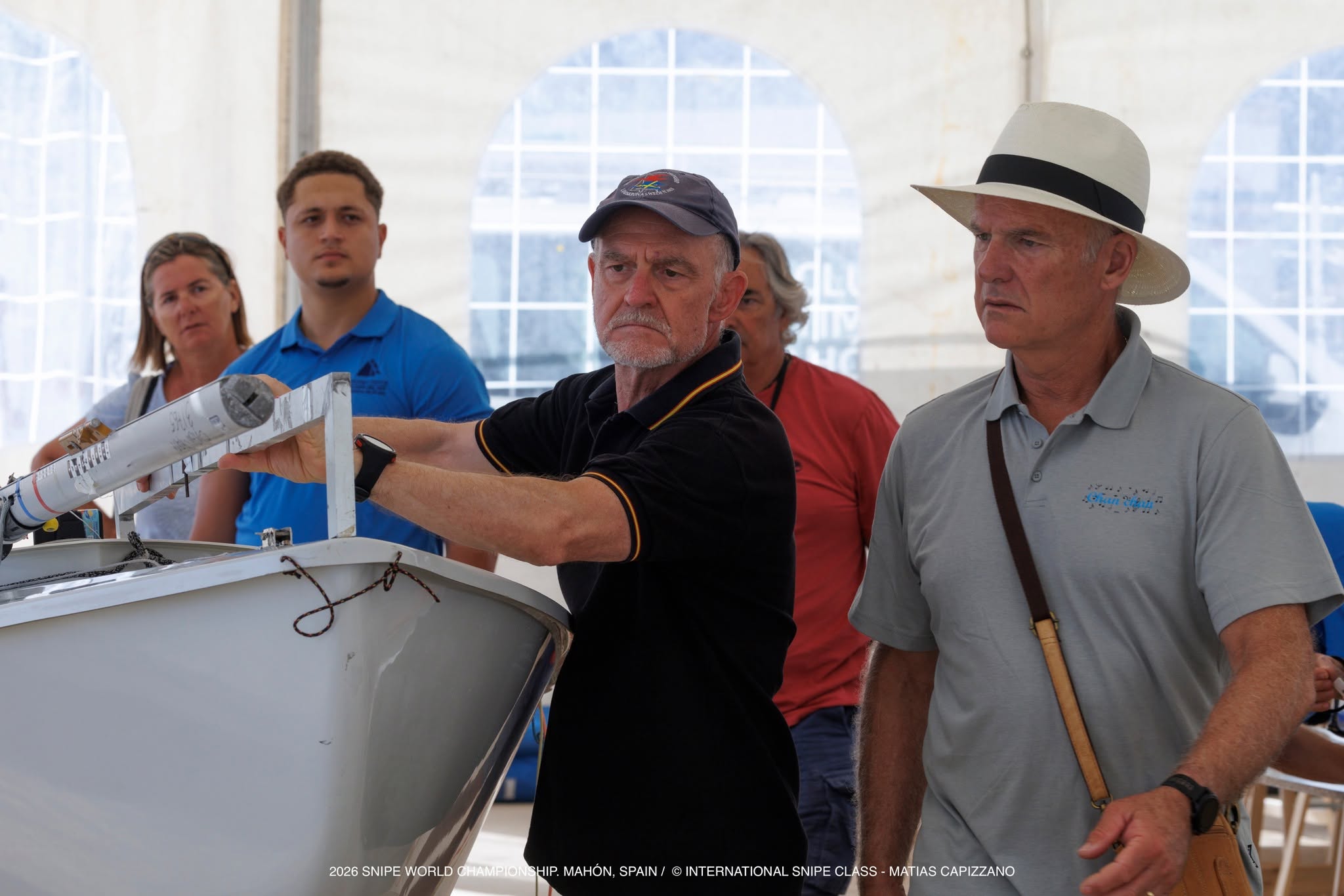
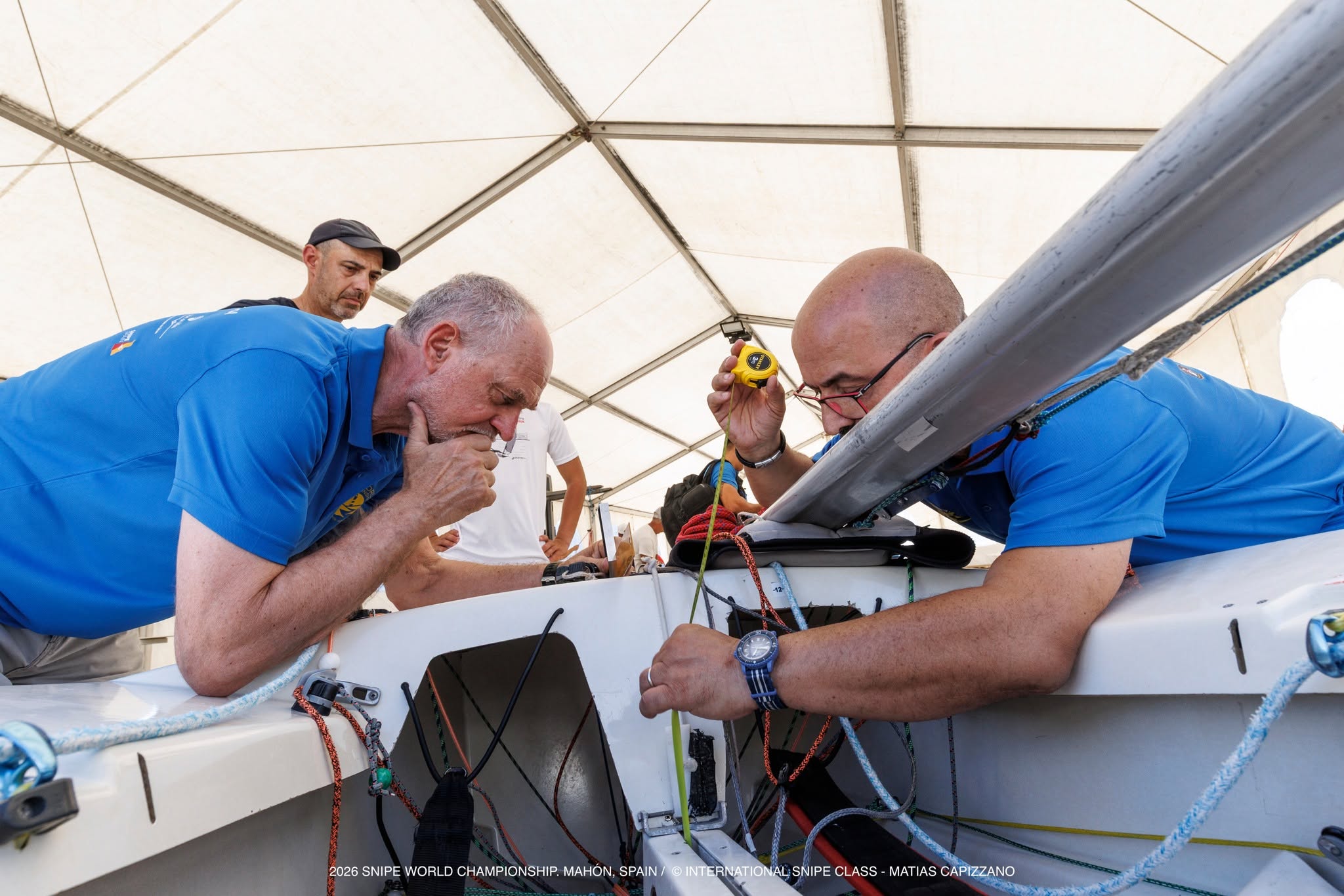
First of all, a clarification is in order: in Mahón, the inspections were carried out by Luis Gonzales, an IM and SCIRA chief measurer; Antonio Cardona, an IM and member of the WS Technical Committee; myself (as chair of the SCIRA Technical Committee); and Pepe Perez, one of the most experienced measurer worldwide, César Travado, the class’s Executive Director, assisted by two trainee Spanish measurers and other highly skilled volunteers. In total, 11 people plus the two Vakaros staff members. I believe that never before has a World Championship seen such a high-level team.
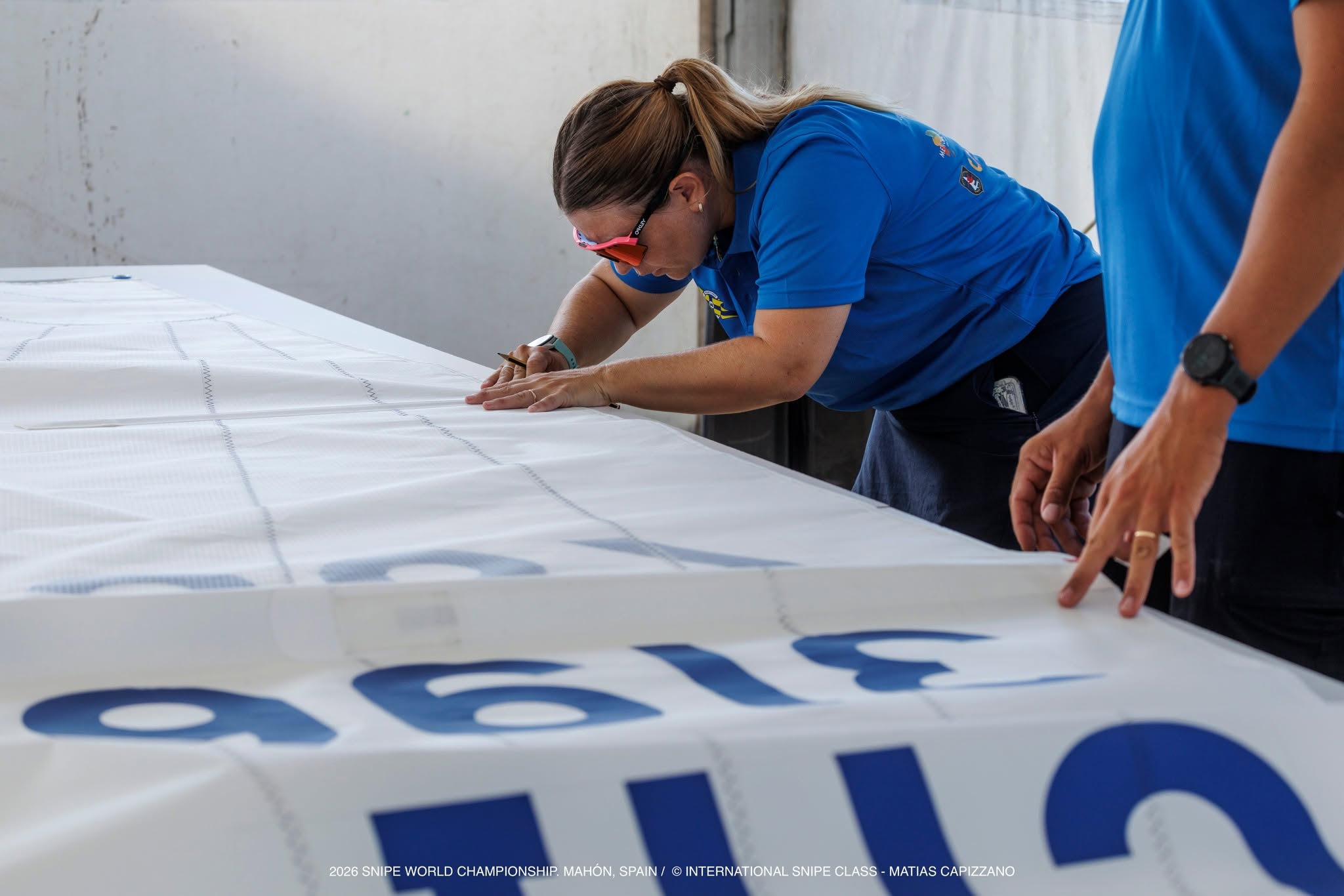
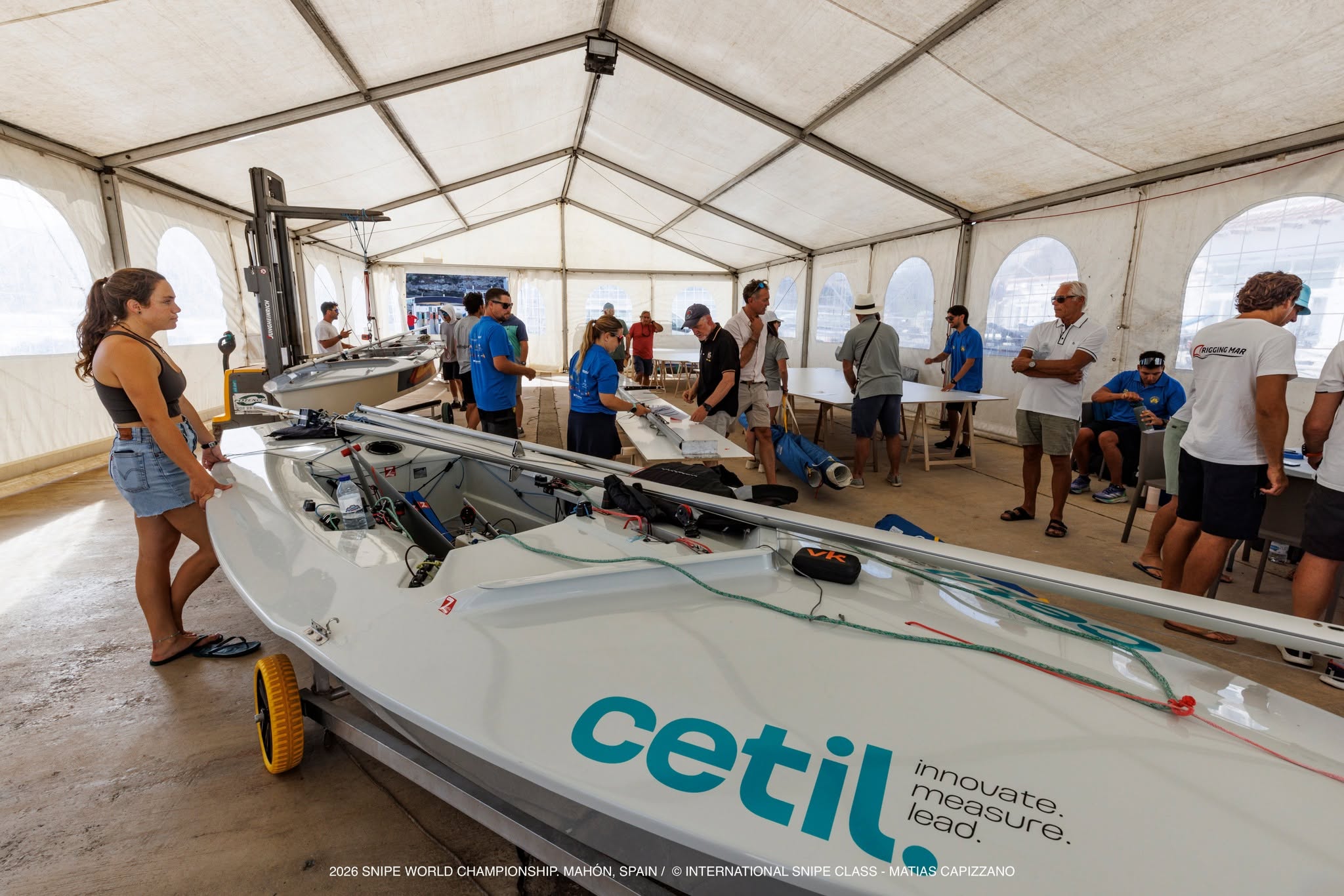
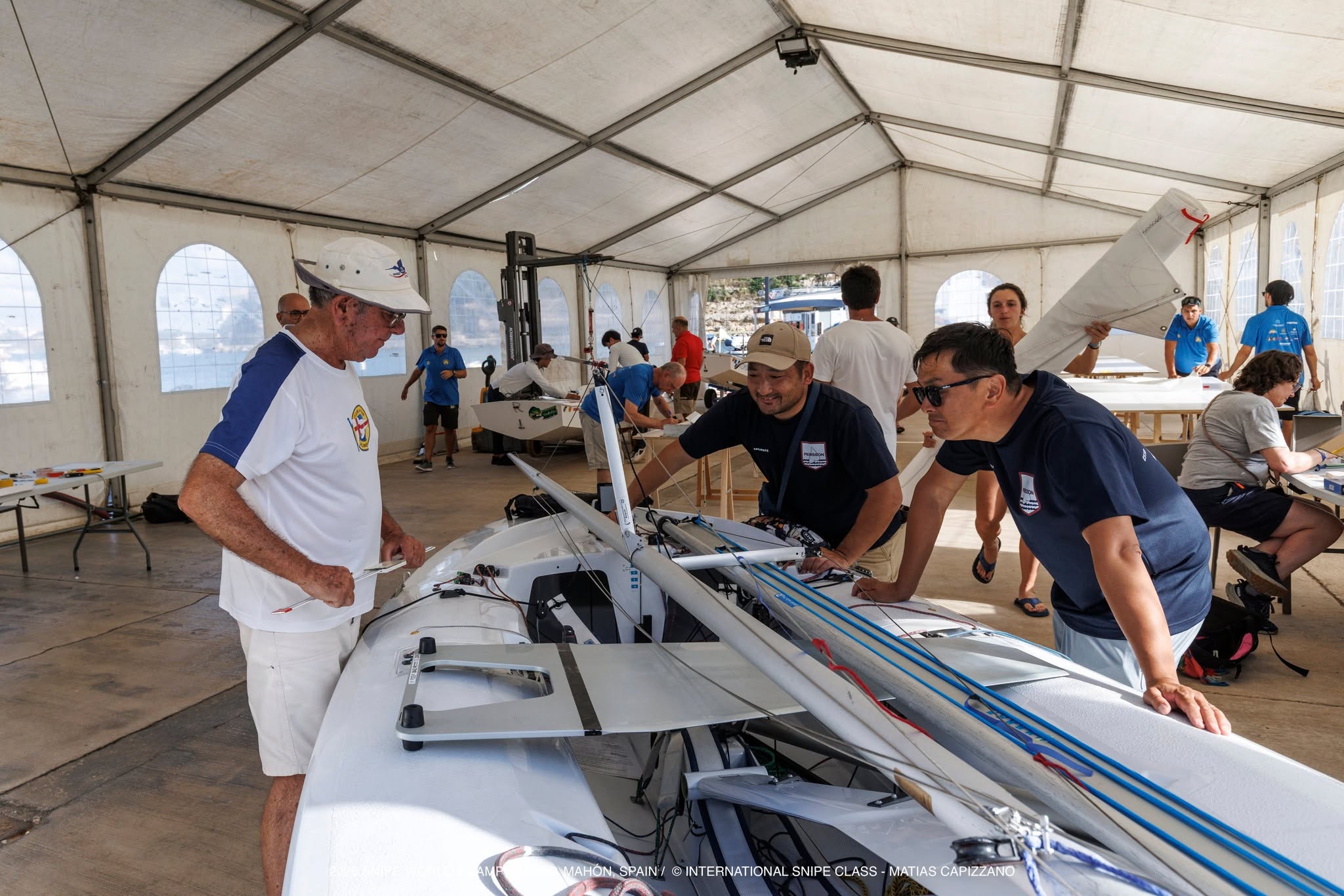
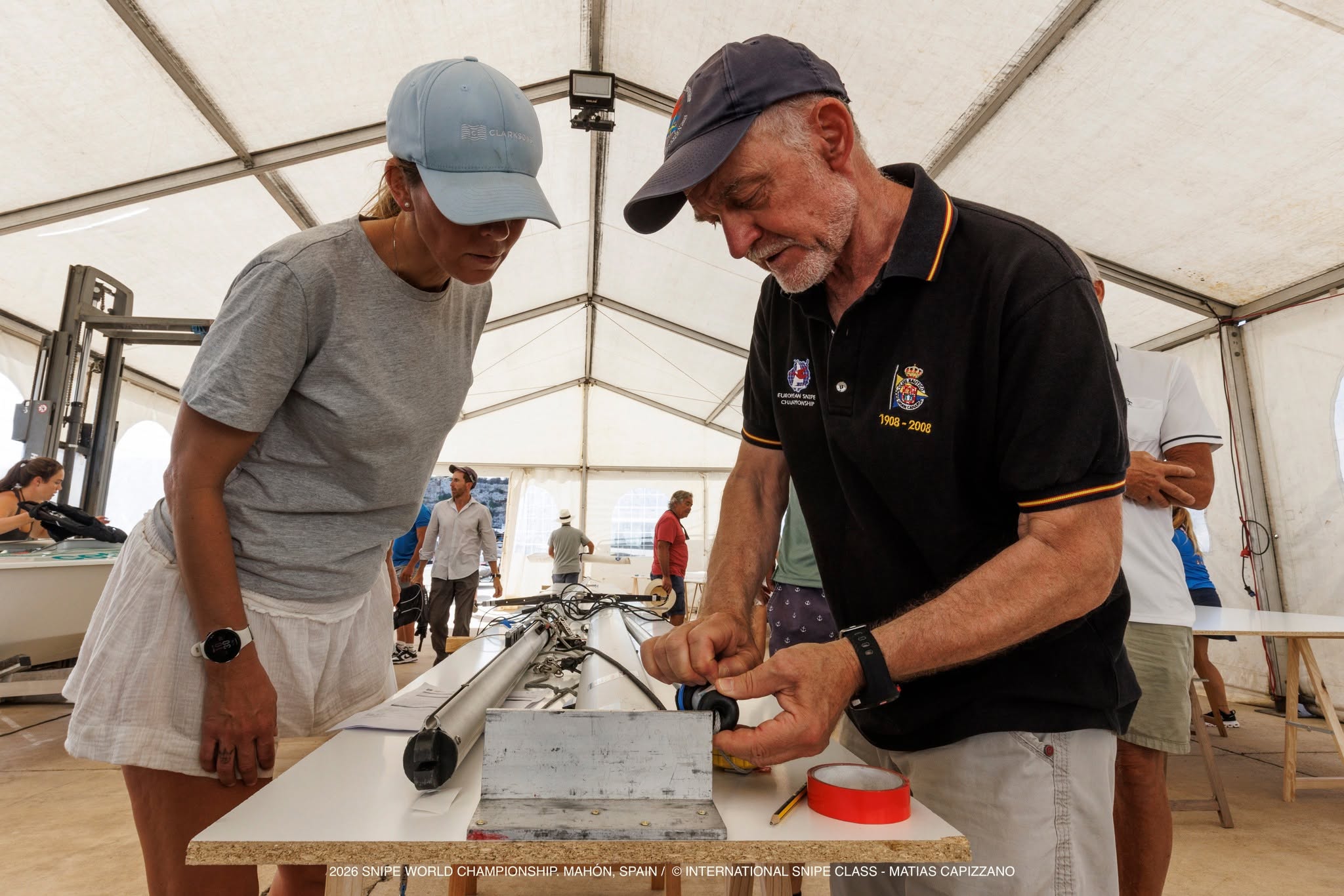
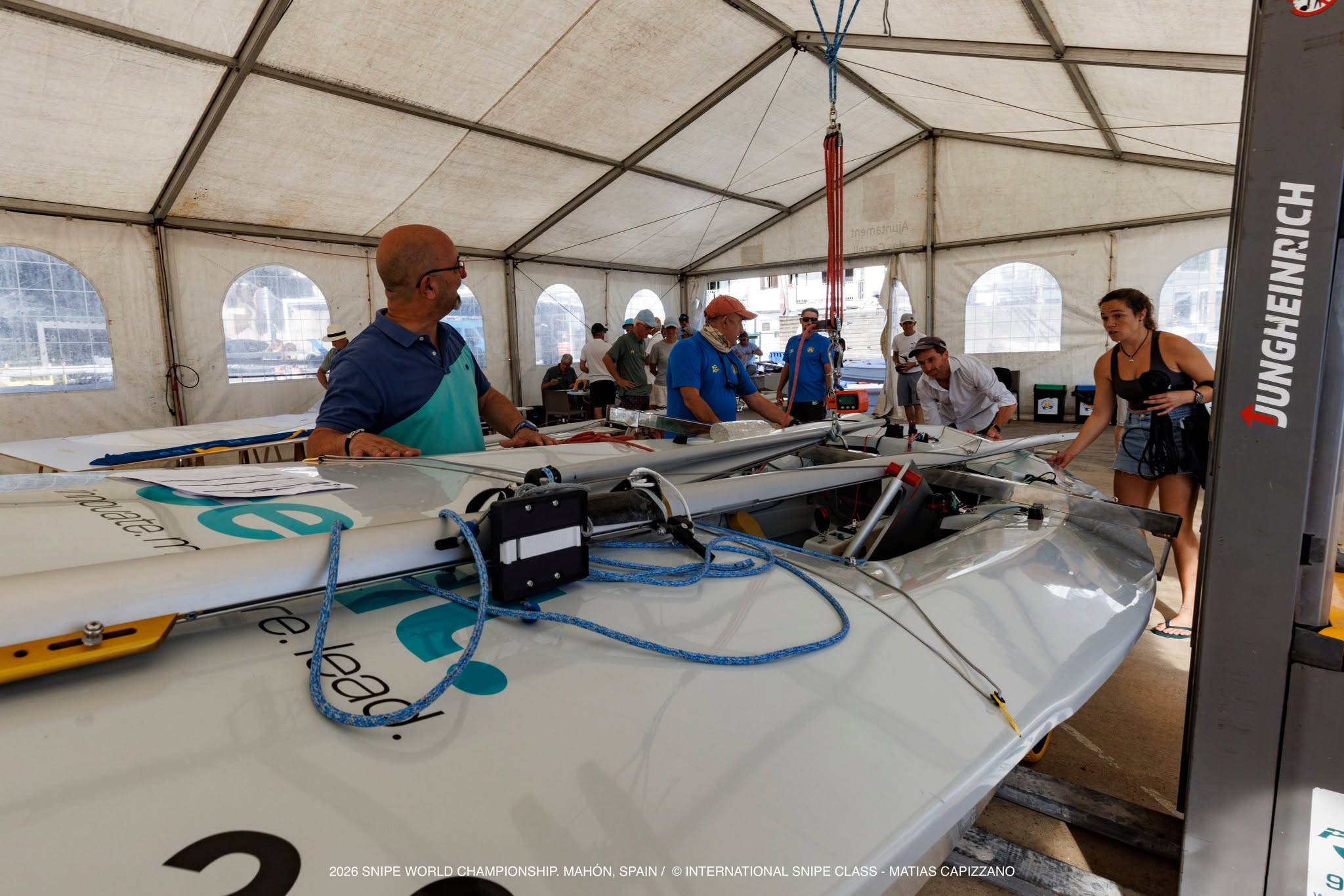
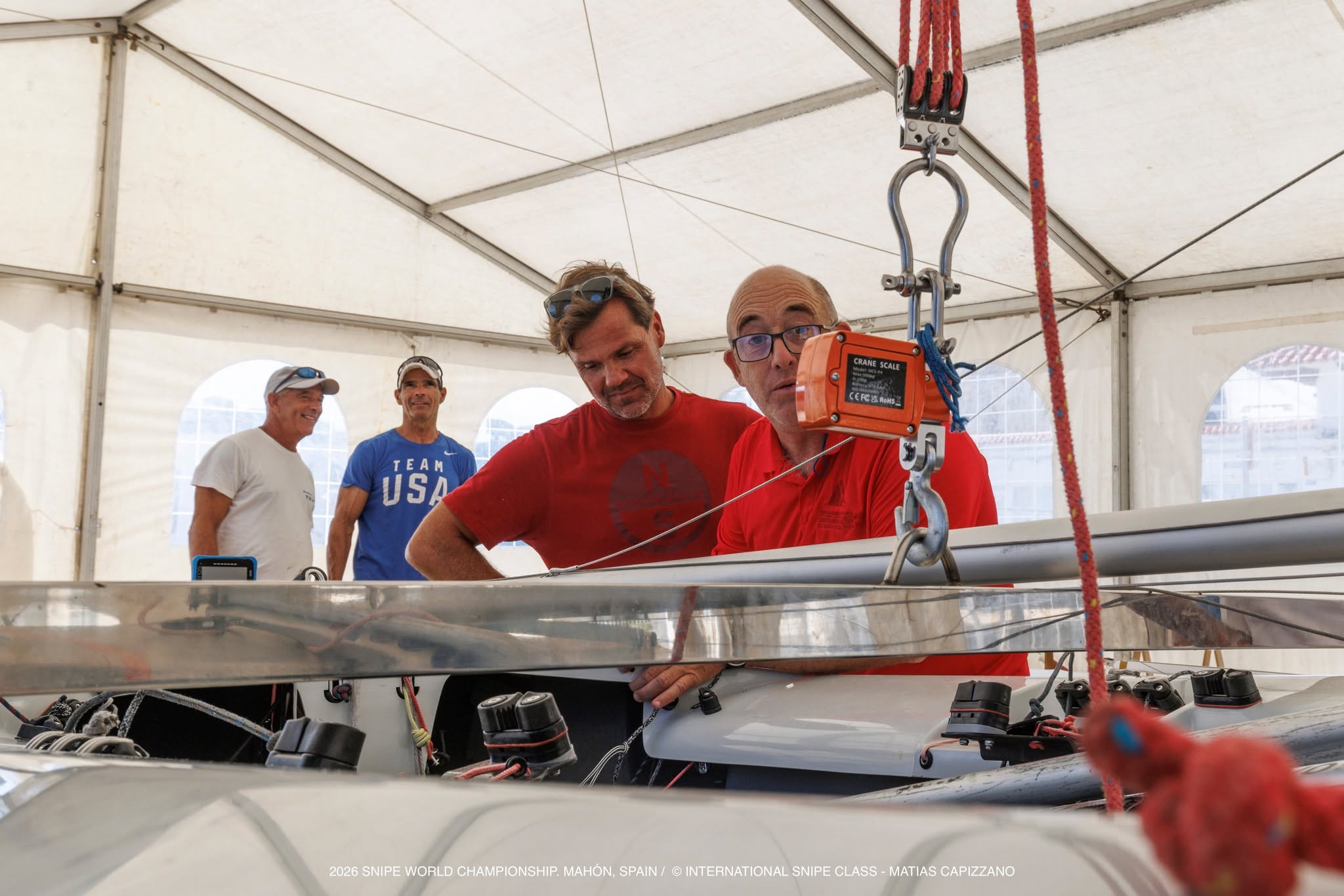
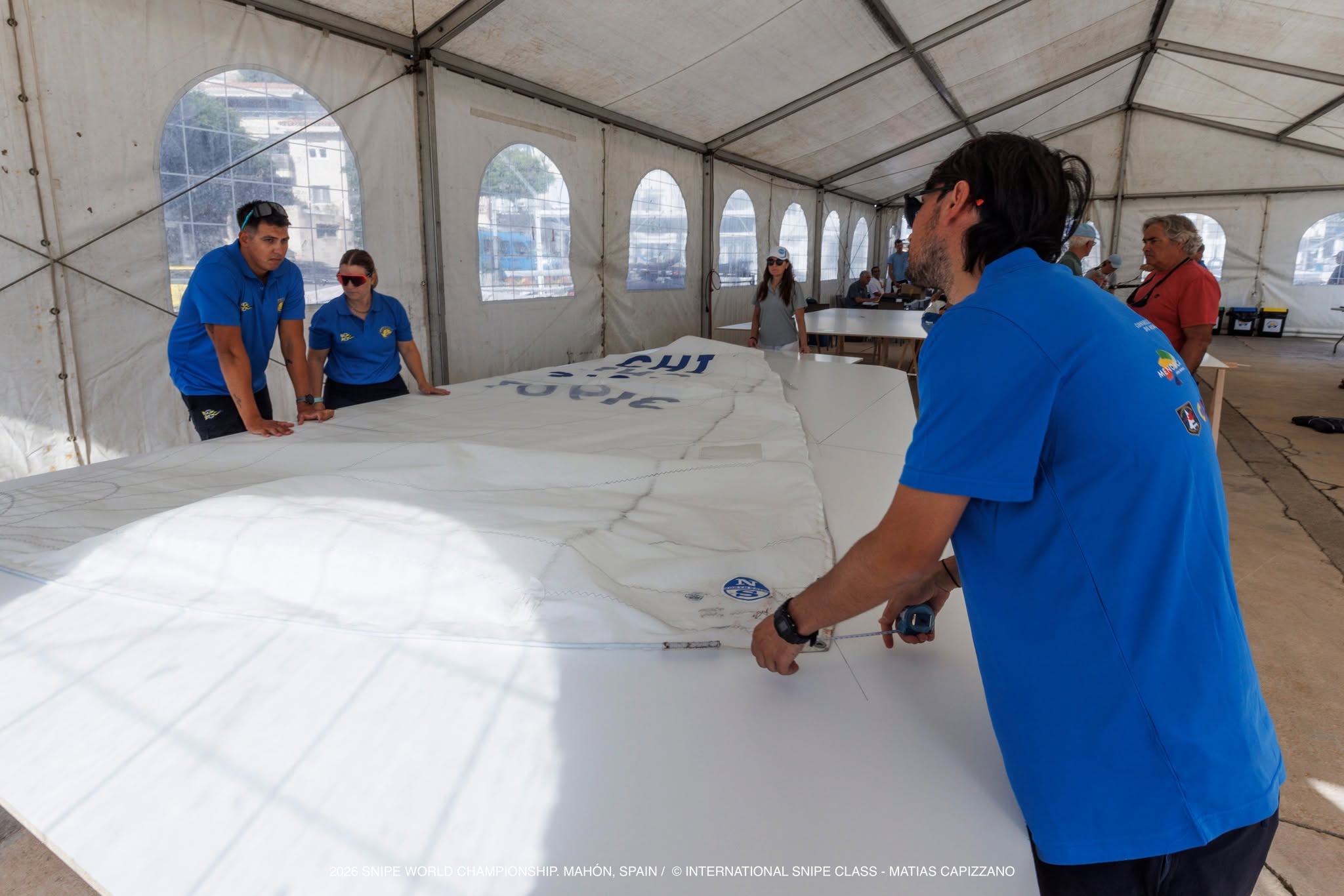
The compliance verifications (which for years now have no longer been called ‘measurement checks’) were carried out in a 250-square-metre marquee erected for the occasion, equipped with everything necessary to divide the controls into five zones: reception with documentation checks, Vakaros installation and setup, appendages and safety, antennas, weight, and sails (mainsail and jib on two separate tables). In a separate location, 30 verifications of the moment of inertia were also carried out.
Compared to my previous experience as a measurer (Rio de Janeiro 2013), there were far fewer problems: the privately-owned boats were of an excellent standard and even the chartered ones were of good or excellent quality; in addition, the class’s ED had, over the past few months, verified the validity of the certificates, had any incorrect ones rectified, and prepared all the documentation to enable the measurers to access key information about the boats at a glance and complete the checklists swiftly.
The only problem of any significance concerned the weight of the boats, which was almost always higher than that stated on the measurement certificate. For this reason, Luis allowed excess weight to be removed where significant – initially only for chartered boats, then also for privately owned ones – with the MOI being re-checked and a new measurement certificate issued. The exemption from the current Class Rules in force for this regatta – which allowed SCIRA, rather than the national secretariats, to issue the new certificates – enabled all competitors to compete on the same level from that point. It should be noted that the online procedure for completing the measurement certificate also made it possible to obtain the document and have it uploaded to the SCIRA database in only a few minutes. A huge thank you to Cesar Travado for organising all of this. (Note: if approved by WS, the new Class Rules establish that from 2027 all certificates will be issued by SCIRA).
The only other ‘job’ of any significance was re-marking most of the limit marks on the daggerboards: the current rule stipulates a clearly defined and more easily identifiable position for the strip on boats built from 2001 onwards, and only a few were already compliant.
Otherwise, it was routine work: retaining cables to be shortened, a few strips on the masts and boom to be redone, a couple of whisker poles that were too long, and little else. (Note: remember that the golden bands used on the standard silver anodisation are no longer accepted, either by WS and the Class).
A particular point concerns a practice that is becoming popular in some countries. On the most common boats in Europe (whether Persson, Zeltic, DB or MAS), some crews loosen or even remove the screws securing the carter to the daggerboard case and the hull, to make the boat ‘softer’ in strong winds. Commenting on this choice would require a lengthy treatise. Here I’ll simply emphasise that the practice of loosening or removing the screws securing the carter will be banned from 2027. (Note: the new rule will come into effect after the WS approval).
Once the preliminary checks are complete, the measurers do not take a break, but head out to sea for after races inspections. These essentially focus on ensuring the daggerboard is correctly positioned downwind and on safety checks at the end of the races (tow line, paddle, daggerboard security line and rudder safety – lifejackets were always compulsory, so no further checks were required beyond the pre-race inspection). Also, pre race controls were carried out to verify the stickers certifying sails, rig and appendages.
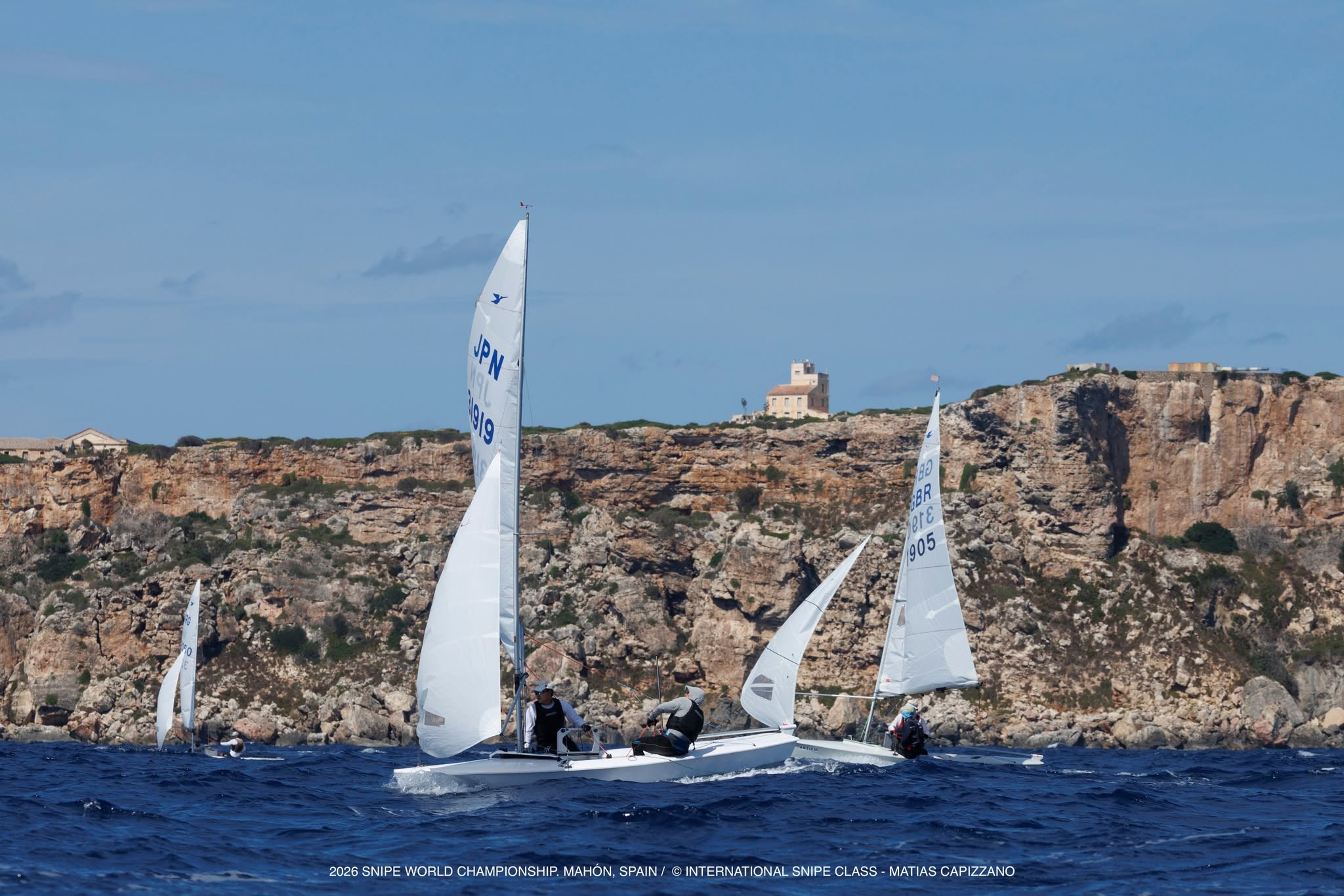
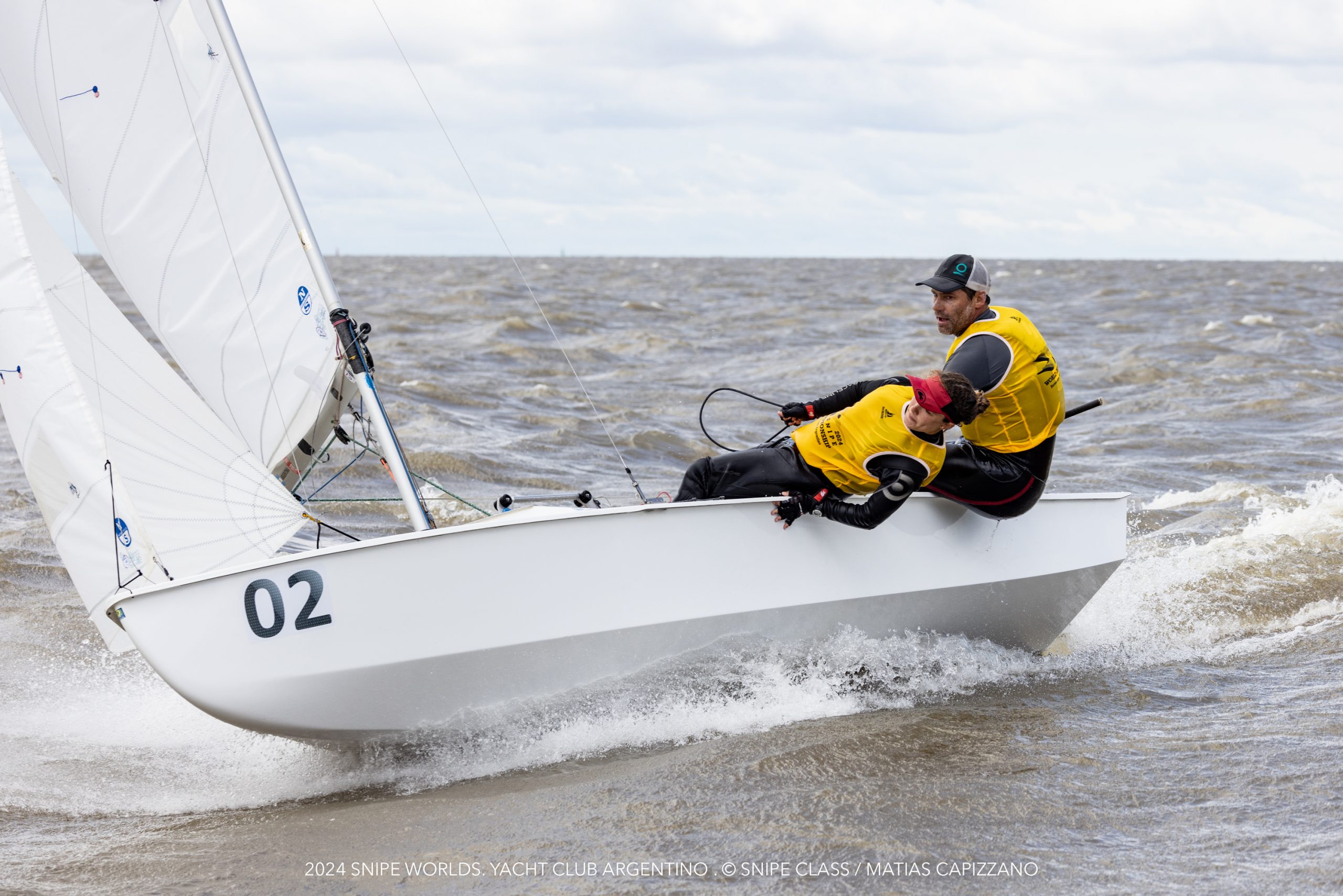
Apart from the heat on the second and third days – no wind and only one race sailed – the first day was quite challenging, with 17–22 knots and breaking waves of up to 2.5 metres. It was a damp day on the rib, but I’m convinced it was worse on the committee boat or the Snipes. No downwind legs, of course, but long runs during which almost no one raised the centreboard to its maximum height. There were, however, plenty of bent masts and spinnaker poles, and quite a few broken rudder fittings. This led to requests for replacements and further checks lasting until the evening to approve the new parts.
The last two days were more straightforward, with three races held each day, in moderate wind conditions (8 to 14 knots) and with a nice, formed swell. The only anomaly was that some competitors had their daggerboards set a little too high, though this was honestly difficult to assess on the water and was therefore presumably less than the height of the strip.
A final point should be made regarding the Vakaros. Currently, the class only authorises its use at the organisers’ request, subject to specific conditions set out in the Class Rules, and with its functions restricted to those permitted.
In this regatta, the OCS warning, finish, timer and course were permitted. The start time was provided by the Race Committee. Online, it was possible to follow the regatta via GPS tracking, speed, heel angle and other useful information.
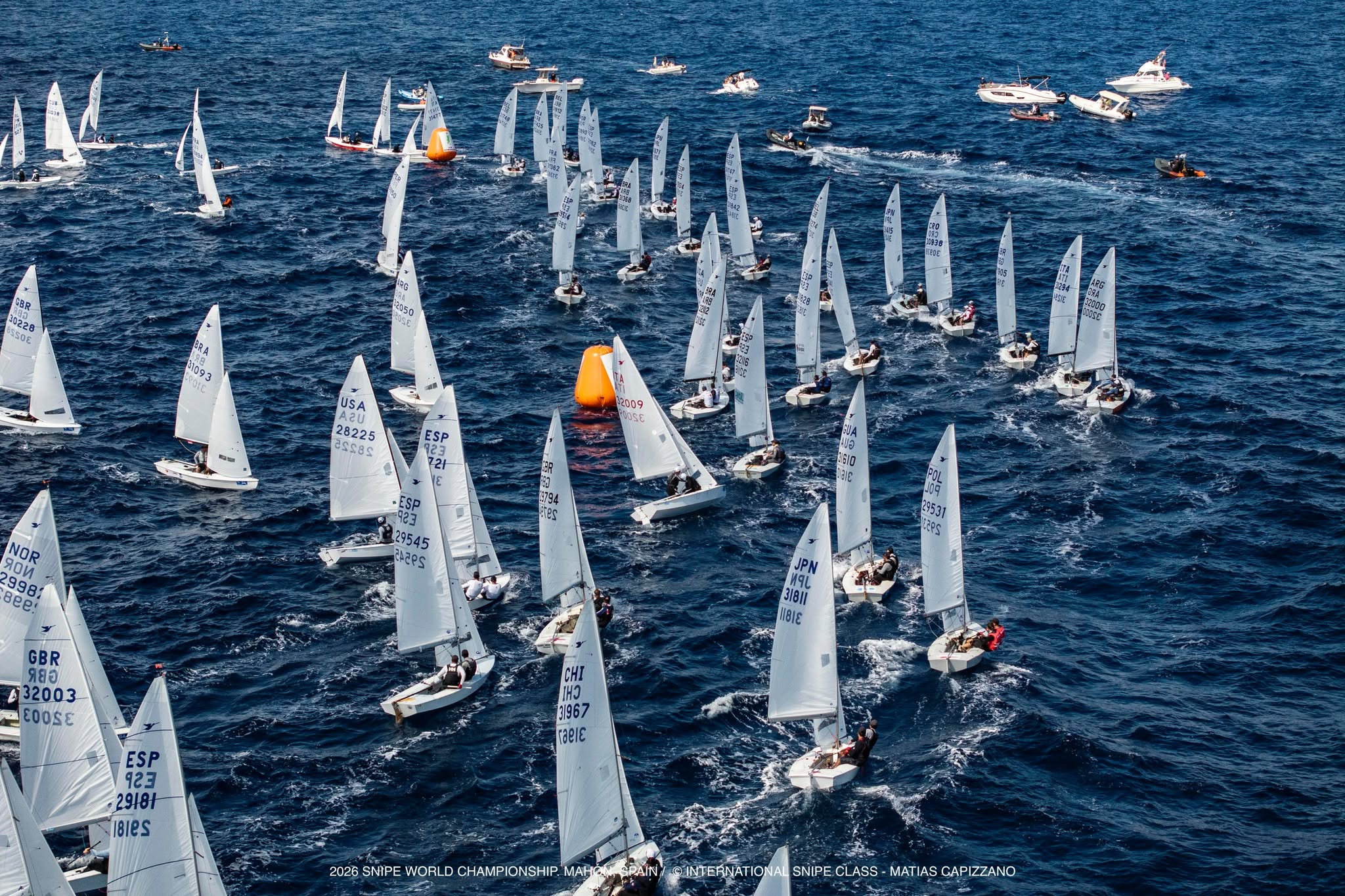
With 88 boats at the start, a starting line over 600 metres long and at times challenging conditions, there were no general recalls and the results were available online just a few minutes after the finish. Without the Vakaros, it would all have been much more complicated.
All this came at a considerable cost, both for the organisers and for the competitors. But in my view, for regattas of this calibre – which are very costly (for everyone) and attract so many competitors – it was certainly a justified expense.
It should be noted, however, that without the approval of the SCIRA Technical Committee, the use of the Vakaros (or any similar systems that may be marketed in the future) is prohibited in any Snipe regatta. Therefore, the Vakaros cannot be used in place of a traditional digital compass.
Leave a reply
Your email address will not be published. Your comment will be revised by the site if needed.
0 comments