
Collision with Damage
If you may have serious damage or injury, know all the steps you must take to file a valid protest so you have the PC decision for your insurance carrier when you get your boat repaired
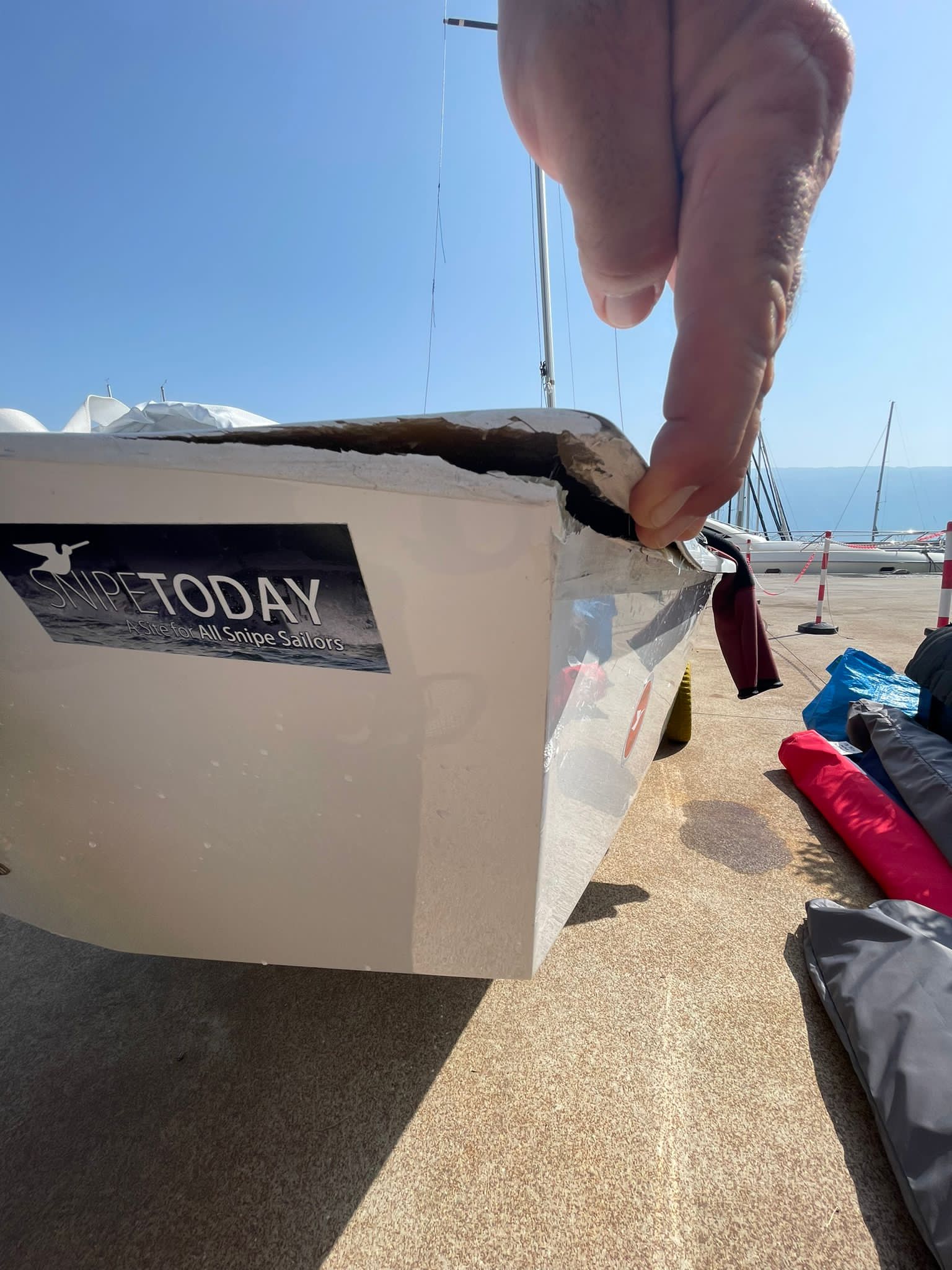
From the RRS 68 newsletter, which provides the latest news from the US Sailing Judges Committee
Sailors: Did you have a collision with damage? You need a protest hearing, especially if there is serious damage or injury.
Many insurance companies want to see the protest committee’s decision on who broke the rules and is at fault. If the damage is likely to involve an insurance claim, it is important to obtain a good protest hearing and a good written decision.
Dick Rose wrote an article in Sailing World magazine many years ago stating that the protest committee, as the rules experts, should determine what happened on the water and apply the rules, not the courts. This is still true today.
Before you race: You may not like protesting, but you need to know how to protest on the water and where to find your red protest flag if your boat is over 6 meters long.
On the water: It is essential that you protest on the water whenever there is a collision. You must follow the procedures in rule 60.2 and notify the RC when finishing if the sailing instructions so state. In short: hail protest, fly the protest flag (boat over 6 meters), notify the RC. Know if the sailing instructions require notifying the race committee after finishing.
On shore: First thing, look up the protest time limit in the sailing instructions. Then file a written protest before the time limit. Rule 60.3 requires the protest to identify the protestor, the protestee, and the incident. You don’t need a lot of extra detail – the incident description needs only to be sufficient that the other boat and the protest committee know what the protest is about. Double-check that the boats, race number, and day are all correct.
Note: You want a hearing to be held, and you can have a valid protest heard, even if one or both boats took a penalty (retiring, turns, scoring, or other post-race penalties before the hearing). Make sure you have photos of the damage and, if possible, an estimate of repair costs for the hearing, so the protest committee has adequate information to make their decision.
After racing, you may realize the damage is much more extensive than you thought on the water, even if you continued racing with little performance impact. And we all know repairs cost more than we expect.
An insurance broker told us, “Insurance carriers often ask for a report from the protest committee or police stating who was at fault. Police reports rarely state who is at fault. If you don’t have a protest decision, the boat owner’s insurance company is left paying out on the claim with no real recourse of going to the other boat’s carrier, and then either raises the boat owner’s premium or drops him.”
The competitor should file the protest as stated above. If you (the boat involved in the collision) failed to file a protest, you may still have a remedy, but it depends on the protest committee. Talk to the protest committee (chair). If they learn of serious damage or injury, even after the protest time limit, they can file a protest against both boats and hear the protest (see rule 60.4(c)(1). But it is their decision to file, not yours.
Finally, if your boat has been physically damaged, or a crew member injured, by a boat that was required to keep clear and has taken a penalty or has been penalized by the protest committee, you may be eligible for redress as well (see rule 61.4(b)(2) or (3)).
Protest Committee (PC): When there is damage, the PC is encouraged to hear the protest and prepare a clear and complete decision. If injury or serious damage may exist, ensure the PC has experienced judges. It may make sense to delay the hearing to allow time to gather damage information. Serious damage is discussed in WS Case 141.
PC filed protest: If the PC learns of an incident involving a boat that may have resulted in injury or serious damage, rule 60.4(c)(1) allows the PC to protest both boats. Rule 60.4(c) says that the validity requirements in Rule 60.4(b) do not apply to a protest from the PC. So the PC can learn of the possible injury or serious damage from any source, including a boat with a conflict of interest, an invalid protest, a boat in the collision, or hearing about it in the parking lot, even after the protest time limit.
The PC can then file a protest against both boats, as provided in Rule 60.4(c)(1). A PC can decide there is a good reason to extend the protest time limit if they are protesting under 60.4(c)(1), (2) or (3).
The US Sailing Prescription for rule 65.1(b) states: “A protest committee shall find facts and make decisions only in compliance with the rules. No protest committee or US Sailing appeal authority shall adjudicate any claim for monetary damages. Such a claim is subject to the jurisdiction of the courts.” While this means the PC does not decide who directly pays, the PC is involved because it determines what happened and which boat(s) violated The Racing Rules of Sailing. As Dick Rose said in his article, we want the PC to decide what happened on the water, not the courts.
Note: This article is the short version, and some nuances are not covered. The more extended version will likely be on the Judges’ page in the future. Additional information is available in Dave Perry’s Understanding the Racing Rules of Sailing through 2028. It is available from the US Sailing bookstore or through the US Sailing Racing Rules app.
Conclusion: If you may have serious damage or injury, know all the steps you must take to file a valid protest so you have the PC decision for your insurance carrier when you get your boat repaired.
This report comes from Wayne Balsiger, Chair, Race Administration Committee, with input from Dave Perry, Peter Wilson, Sandy Grosvenor, and Rob Overton.
Leave a reply
Your email address will not be published. Your comment will be revised by the site if needed.
0 comments