
Hiking!
An effective hiking position is one of the most important factors for boat speed.
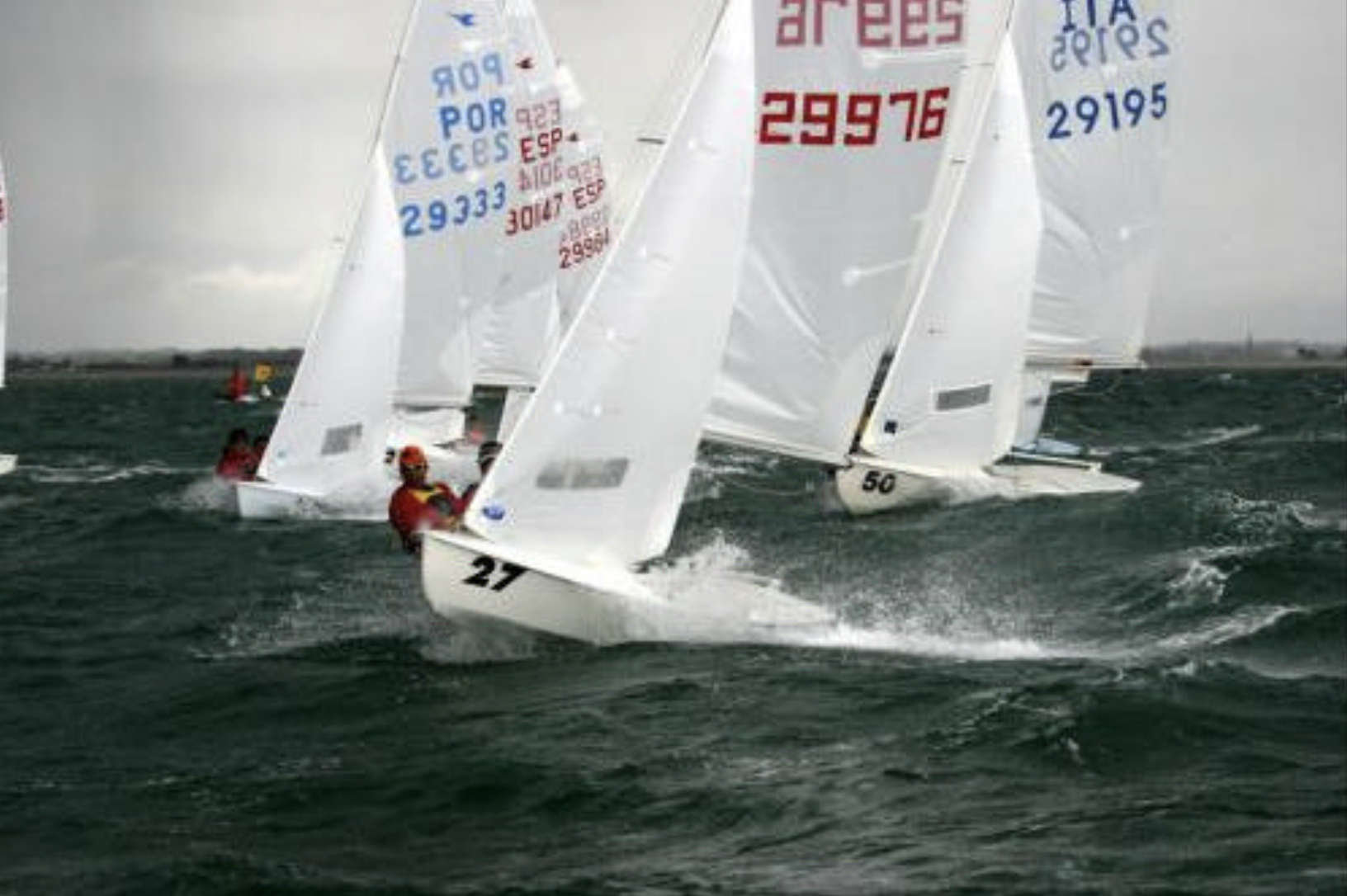
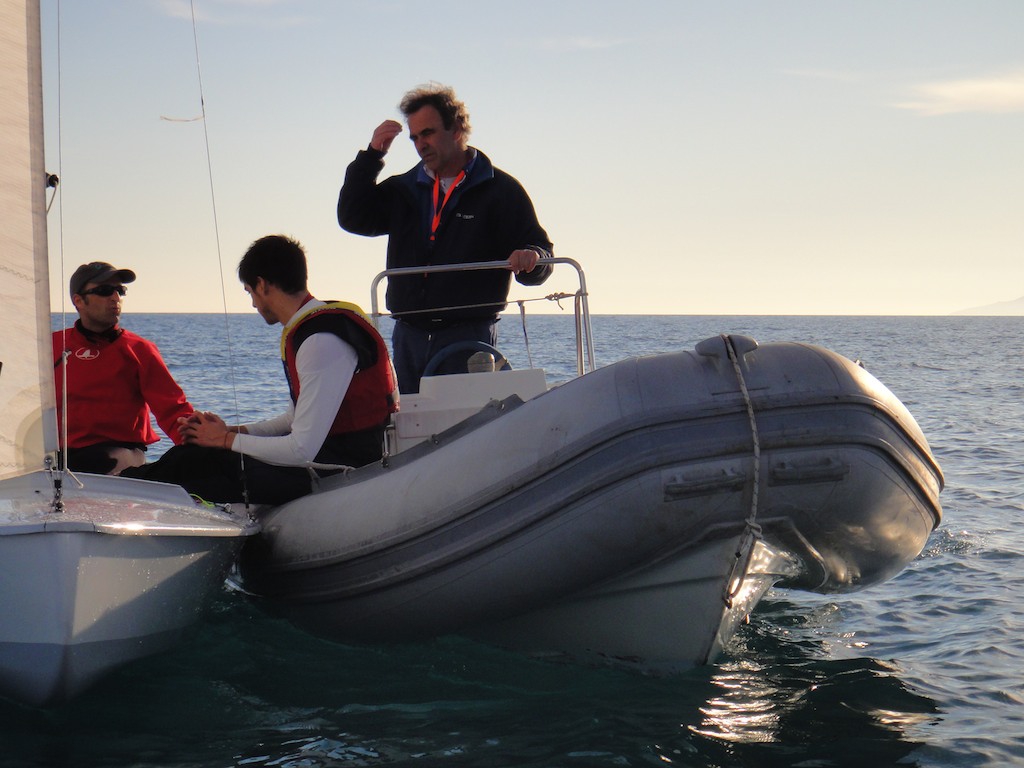
Main photo: Enrico and Franco Solerio at the 2004 Snipe Europeans in Larmor Plage, France
(Originally published on snipe.it in 2006)
For dinghies without a trapeze, an effective hiking position is one of the most important factors for boat speed. Proper hiking technique guarantees a greater righting moment on one hand, and better control of the boat through body movement—across waves and gusts—on the other.
Perhaps the first sailor to fully understand the importance of hiking was Paul Elvström. When it was too cold to go out to sea, he would train at home, spending long periods in position on a bench. Thanks in part to this athletic preparation, his upwind speed in heavy air was unrivaled!
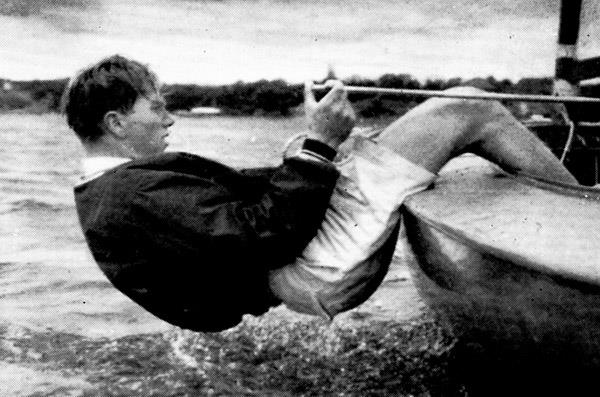
Above: Paul Elvström
What factors ensure a greater righting moment and, therefore, more speed?
- a) The weight of the sailor, including the weight of their clothing.
- b) The height of the sailor.
These two elements allow the righting moment to be calculated with a mathematical formula (it was available at philsfoils.com – see the explanation at the bottom of this article), provided the following equally important factors are also considered:
- c) The strength and endurance of the quadriceps femoris and other involved muscles (tibialis, iliopsoas, abdominals).
- d) The adjustment of the hiking strap length.
It is clear that the maximum righting moment is obtained by moving the body and center of gravity as far outboard as possible. To achieve this, however, muscular strength, endurance, and good aerobic capacity are required.

Practical Considerations and Advice
- Muscle fatigue: Static (isometric) muscle contraction is very taxing. Studies show that muscles fatigue after 5 minutes of isometric effort (Michael Blackburn, Sail Fit, 1997). However, overall endurance can be extended by training and improving recovery times. Even brief recovery periods reduce muscle tension and allow for blood circulation. This naturally happens on the boat because, unlike a gym bench, the body moves with waves and tacks, allowing for small adjustments and brief recovery periods.
- Training: Being fit also means understanding your fatigue limit and pacing yourself to avoid “burning out” before the finish line. Training on a purpose-built “hiking bench” is excellent for increasing resistance—especially since hiking at sea feels easier by comparison. Weight training and aerobic sports (cycling, running, cross-country skiing) are also highly beneficial.
- Clothing: Good hiking pants (padded or battened) are essential. Neoprene wetsuits with integrated battens are preferred over straps/buckles, as they don’t shift and they transmit force directly to the boat. They prevent the gunwale from compressing the thigh (which inhibits circulation) and allow you to hike further out. Neoprene boots help keep the foot flexed. Some sailors, particularly Brazilians, prefer to go barefoot, sometimes using elastic wraps to prevent the strap from chafing the instep and ankle.
- Hiking Straps: Wide, padded straps are ideal. Avoid applying neoprene tubes, as they often rotate and roll up.
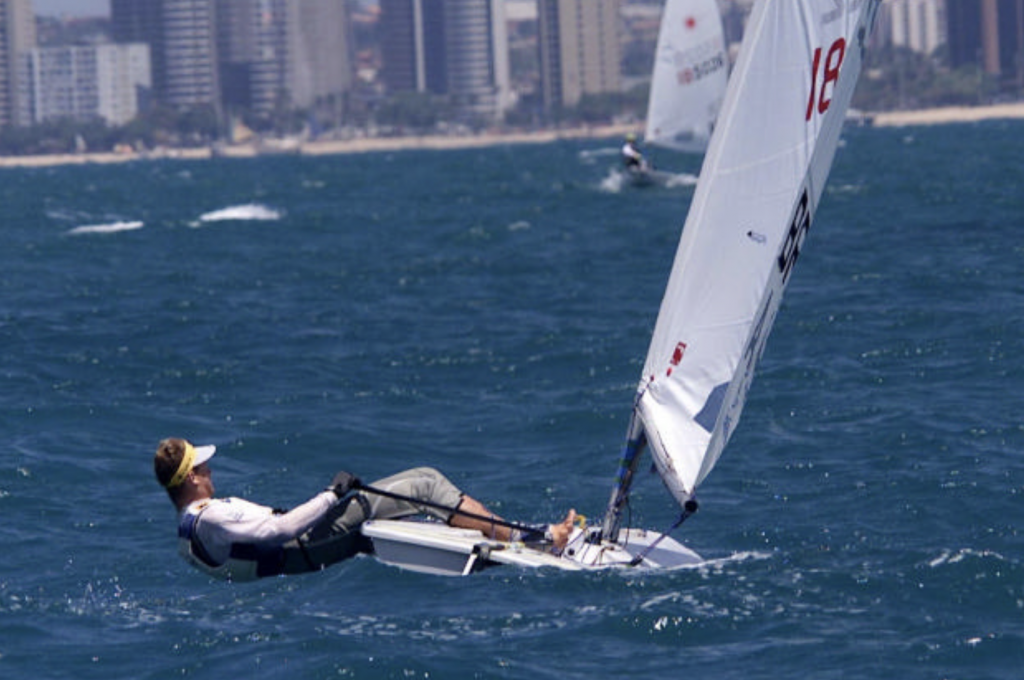
Below: Robert Scheidt at the 2005 Laser Worlds in Fortaleza, Brazil
Hiking Positions: Two Schools of Thought
Laser sailors pay close attention to hiking position and strap length because the boat is a strict one-design where everything is equal; thus, body movement and strength drastically influence speed.
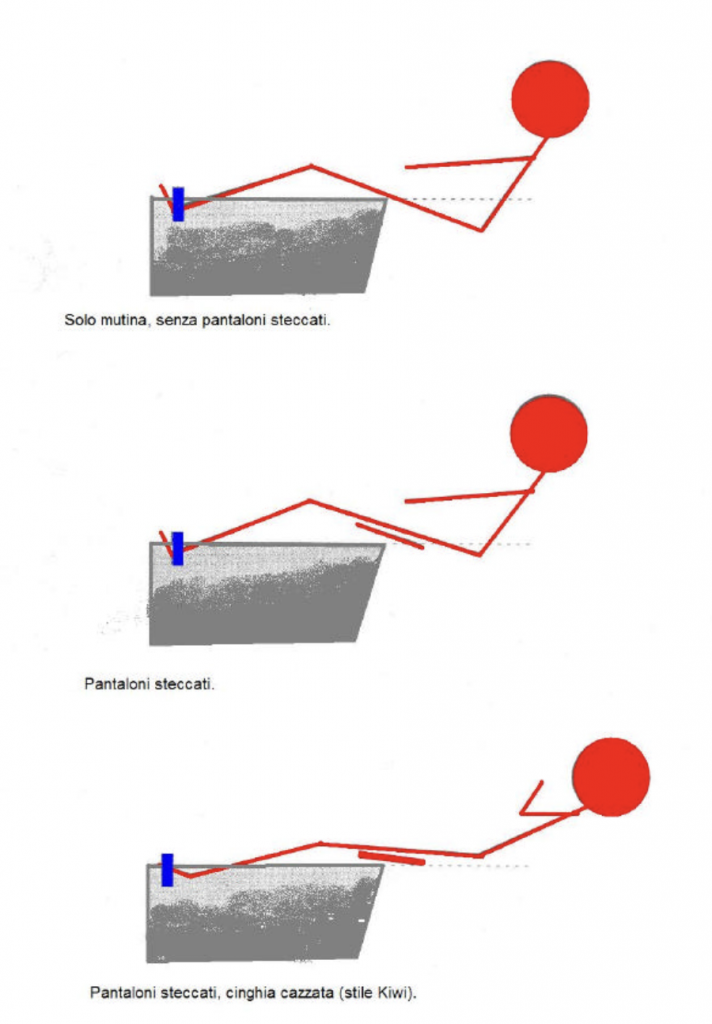
- The “Kiwi” Technique: Developed by New Zealanders in the 90s (Nick Burfoot, Hamish Pepper), this involves very tight straps and placing the feet under the straps near the toes (“off the toes”). The legs are kept straight, and the torso is flat over the water. This results in greater leverage but is very taxing and can cause issues for tendons and ligaments in the ankles, knees, and hips if not adopted gradually. A benefit is that it keeps the sailor’s backside out of the water and reduces the need to constantly adjust straps as wind varies.
- The “Agile” Technique: Used by sailors like Ben Ainslie, this is a less extreme position with longer straps and slightly more pronounced angles at the knees and hips. Ainslie suggests adjusting strap length in the water to find the most effective balance where there is equal pressure on the calf and thigh. If the strap is too loose, your knees end up “in the sky”; if too tight, there is too much pressure on the ankles.
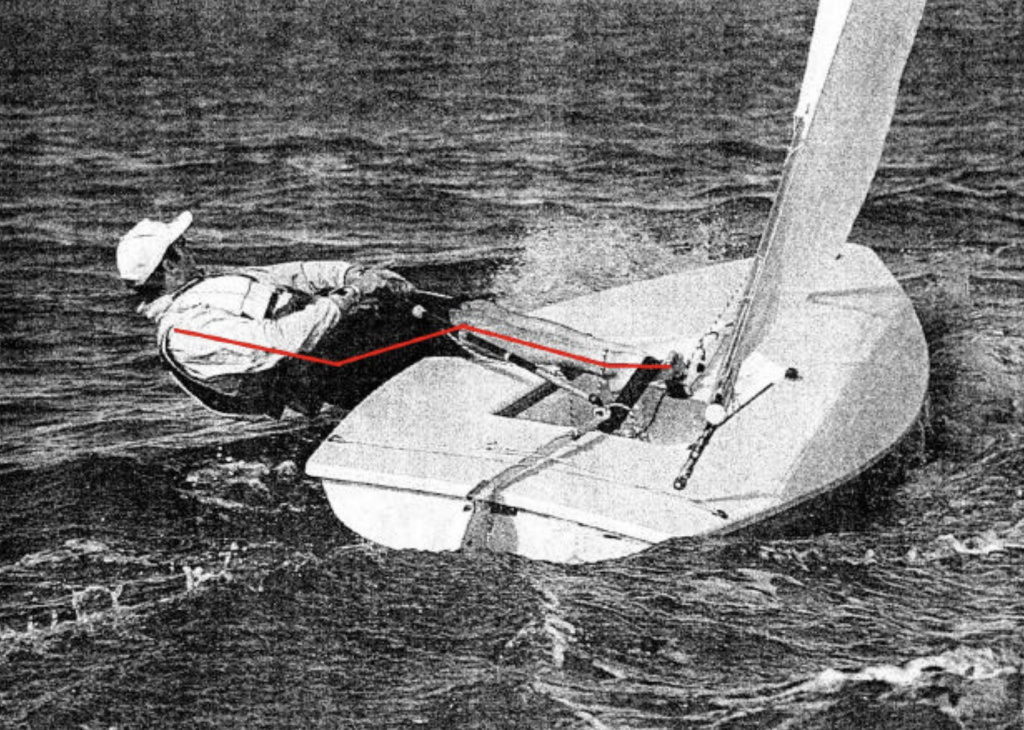
Above: Australian Michael Blackburn adopting “Kiwi” technique (photo by Bob Ross)
Application to the Snipe
For the Snipe, the deck shape is different, and the sailor is often not an Laser Olympic athlete standing 1.80×80. However, the principles remain the same.
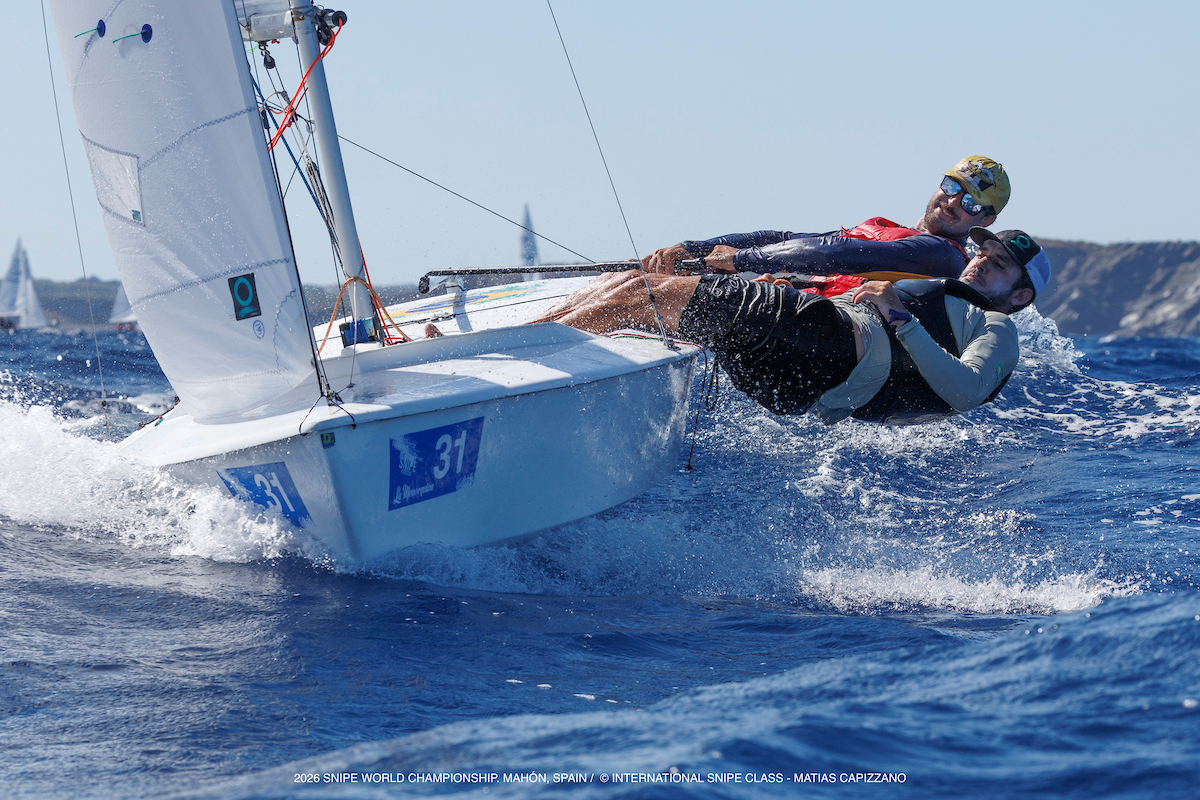
- Proper length: The correct strap length allows the hips to move as far outboard as possible. If straps are too loose, the hips drop, and your backside ends up in the water, which fails to utilize the quadriceps and overloads the knee ligaments.
- Agility: Correct length allows you to raise and lower your torso during gusts and lulls.
- Foot placement: Avoid keeping feet wide apart; this indicates you aren’t applying force to the straps. When hiking correctly, feet tend to move toward each other.
- Pacing: The “right” position is the one that allows you to finish the last beat of the last race. If you aren’t super-fit, pace your strength. Avoid “absurd” positions like having your backside only a few centimeters out while your torso is horizontal.
- Final tip: Your quadriceps are stronger than your abdominals—use them! Lengthen the straps, get your backside out, and put those hiking battens to work!
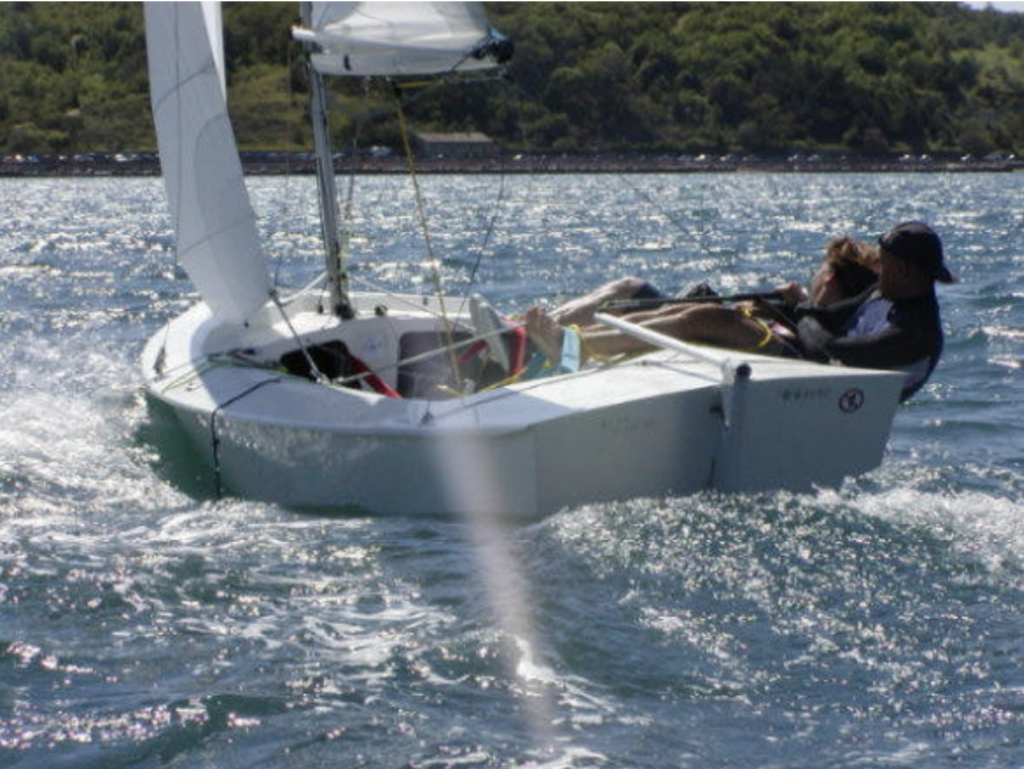
In the photo below, 470 Olympian and 2001 Snipe World Champion Alexandre Paradeda, pictured here with Ortenzia Caselli, demonstrates a perfect hiking position (Muggia, Italy, 2003).
Below: First drawing: hiking pants; second drawing: with hiking pants; third drawing: ‘Straight legs,’ ‘Kiwi’ technique.
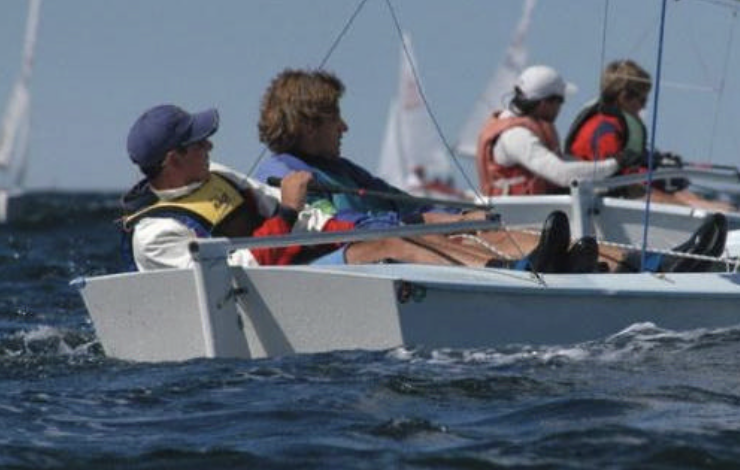
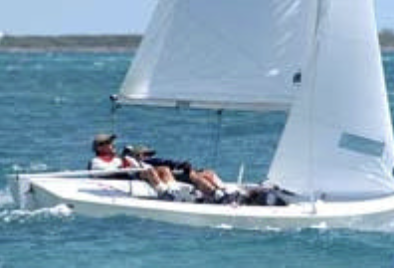
In the photo above Paolo Tomsic and Andrej Mocilnik, and below Augie Diaz and Jon Rogers (2003 Snipe Worlds in Landskrona, Sweden – photos by Bill Welch).
Further Reading:
- Sail Fit: Sailing Fitness and Training, Michael Blackburn (1997).
- The Laser Campaign Manual, Ben Ainslie (2002).
- Mental & Physical Fitness for Sailing, Alan Beggs et al. (1993) .
Righting Moment Calculation (Hiking)
The Righting Moment (RM) is the torque generated by the sailor to counteract the heeling force of the wind on the sails. When hiking with straps, your body acts as a lever. The RM is calculated by multiplying your Weight by the Horizontal Distance (leverage) between your Center of Gravity (CG) and the boat’s centerline.
The Formula Applied:

- W (Weight): Sailor’s body mass in kg.
- B (Beam): The width of the boat in meters (calculated at the hiking point). For this table, a standard 1.50m beam is used.
- H (Height): Total height of the sailor in meters.
- 0.4 (CG Factor): This constant represents the distance from the feet to the human Center of Gravity in a horizontal “full hiking” position (approx. 40% of total height).
Righting Moment Reference Table (kg·m)
Based on a boat beam of 1.50m. Values expressed in kg·m.
| Weight \ Height | 160 cm | 170 cm | 180 cm | 190 cm | 200 cm |
| 50 kg | 69.5 | 71.5 | 73.5 | 75.5 | 77.5 |
| 60 kg | 83.4 | 85.8 | 88.2 | 90.6 | 93.0 |
| 70 kg | 97.3 | 100.1 | 102.9 | 105.7 | 108.5 |
| 80 kg | 111.2 | 114.4 | 117.6 | 120.8 | 124.0 |
| 90 kg | 125.1 | 128.7 | 132.3 | 135.9 | 139.5 |
| 100 kg | 139.0 | 143.0 | 147.0 | 151.0 | 155.0 |
Text in Italian
Comments for this post are closed
0 comments