
Understanding the Snipe Class: Boatbuilders
Unlike many recent classes, the Snipe is an International Class with rules that are "open" to construction. Potentially, anyone can build a Snipe—including a private individual—provided they strictly adhere to the Class Rules and the official plans.
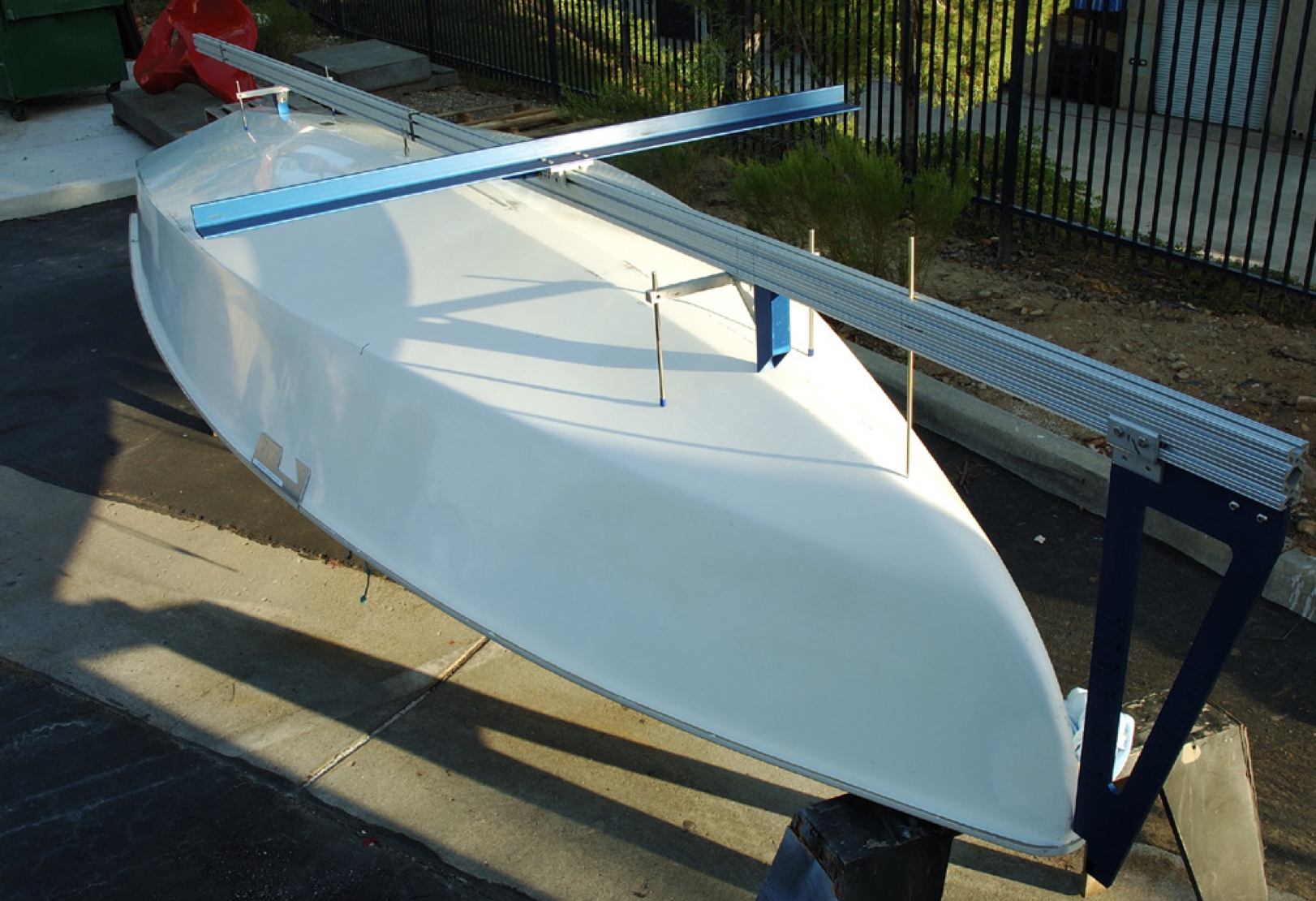
Unlike many recent classes, the Snipe is an International Class with rules that are “open” to construction. Potentially, anyone can build a Snipe—including a private individual—provided they strictly adhere to the Class Rules and the official plans.
However, it is vital to understand that the Snipe operates under World Sailing (WS) Closed Class Rules. As explicitly stated at the beginning of our Class Rules:
“PLEASE REMEMBER: THESE RULES ARE CLOSED CLASS RULES WHERE IF IT DOES NOT SPECIFICALLY SAY THAT YOU MAY – THEN YOU SHALL NOT.”
This means that any construction method, material, or design feature not expressly permitted is strictly prohibited.
SCIRA Builder Certification
A close relationship should exist between builders and sailors for such relationships are among the many strengths of the International Snipe Class. The intent of this Builder Certification Rule is to provide a workable structure for this relationship and to provide a measure of protection for both builders and sailors alike.
For commercial production and official racing, the SCIRA Builder Certification Program dictates specific requirements.
SCIRA distinguishes between “Provisional Builders” (new applicants) and Certified Builders (those with a proven track record of conformity).
To be certified as a Class Builder by the Snipe Class International Racing Association (SCIRA), a builder must agree to and abide by the following requirements written in the SCIRA Builder Certification document.
Mould Approval and Prototypes
Mould Inspection: Before series production begins, a builder must submit their moulds for inspection by SCIRA. The moulds must produce hulls that fall within the specific “measurement points” and tolerances.
To achieve “Certified” status, a builder must typically produce 5 sample boats that undergo rigorous measurement to prove production consistency.
Measurement : Procedures and Frequency
The frequency of measurement depends on the builder’s status:
Provisional Builders: Every single boat (100% of production) must undergo a full measurement by an Official Measurer to receive a certificate.
Certified Builders: Once certified, the builder guarantees that subsequent boats match the approved samples. However, SCIRA maintains quality control through periodic audits and random checks (e.g., one boat every 10).
Who Measures? Initial certification and audits are performed by the SCIRA Chief Measurer.
To renew the certification, at least one boat of any ten manufactured or one boat per year, whichever is shorter, shall be completely measured by an International Snipe Class measurer or an WS measurer.
Every certified Class Builder shall select a Builder’s Measurer, who shall be satisfactory to the builder’s regional International Snipe Class Measurer.
Builder Obligations
Builder’s Declaration: Required for every hull.
A Measurement Data Sheet (MDS) shall be completed in full by the Builder’s Measurer for every new boat manufactured by the builder. The MDS shall then be mailed to the Executive Director of SCIRA, and a Measurement Certificate shall be given to the first purchaser.
Official SCIRA Decal: Must be affixed to certify royalty payment.
No Unauthorized Changes: No modifications can be made to approved moulds or construction laminates without explicit SCIRA approval.
2025 Snipe Clas Measurement Handbook
Differences between the Snipe Class and other Classes
Snipe (International “Open” Class):
Multiple builders worldwide are authorized to produce the boat (e.g., Lemao, Jibe Tech, MAS Marine, Zeltic, SRG, J2, Tsujido, Persson Marine Japan).
Competition between builders is permitted and is based on construction quality, while strictly remaining within the boundaries of the Class Rules.
SMOD – Single Manufacturer One Design:
ILCA, Nacra, Melges 24, J70, etc.: These classes often operate under an exclusive licensing regime. The manufacturer (or a very limited group of licensees, as with ILCA) holds exclusive rights to the trademarks and the moulds. The boat is treated as a specific, proprietary industrial product.
The Difference between One-Design and Monopoly:
One-Design: This is a technical concept. All boats must be identical in performance and measurements to ensure that the crew wins the race, not the equipment.
Monopoly: This is a commercial concept. It occurs when a single manufacturer holds the exclusive right to build that specific boat. The Snipe is a One-Design but not a monopoly, as various builders can produce it by following the same set of rules.
International Classes vs. “Proprietary” Classes
The Snipe is a class governed by its members (the sailors) through SCIRA, which owns the rights to the plans and specifications. The Class Rules are fundamental and central.
Classes such as the Melges 24 or J70 are “proprietary” classes where the boatyard (Melges or J/Boats) maintains much more direct commercial control over class management and component production. This ensures extreme standardization but limits the owner’s freedom to choose a hull supplier.
In summary, the strength of the Snipe lies in its longevity, derived from Class Rules that allow for controlled evolution and production by various boatbuilders. This maintains performance uniformity through rigorous measurement of every single hull produced.
Comments for this post are closed


0 comments