
Understanding the Snipe Class: Officers and Board of Governors (Part II)
If the heart of the Class lies in the Fleets, and if the National Secretaries act as liaison and coordination officers between local instances and continental or world decisions, at the international level, the Class is administered by the Board of Governors.
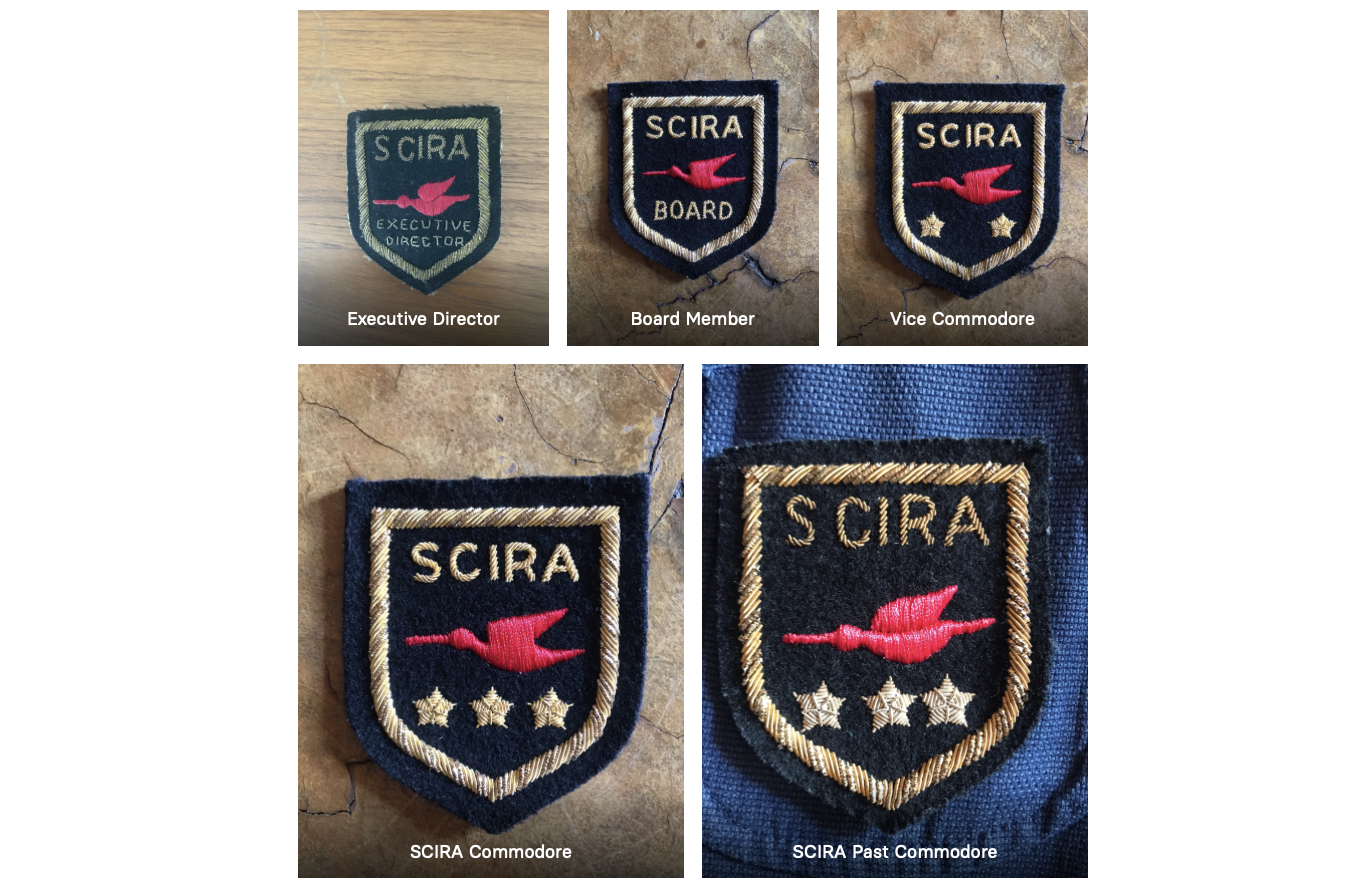
If the heart of the Class lies in the Fleets, and if the National Secretaries act as liaison and coordination officers between local instances and continental or world decisions, at the international level, the Class is administered by the Board of Governors.
After analyzing the Officers (Constitution – Section 22) of our association (Commodore, the Vice Commodore, and the Executive Director) and the functional differences between the Officers and the Board of Governors in Part I, let’s now analyze this latter body.
We noted that the Board is constituted as follows: Board Members are divided into two categories (Constitution – Section 23):
- Voting Members: Commodore, Vice Commodore, Chairman of the Technical Committee, the General Secretary for Europe, the General Secretary for the Western Hemisphere & Asia, the Secretary, and the Treasurer.
- Non-Voting Members: There shall be three (3) additional members comprised of Legal Counsel, WS Representative, and Executive Director.
Key Roles of the Board of Governors (Summary) – Constitution, Section 23
Treasurer
Responsible for the financial affairs of the Association.
Oversees the Executive Director’s maintenance of the Association’s books, financial records, and securities.
Places funds in a depository approved by the Board of Governors.
Reviews financial statements for presentation to the Board.
Prepares a summary of these statements for publication in the Snipe Bulletin for member information.
Secretary
Keeps the minutes of meetings.
Supervises the Association’s system of forms and records for all members.
Oversees membership trends and patterns and reports to the Board.
Note: The role is crucial, often requiring the Secretary to urge National Secretaries to update membership and dues payments (SCIRA dues), and to update boat and member accounting.
General Secretaries (Section 24)
Elected at a meeting of National Secretaries called by the outgoing General Secretary (in-person or online).
The current Hemisphere General Secretary, or their designate, chairs the meeting.
Designated representatives may represent and vote for absent National Secretaries from their countries; proxy voting shall not be allowed otherwise.
Chair of the Technical Committee (Section 28)
A key figure for the integrity of the Class and the observance of its rules, playing a central role on the Board.
Presides over the Technical Committee, whose function, in accordance with World Sailing Regulations, is to maintain, study, and make recommendations on all Class Rules restrictions (including Rules of Conduct, Deed of Gifts, Constitution, and Bylaws).
The Committee has the power to clarify any rule deemed unclear or unfair.
May submit clarifications as rule amendments to World Sailing after approval from the Board of Governors.
Responsible for writing Circular Letters, whose corrections, interpretations, or simplifications, when posted on the Snipe website, become part of the current rules.
Non-Voting Members
There are two figures, in my opinion not valued as they should be, both non-voting members: the Legal Counsel and the World Sailing Representative (the second is currently vacant).
Legal Counsel
- Advises on legal matters as pertains to the Association.
World Sailing Representative
- Charged with attending WS meetings and representing the Snipe Class in all matters that arise with WS.
- Provides an annual report to the Board of Governors and reports to the Secretary.
- Term of office is 4 years, ending in Olympic years (e.g., beginning January 1, 2020).
- SCIRA funds expenses for the Annual WS meetings (including coach class airfare to two meetings per year, if necessary, and expenses not to exceed $500 per meeting).
Personal Opinion: It is fundamental for an International Class to be represented not only on a technical level (e.g., at meetings discussing Class Rules) but also on a “political” level (International Classes Committee and other formal and informal meetings at the Annual WS Assembly).
How is the Board Elected?
This is a rather interesting topic to discuss.
We have repeatedly stressed that the heart of the Class is the Fleet. This is the democratic center par excellence, where the Fleet Captains are elected. The democratic nature of the association is then articulated differently from country to country at the national level for the election of the National Secretary.
In some cases, National Secretaries are elected by all members, without distinction between owners and non-owners. In other cases, the Fleet Captains elect the National Secretary. In still other cases, the Fleet Captains elect the District Governors who, in turn, elect the National Secretary. This, therefore, constitutes a form of indirect election (second or third degree).
Well, we have seen that the General Secretaries (for Europe and for the Western Hemisphere & Asia) are elected by their respective National Secretaries.
For the other (voting) members on the Board, namely the Commodore, Vice-Commodore, Treasurer, Secretary, and Chair of the Technical Committee, the election process appears somewhat difficult to fully comprehend.
Section 25: Election of Board Officers and Voting Members (Summary)
The election of key Board roles follows a nomination and voting process managed by the Board of Governors itself:
- Electing Authority: The Board of Governors holds the sole power to nominate and elect the Officers and Board Members for the ensuing term.
- Timeline: The election must take place by December 1st after the general meeting.
- Nomination Process:
- By August 1st, the Commodore appoints a Nominating Committee.
- Nominations must be received by October 1st. Nominations can be supplemented by any voting Board member.
- Voting:
- The Executive Director sends out ballots to each voting member by November 1st.
- Completed ballots must be returned by November 21st.
- Term Start: Officers and Board Members take office on January 1st (or until successors are elected).
Terms of Office (Staggered terms, starting on odd years)
| Role | Term Length | Term Start | Term Limit |
| Commodore | 2 years | Odd Years | Maximum of 2 consecutive terms |
| Vice Commodore | 2 years | Odd Years | Maximum of 2 consecutive terms |
| Chair of the Technical Committee | 4 years | Odd Years | Maximum of 2 consecutive terms |
| Treasurer | 4 years | Odd Years | Re-electable only once consecutively |
| Secretary | 2 years | Odd Years | Maximum of 2 consecutive terms |
| General Secretaries | 2 years | Even Years | (Elected per Section 24) |
The “Ratio” Behind the Rule
The purpose of this rule appears clear.
The Class is branched and widespread across many countries, each with different issues, peculiarities, and strengths. Members of every single fleet, every single district, and every single country must be represented equitably and impartially, regardless of their strength or size.
To “govern” the Class at a global level, it is essential that those who represent it at the top are known and understand not only the Class locally, but also possess a wider vision. Furthermore, they must be known and appreciated for their dedication to the Class, their abilities, their vision, and their altruism. Conflicts of interest (Section 23.2c) that could compromise their impartiality and independence must be excluded. The aim is not to find popular people, but people who are competent, available, and highly integrity.
The “Cursus Honorum” and Experience
It often happens that individuals already on the Board, who have distinguished themselves through their qualities, experience a sort of “cursus honorum,” meaning a re-appointment to the Board in a different position in a subsequent term.
In my experience on the Board, it is often appropriate for a newly appointed member to gain the necessary experience to understand how the Class operates globally: the issues, critical aspects, important functions, the relationships with other Board voting and non-voting members and with the Executive Director, and the relationships with the various countries and continents. After gaining this certain level of experience, a Board member is well-qualified to take on the Class’ top roles. Experience is fundamental, especially for the Commodore and Vice Commodore (who are Officers in addition to being Board members). Their role as Officers demands a standing and a knowledge of the Class and its rules that enables them to represent the Class adequately.
Democratic Legitimacy and Potential Crisis
This is the rationale behind the rule. But the question that arises is: Is the democratic nature compromised, given that, essentially, the election of incoming members takes place by a vote of the current Board, based on a non-binding indication from the Nominating Committee (whose members are appointed by the Commodore)?
In my opinion, the election mechanism works (and has worked) as long as the outgoing Board prioritizes the sole good of the Class, seeking the best available people, and does not simply aim to perpetually maintain its own power with the complicity of the Nominating Committee.
The Nominating Committee is composed of Class elders who wisely propose (or avoid proposing) certain names. The Nominating Committee should listen to the suggestions and proposals of the National Secretaries and the Board, in addition to suggesting names for the various positions itself. The election mechanism enters a crisis when logic based on personal interests, friendships, enmities, or partisanship prevails (within the Nominating Committee and the incumbent Board). Or when the idea prevails that someone who enters the Board in a specific position will automatically “climb the career ladder” through a predetermined sequence until becoming Commodore, without any evaluation of their merit or past actions, but simply by building relationships for their election and avoiding taking potentially unpopular positions, even if in the Class’ best interest.
Standing Committees
Speaking of committees, Section 33. Standing Committees states: The Commodore shall appoint members to serve on the following standing committees: Long Range Planning and Promotion.
Long Range Planning Committee
- Normally deals with the long-term policy planning of the Class.
- The Commodore identifies the topics to be discussed (e.g., Pan Am Games, policies with WS, SCIRA membership and database).
- The committee’s function is to study certain topics and propose practical solutions to specific problems or suggest practical approaches to resolve an issue.
Promotion Committee
- Chaired by the Vice-Commodore, who is responsible for setting topics, promoting discussion, assigning tasks among its members, and implementing decisions.
- In my opinion, this is one of the most important organs or tools for the Class, if properly valued and supported. It can certainly be useful for many suggestions and initiatives, including local activities.
- The selection of its members is essential to bring specific elements to the discussion (e.g., youth activity, women’s activity, fleet promotion, promotion in small countries, external promotion methods).
In an upcoming article, we will cover the Decision-Making Process.
Read also:
Comments for this post are closed



0 comments