
Making the Easy Difficult through the Useless
or: Boats sail fast; it’s the sailors who slow them down
Or: Boats sail fast; it’s the sailors who slow them down
[Originally published in Italian in February 2011 on the snipe.it website, but still relevant today]
Last Saturday, I was in Talamone. I was as impatient as a child to get back on the Snipe after the winter break—which, for me, wasn’t even that long. Over the course of the weekend, reflecting in hindsight, I developed (or rediscovered) a few convictions that are always worth keeping in mind.
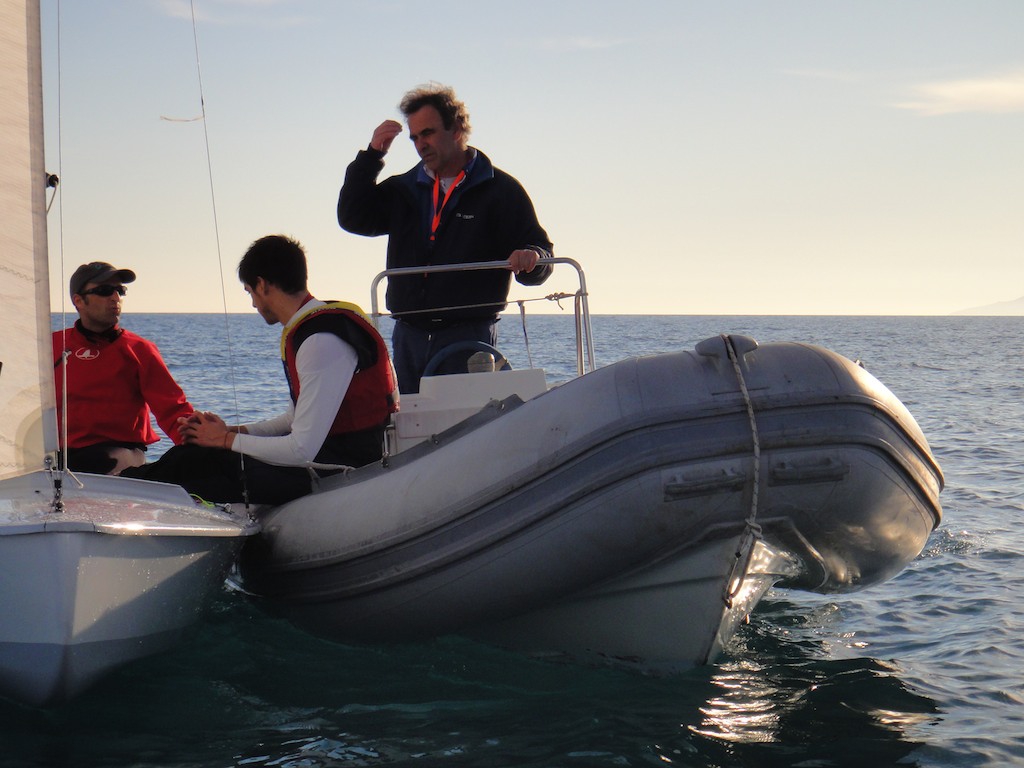
So, here’s the story. Saturday was scheduled for a great training session with other boats and Alessandro Testa as our coach.
In the morning, starting at breakfast, we were already debating with other sailors about spreaders lengths, cleat positions, mast push-puller, and spreader angles… all those topics sailors love so much and that spark infinite discussions. Throughout the morning, we were all focused on setting up the boat: cleaning, polishing, grabbing the tension gauge and the measuring tape. We always fall for it! Not that it isn’t useful or necessary—it’s just not that essential.
The training session brought everyone back to harsh reality. Some more than others.
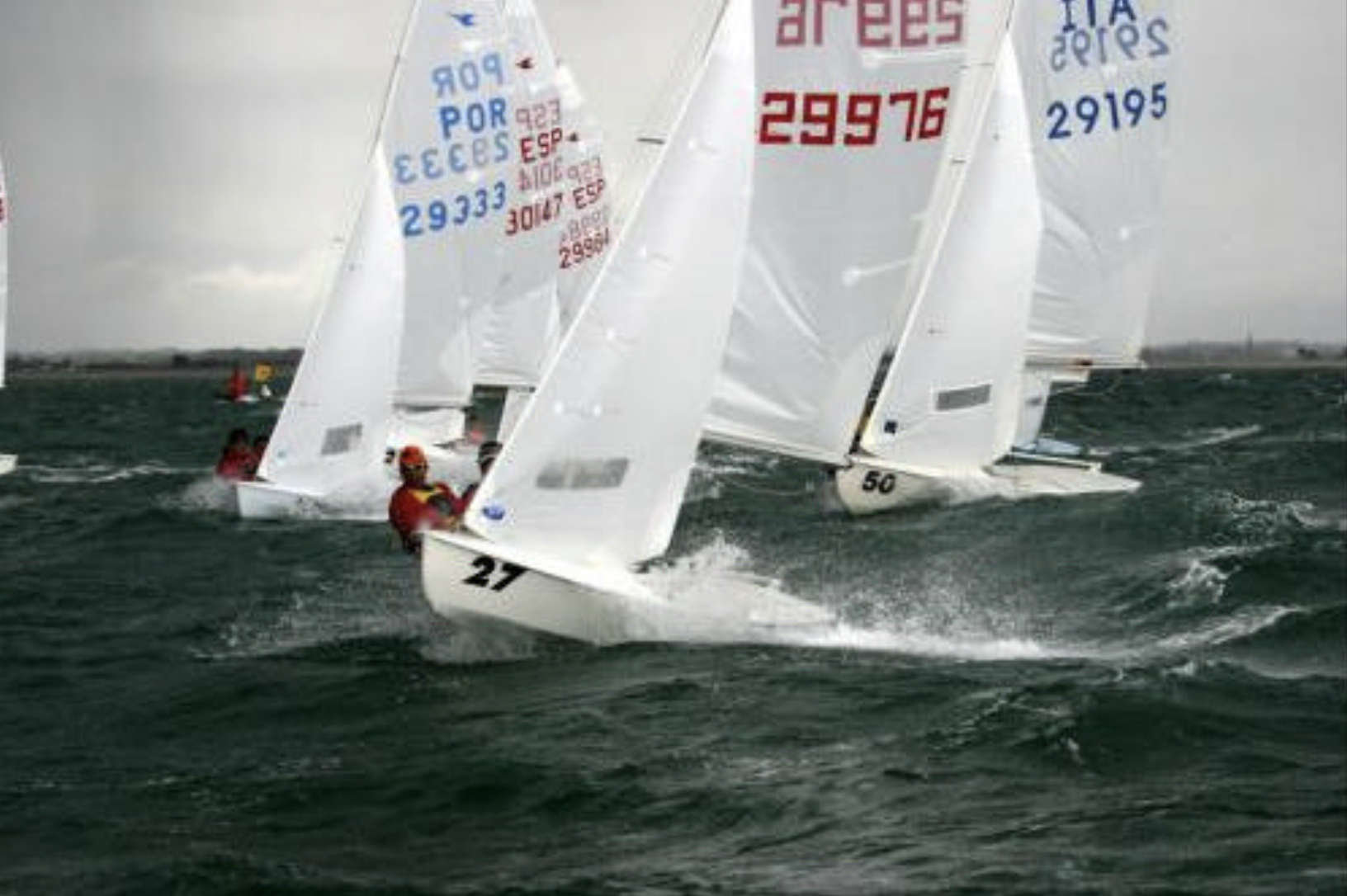
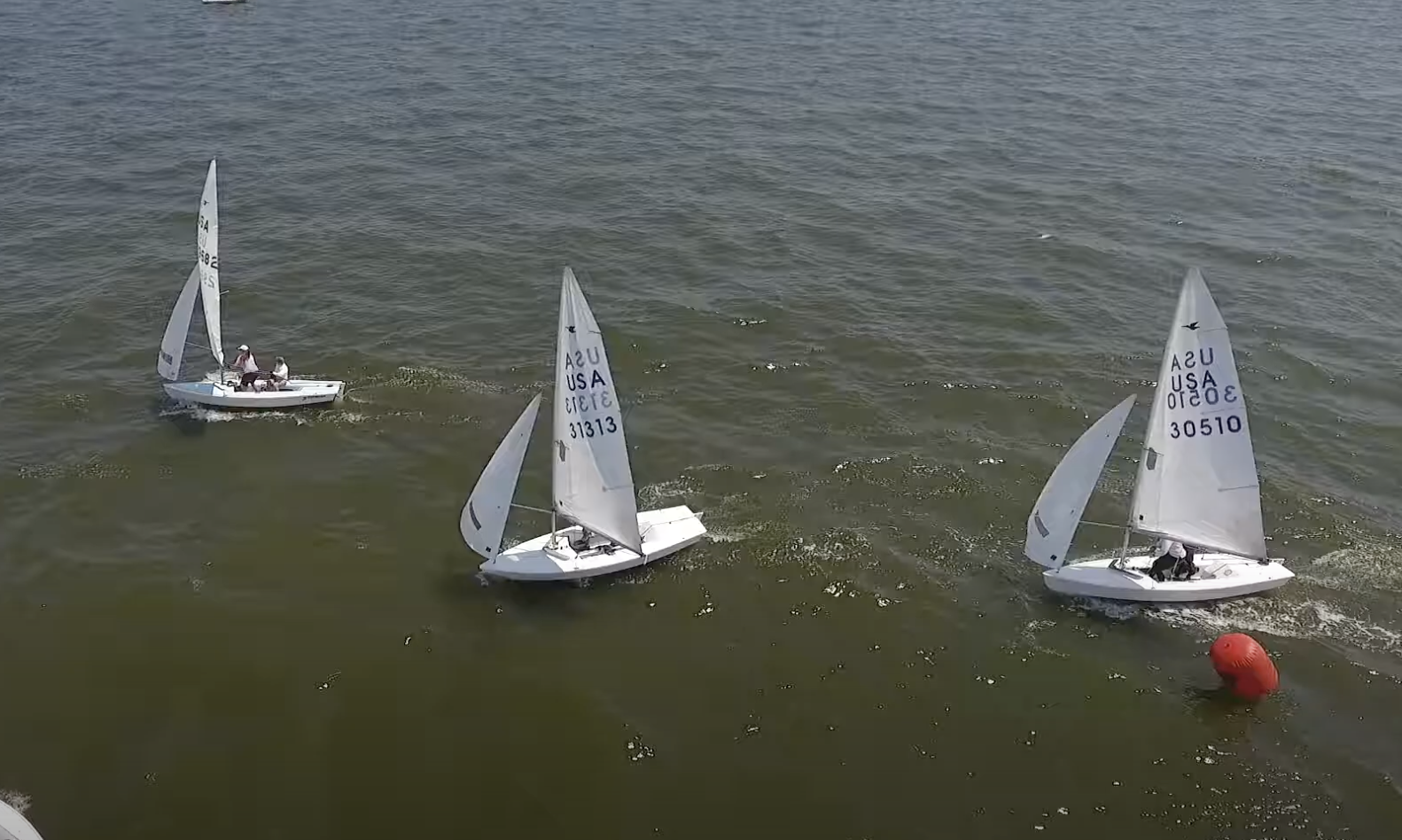
The micro-courses, the mark roundings, the continuous tacking, and the jibing reminded us that sailing is essentially a sport where precision, speed, and timing in maneuvers are vital. To achieve this, both the team and the boat must function perfectly. There is no point in buying an ultra-light, super-smooth block if the pole doesn’t retract quickly, getting stuck between the forestay and the jib luff during a jibe!
Instead, the boat or deck layout that attracts people the most isn’t the most functional one; it’s the most complex, full of micro-adjustments—the more cerebral and less functional, the better.
Neurotics!
I am convinced that anyone who buys a Snipe immediately goes online to look for tuning guides. Then they buy a tension gauge and a tape and scour websites for every article on rig settings. At clinics, the favorite questions are always about tension and rake… few are those who study videos of maneuvers. Fewer still are those who study how the top teams actually handle or steer the boat.
And when they end up a regatta on the second page of the results (and quite far down the page, at that), they claim the reason for the debacle lies in a boat that “isn’t fast” or some undisclosed secret they aren’t privy to.
The training was both useful and merciless. A well-executed tack requires a specific roll, a certain execution speed, and precise movements. This entire mix that makes a tack “good” changes constantly depending on the wind, the sea state, and tactical situations. Even a hitch (like a knot in the pole launcher line) can be solved more or less quickly. It seems obvious and natural, but in reality, it isn’t for anyone.
We saw who was going at 2 knots, who at 5, and who at 10. Even those who thought they were going 100—just because they were doing circles around those going 2—certainly weren’t going 100. “You came out of that tack incredibly slow and weren’t accelerating,” Alessandro rightly pointed out. “You couldn’t break free from the cover of the other boat.”
After Saturday’s training, I experienced Sunday’s race through a different lens. Breaking it down into its various phases, I realized there is a lot of work to be done on maneuvers, mark roundings, and boat handling.
After these two days in Talamone, I have an even greater desire to go sailing and practice this complex sport—a sport that we make unnecessarily complex. We must remember that, first and foremost, it is a sport. After all, executing a beautiful tack is like carving a perfect turn on skis, or hitting a flawless down-the-line backhand in tennis.
Well, it’s not exactly like that. It’s better… because we also have the tuning settings!
Rendere Difficile il Facile attraverso l’inutile
Ovvero: le barche camminano, sono gli uomini che le rallentano …
Sabato ero a Talamone. Impaziente come un bambino di risalire sullo Snipe dopo lo stop invernale, per me, in fondo, neppure tanto lungo.
Nel corso del weekend, ragionando a posteriori, ho maturato (o riscoperto) alcuni convincimenti che è buona regola tenere sempre presenti.
Dunque. Sabato è previsto un bell’allenamento con altre barche ed Alessandro Testa, quale coach.
La mattina, già a colazione, discutiamo con altri velisti di lunghezza delle crocette, posizione degli strozzatori, spingialbero, apertura delle crocette … Tutti argomenti che piacciono tanto ai velisti ed oggetto di discussioni infinite.
Nel corso della mattinata siamo stati tutti concentrati a mettere a posto la barca, pulire, lucidare … prendere tensiometro e cordella metrica. Sempre lì cadiamo! Non che non sia utile e necessario. Tuttavia non è così essenziale.
L’uscita di allenamento ha riportato tutti alla cruda realtà. Chi più e chi meno.
I micropercorsi, i giri di boa, le continue virate, le strambate ci ricordano che la vela è essenzialmente uno sport dove la precisione, la rapidità, la tempestività nelle manovre è essenziale.
Per far questo, sia noi uomini, sia la barca deve funzionare alla perfezione. Non ha senso comperare un bozzello ultraleggero ed iperscorrevole se il tangone non rientra rapidamente, infilandosi , durante la strambata, tra lo strallo e l’inferitura del fiocco!
Invece la barca o il piano di coperta che attrae di più non è quello più funzionale, ma quello più complesso e ricco di microregolazioni, più cerebrale e meno funzionale. Neurotics! Sono convinto che chi compra uno Snipe va subito a cercare su internet le tuning guides. Poi compra tensiomentro e cordella metrica, va sul sito a leggersi tutti gli articoli sulle centrature. Ai clinics le domande preferite sono su tensioni e rake … Pochi sono quelli che studiano i video sulle manovre. Pochissimi quelli che studiano come manovrano o portano la barca gli equipaggi di punta. E quando finiscono nella seconda pagina della classifica (ed anche abbastanza in fondo alla pagina), il motivo di tale debacle risiede nella barca che “non va” o in qualche segreto non svelato e di cui non sono a conoscenza.
L’allenamento è stato utile e impietoso. Una virata fatta bene richiede un certo rollio, una certa velocità di esecuzione, determinati movimenti. Tutto questo mix, che rende una virata una buona virata, cambia di continuo, a seconda del mutare delle condizioni di vento, di mare, delle situazioni tattiche. Anche un problema o un intoppo (come una cocca alla cima dello sparatangone) può essere risolto più o meno rapidamente. Sembra ovvio e naturale, ma nella realtà non è così per nessuno.
Si è visto chi andava a 2 all’ora, chi a 5, chi a 10. Anche chi pensava di andare a 100, perché faceva i giri attorno a chi andava a 2, non andava di certo a 100. “Da quella virata sei uscito lentissimo e non acceleravi – faceva giustamente notare Alessandro – Non ti riuscivi a liberare dalla copertura”.
Dopo l’allenamento di sabato, la regata di domenica l’ho vissuta in un’altra ottica. Scomponendola in tante fasi, mi sono accorto che c’è molto da lavorare su manovre, giri di boa, conduzione.
Dopo i due giorni di Talamone mi è venuta ancora più voglia di andare in barca e praticare questo sport complesso, ma che siamo noi a rendere inutilmente complesso. Dobbiamo ricordarci che prima di tutto è uno sport. Del resto fare una bella virata è come fare una bella curva in conduzione sugli sci, o come tirare una punizione ad aggirare la barriera. Beh, non è proprio così. E’ meglio … ci sono anche le centrature!
Leave a reply
Your email address will not be published. Your comment will be revised by the site if needed.

0 comments