
Is it Time for an “Open Standard” OCS Detection System?
Balancing Innovation and Fair Competition: A Proposal for a Universal Racing Protocol
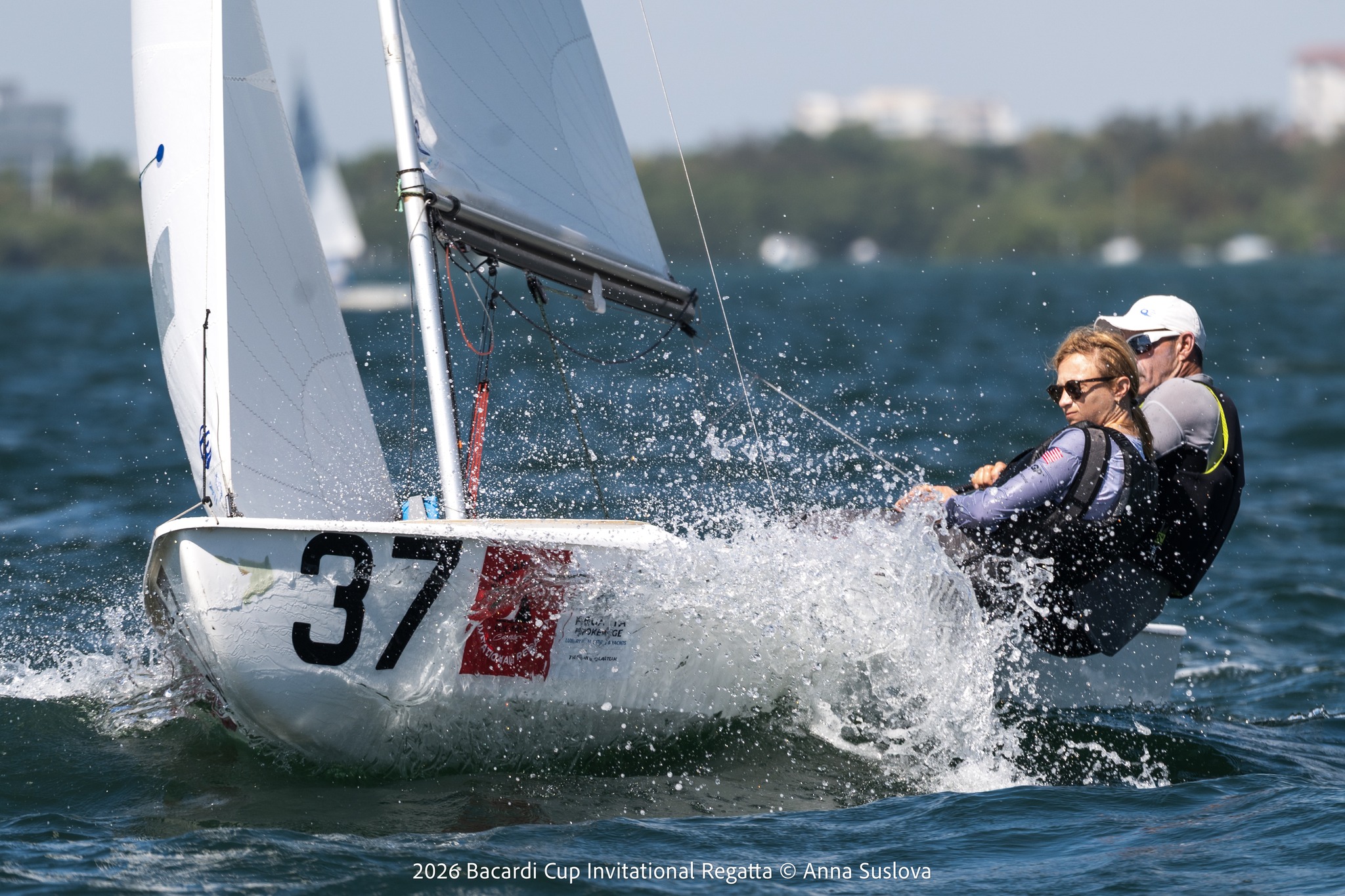
There is currently significant confusion within our Class regarding the use of electronic starting aids, such as Vakaros RaceSense, during Snipe regattas. Is it legal or illegal? Many sailors, operating under the mistaken belief that it is entirely permitted, have already purchased the device.
As of January 15, 2026, Class Rule C.5 has been amended. However, the confusion persists—perhaps due to a lack of attention to the rules or the update articles published here. The situation reached a point where the Technical Committee had to issue a formal Statement to clarify that only classic electronic compasses with the following limited functions are allowed:
- Heading
- Heading +/- tacking angle
- Time / Race timing information
- Device status information
Electronic instruments with additional functions (GPS or multi-function wristwatches) are NOT permitted. Most importantly, the use of Vakaros RaceSense—which relies on GPS to identify OCS boats—is prohibited under general rules. There are, however, specific exceptions. A device may only be used if:
- The Notice of Race explicitly includes its use; AND
- The Organizing Authority (Yacht Club, etc.) provides devices for those who do not have one; AND
- The Technical Committee has specifically authorized its use for that event.
Personal Reflections
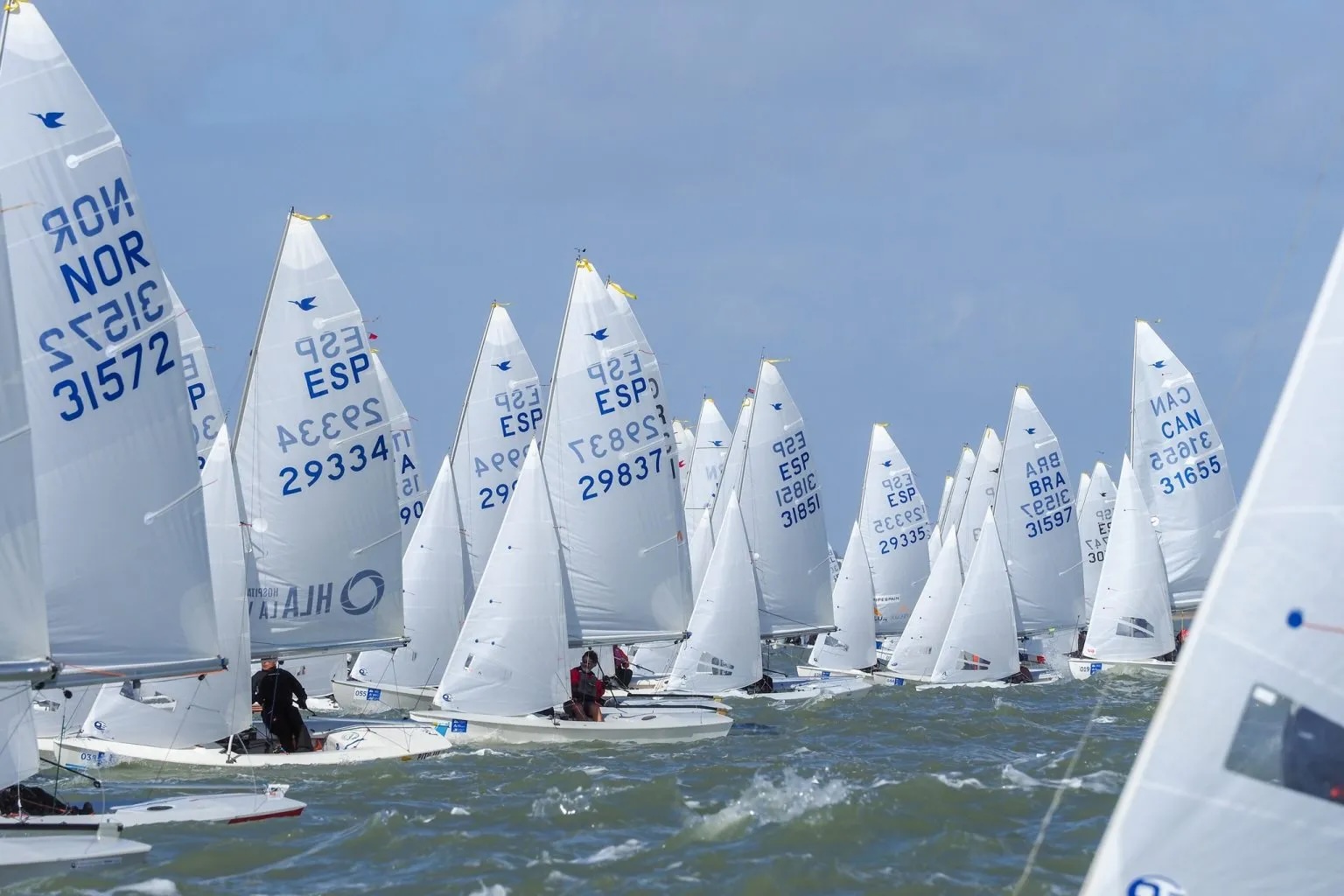
I tested the Vakaros RaceSense at the 2025 Don Q in Miami, and the system works. The advantages are undeniable, especially for large, hard-to-control fleets: zero general recalls, less time wasted on the water, and fairer races. It eliminates human errors by the Race Committee, such as confusing sail numbers or the physical impossibility of spotting every OCS boat in a crowded line. For major events with a lot of boats, I am a proponent of this technology.
However, my concerns likely mirror those of the Board and the Technical Committee.
Liberal economic thought, based on true competition between producers of goods and services, has perhaps gone out of fashion in a world increasingly governed by autocracies and economic concentrations… but that is a much broader discussion that is not appropriate to address here.
In our specific case, we are facing a de facto monopoly. One company dictates the purchase price of a very useful tool or, alternatively, the daily rental fee for a single regatta.
The pricing for these Vakaros units can be verified at the following link: Vakaros RaceSense .*Note
At the 2026 Don Q, the rental cost is US$35 per day ($105 for the event, plus the cost of the entry fees). Beyond these individual costs, the Organizing Authority likely pays additional (and often undisclosed) fees for the technical assistance, and RC training. *Note
These prices are legitimately set by Vakaros in the absence of effective competition (following their acquisition of competitor Sailmon). Through clever marketing (including more and more events and classes), and high-profiles testimonials (featuring prominent sailing personalities, International Class presidents, and coaches who organize clinics for Opti and other youth classes), they are rapidly expanding their reach. But is this total dependence in the best interest of the Classes, clubs and sailors?
While the benefits (fairer races and no recalls) are great, the Board has rightly maintained control, requiring specific Technical Committee authorization to ensure the benefits outweigh the costs for each event.
A Possible Solution: The “Open” Model
I am not an IT or radio signal expert, but my research suggests a different path is possible. We should move away from “Closed Ecosystems” toward an Open Racing Protocol.
[Note: To be honest, this solution wasn’t actually my idea. It came from a friend of mine, an expert International Race Officer with extensive experience in the Olympics and high-level international regattas.]
1. How RaceSense Works (The “Closed” Model): RaceSense is a proprietary ecosystem. *Note
2. The “OpenStart” Model (Universal Protocol): We should replicate the mobile telephony model, where different hardware (iPhone, Samsung) works on the same network (5G). This requires:
- A Transmission Protocol (The “Carrier”): The Committee Boat would act like a “cell tower” broadcasting line coordinates and time sync.
- A Data Format (The “Language”): Manufacturers like Vakaros, Velocitek, Garmin, Raymarine, or new start-up companies would agree on a common message format (e.g., “Boat ID + Bow Coordinates”).
- Standardized Bow Offsets: A certified way for sailors to program their boat’s dimensions into any compliant device so the system “sees” the bow accurately.
3. The “Lite” Version: Focus on Fair Play By limiting the device to start-line detection only (no speed, VMG, or tactical data), we solve two hurdles:
- Cost: A “blind” transponder (like a highway toll tag) without a screen could cost under €200.
- Class Rules: A “Black Box” that only vibrates for an OCS would be legally acceptable in classes that forbid tactical GPS data.
Conclusion
The technology for a high-precision, universal OCS system already exists. It is important to credit Vakaros for acting as a pioneer in this field; their system has successfully demonstrated the technical viability of the concept and convinced even the most skeptical observers of its benefits. Vakaros’ success was recognized by World Sailing, which presented the company with the prestigious World Sailing Technology Award during the General Assembly held in Dún Laoghaire in November 2025.
Currently, however, the barrier to wider adoption is not technical, but rather the prevalence of proprietary “closed” systems, which can limit accessibility due to costs and a lack of hardware interoperability.
To address this, an initiative to define an “Open OCS Standard” would be highly desirable. Such a project could be led not only by World Sailing, but also by one or more MNAs or a coordinated group of International Classes. By establishing shared technical specifications for interoperability, these governing bodies could encourage different manufacturers to develop compliant devices. This shift would foster healthy competition, reduce costs, and ultimately help democratize high-tech officiating for every sailing club and class. Once these results are achieved, I believe there would be no obstacles to amending Class Rule C.5.
*Note: These sections have been updated following a valuable comment on our Facebook page by Mr. Douglas Wake, Director of Marketing and Events at Vakaros, who clarified several points as follows: “Disappointed to see some pretty significant factual issues with this article. RaceSense does not (never has, never will) use LoRa (asserted in the conclusion). No Snipe regatta has ever used RaceSense RTK – 99.9% of RaceSense events use DGNSS (including all Snipe events). An Atlas Edge is 699EU – not 1149 – and fully RS capable. Clubs don’t pay for support, licensing, base stations… Regardless of one’s opinion, this is a far fling from an accurate representation of the technical details. Happy to help provide more information to get this closer to the truth.”
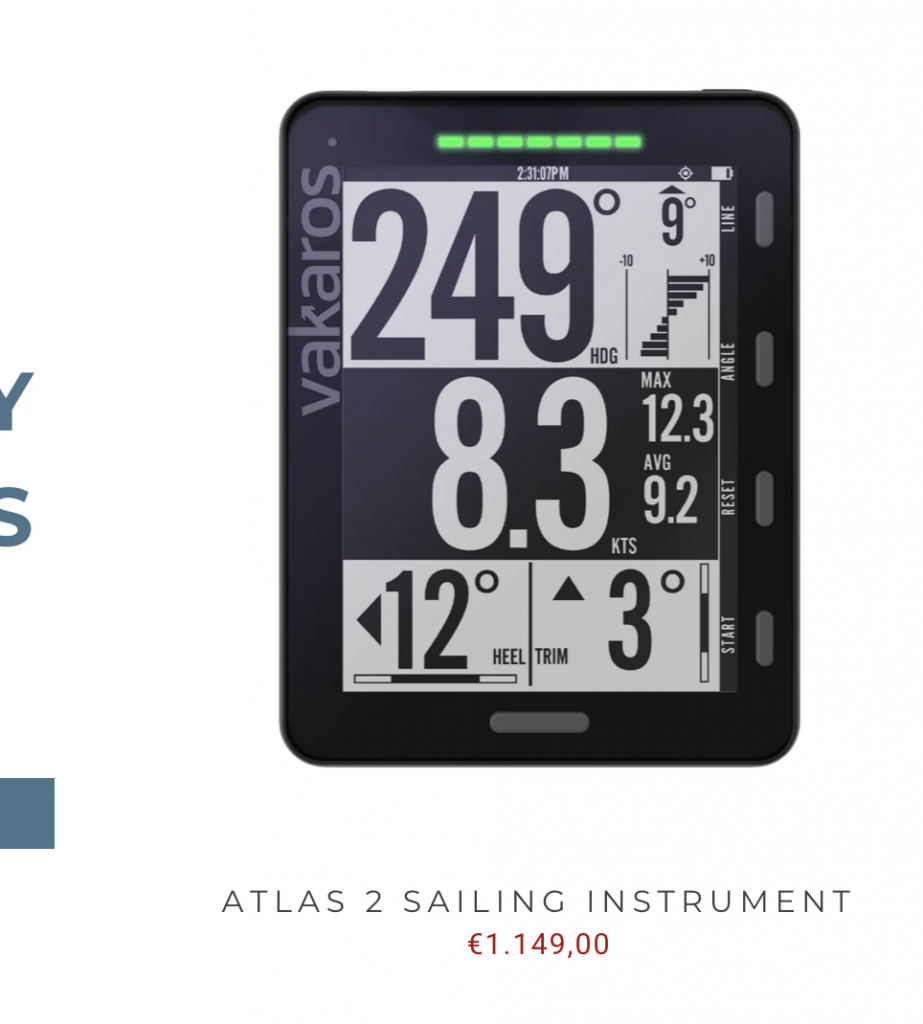
Regarding the price, it should be noted that the quoted price for the Atlas 2 (€1,149.00) was indeed correct. However, we understand that price lists are subject to constant changes.
As for the ‘additional costs’ associated with using Vakaros at an event, to be precise, it is our understanding that for a 2025 international event in Europe, the proposal provided to the OA (SCIRA in that instance) did include non-negligible costs for on-site technical support during the event.
Our thanks to Mr. Wake for his clarifications.
The original versions of these sections were as follows:
In Europe, the Vakaros RaceSense is sold for €1,149.00.
…
At the 2026 Don Q, the rental cost is US$35 per day ($105 for the event, plus the cost of the entry fees). Beyond these individual costs, the Organizing Authority likely pays additional (and often undisclosed) fees for software licensing, the “Halo” base station, technical assistance, and RC training.
…
1. How RaceSense Works (The “Closed” Model): RaceSense is a proprietary ecosystem. It uses RTK-GPS(Real-Time Kinematic) for centimeter-level accuracy and a proprietary mesh network. The “lock-in” means only Vakaros hardware can talk to the system.
2. The “OpenStart” Model (Universal Protocol): We should replicate the mobile telephony model, where different hardware (iPhone, Samsung) works on the same network (5G). This requires:
- A Transmission Protocol (The “Carrier”): Using open-standard frequencies like LoRa (Long Range). The Committee Boat would act like a “cell tower” broadcasting line coordinates and time sync.
- A Data Format (The “Language”): Manufacturers like Vakaros, Velocitek, Garmin, Raymarine, or new start-up would agree on a common message format (e.g., “Boat ID + Bow Coordinates”).
- Standardized Bow Offsets: A certified way for sailors to program their boat’s dimensions into any compliant device so the system “sees” the bow accurately.

Note: The “Exchange of Views and Reading” section of this website hosts the views of the Snipe Sailors.
This article represents a personal opinion, which may not coincide with the official opinion or view of the Class or other sailors. We deem it useful to discuss (naturally avoiding offensive content) various topics relating to our Class, to allow for an open and democratic discussion, as has always been the case on SnipeToday for more than a decade.
Dear readers, if you want to reply to this article, agreeing, or disagreeing, or proposing different solutions, I will be happy to host you in this section of the site (email to: [email protected])
Leave a reply
Your email address will not be published. Your comment will be revised by the site if needed.

2 comments
Alex Pline
"Liberal economic thought, based on true competition between producers of goods and services, has perhaps gone out of fashion in a world increasingly governed by autocracies and economic concentrations…"
That's a tad hyperbolic don't you think? New technologies always start as competitions with closed systems. This is just the economics of the development cycle. Rarely do companies or individuals invest significant money - especially in a market like sailing where there is a limited possible volume - to develop and market a new technology or system. The history of AC and DC power between Edison and Tesla (and their deep pocketed supporters) is a classic example.
But like modern cellular technology, open standards and protocols may eventually emerge in this genre, but I am not 100% convinced it will due to the limited size of the market. There may never be enough volume to warrant the effort it will take to do this. Until then, we have to use the system we have if we want to have the benefits of it. Of course it's not for every event, but I believe in the scheme of what we pay to sail at national and international level events, this is a small price to pay for a more fair game.
Leave a reply
Your email address will not be published. Your comment will be revised by the site if needed.
Pietro Fantoni
Hi Alex,
If yours isn't a rhetorical question, I'll answer you. But even if it were, I'm going to answer you anyway. Technically, this isn't a hyperbole (at least not as we here in Old Europe understand this rhetorical figure derived from Greek and Latin literature): in a strict sense, hyperbole consists of pushing the meaning of an expression to the extreme, amplifying or reducing its reference to reality to strengthen its impact and, by contrast, increase its credibility. It would have been enough to say that my thesis was irrelevant to the world of electronic devices applied to sailing.
That being said, I agree with you that our market is small and limited (but let’s consider just one Class, leaving aside the Snipe: is the world of the Optimist Class alone—with its tens of thousands of athletes and parents across every continent—really so small and insignificant for an entrepreneur, given that it sustains boatyards, sailmakers, and coaches? If we then add all of youth sailing (I mean, not college sailing), is it truly that insignificant?). If I may, the reference to Edison and Tesla seems a bit misplaced. That was a matter of entirely new technology; here, it is about applying a technology that has already been tested, developed, and used in many other fields and sectors of society to a specific niche. I've noticed that in the US Vakaros is very popular. We shall see what happens in other countries and continents.
Leave a reply
Your email address will not be published. Your comment will be revised by the site if needed.