
Reflections on the Snipe Junior World Championship in Melilla: Numbers, Passion, and the Unique Magic of the Class
The Snipe Junior World Championship recently wrapped up in Melilla, Spain, leaving behind a trail of great racing, warm camaraderie, and a few lessons for the future
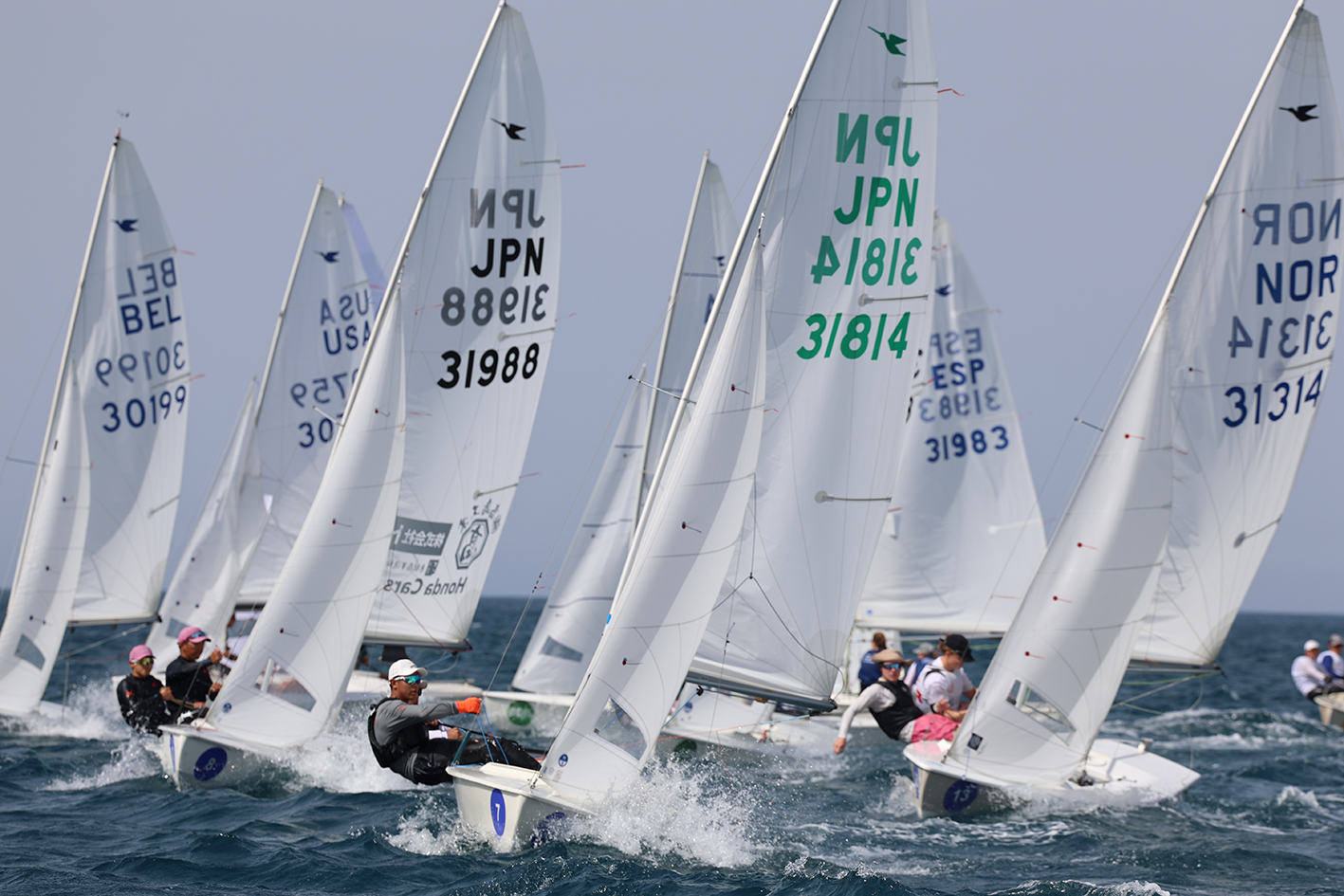
The Snipe Junior World Championship recently wrapped up in Melilla, Spain, leaving behind a trail of great racing, warm camaraderie, and a few lessons for the future. Leading up to the event, the SCIRA Board put a massive effort into ensuring a record-breaking turnout, both in the number of boats and represented nations. A financial assistance program for countries holding national qualifiers was announced months in advance, prompting many mid-to-large nations to push hard to get youth teams on the water. Naturally, when a single pie is divided into many slices, every piece turns out a bit small, leading to a few grumbles about the actual funding received. Still, the drive to build momentum was undeniable.
It’s worth noting how different this approach was compared to the 2024 Junior Worlds in Miami. Where Miami relied heavily on the sheer drive, private initiative, and personal network of a single individual and his local fleet to secure boats and accommodation, Melilla saw SCIRA take the helm directly through its National Secretaries. The numbers speak to the different dynamics: Miami brought together 46 boats from 19 countries, while Melilla rallied 53 boats from 13 nations.
Melilla: A Sport-Loving Host
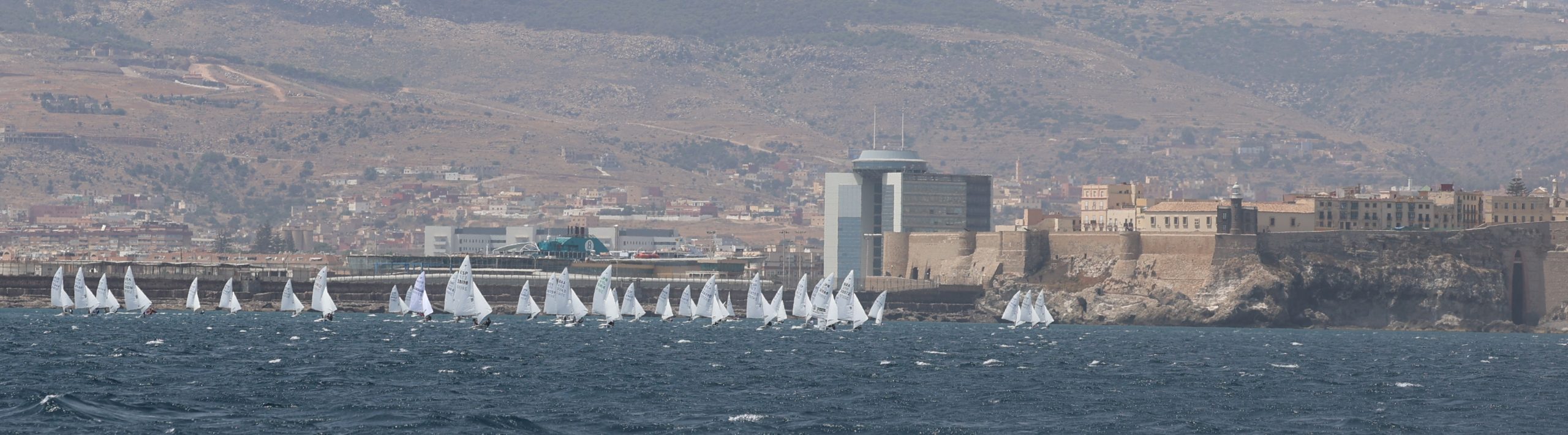
Melilla, a Spanish enclave on the African coast connected to mainland Spain by ferry and flight, is a surprisingly vibrant hub for sports. True to its nickname, “Melilla Ciudad del Deporte,” the autonomous city regularly hosts everything from triathlons to beach volleyball. The Real Club Marítimo de Melilla (RCMM) is no stranger to the Snipe Class either, having hosted the Snipe Women’s European Championship (SWEC) in 2024 and the Spanish Nationals in 2025.
The RCMM proved to be a top-tier host. Equipped with three launch ramps, a dedicated measurement tent, a spacious boat park, and fantastic facilities (including a pool, gym, and padel courts), the club welcomed sailors and supporters with genuine warmth. Beyond the daily post-race gatherings, a lively evening BBQ with live music and a generous prize-giving reception made everyone feel right at home. A sincere thank you goes to the President Jeronimo Perez and everyone involved in making the event run smoothly ashore.
The Charter Conundrum
Organizing a Junior Championship—much like a Women’s event—comes with a very specific challenge: logistics. Very few junior sailors actually own a Snipe. Add Melilla’s unique geographic location, where almost all equipment had to arrive from mainland Spain via ferry, and you have a logistical puzzle. Unlike racing in Valencia, driving a trailer down to Melilla isn’t an option for most European teams.
While a dozen private or chartered boats were arranged directly through personal connections with generous owners, the vast majority had to be chartered through the Organizing Committee. And here lies the most sensitive issue of the week—one that will require a very different level of attention in the future.
Managing the charter fleet was entrusted to an individual who appeared distinctly disinclined to listen and unaccustomed to the specific needs of a youth regatta, revealing clear organizational shortcomings. While we owe immense gratitude to the private owners who stepped up, official responses were conspicuous by their absence: communication was scarce, allocation criteria were clear as mud, and details regarding equipment and delivery dates remained a mystery for far too long.
To make matters worse, the coordinator only made an appearance once the champion actually started (on Tuesday the day of the practice race). Competitors arriving days in advance from as far as the US or Japan were left waiting on the quay with zero information on which boat had been assigned to them, where and when it would be delivered, or how the handover would be handled.
The story was much the same for support RIBs. Youth sailors need constant on-water assistance, yet the shortage of accredited charter RIBs forced many coaches to seek ride-alongs on other boats, amid assurances that mostly remained on paper. For future editions, the charter and coach boat framework must be rethought from the ground up to ensure efficiency, complete transparency, and fair treatment for all competing nations.
Measurement and Opening Ceremony
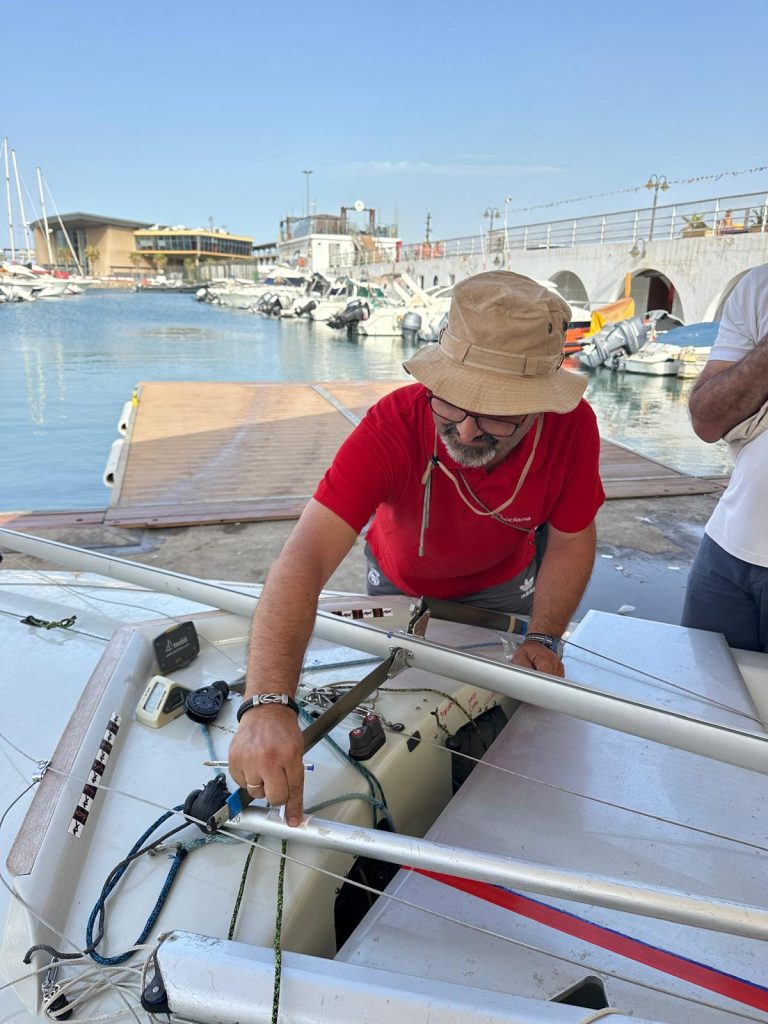
Given the sheer volume of charter boats—many requiring last-minute fixes to meet class rules—measurement was a complex affair. Chief Measurer Luis González steered the process with great skill, resolving critical issues and getting the entire fleet officially cleared for competition.
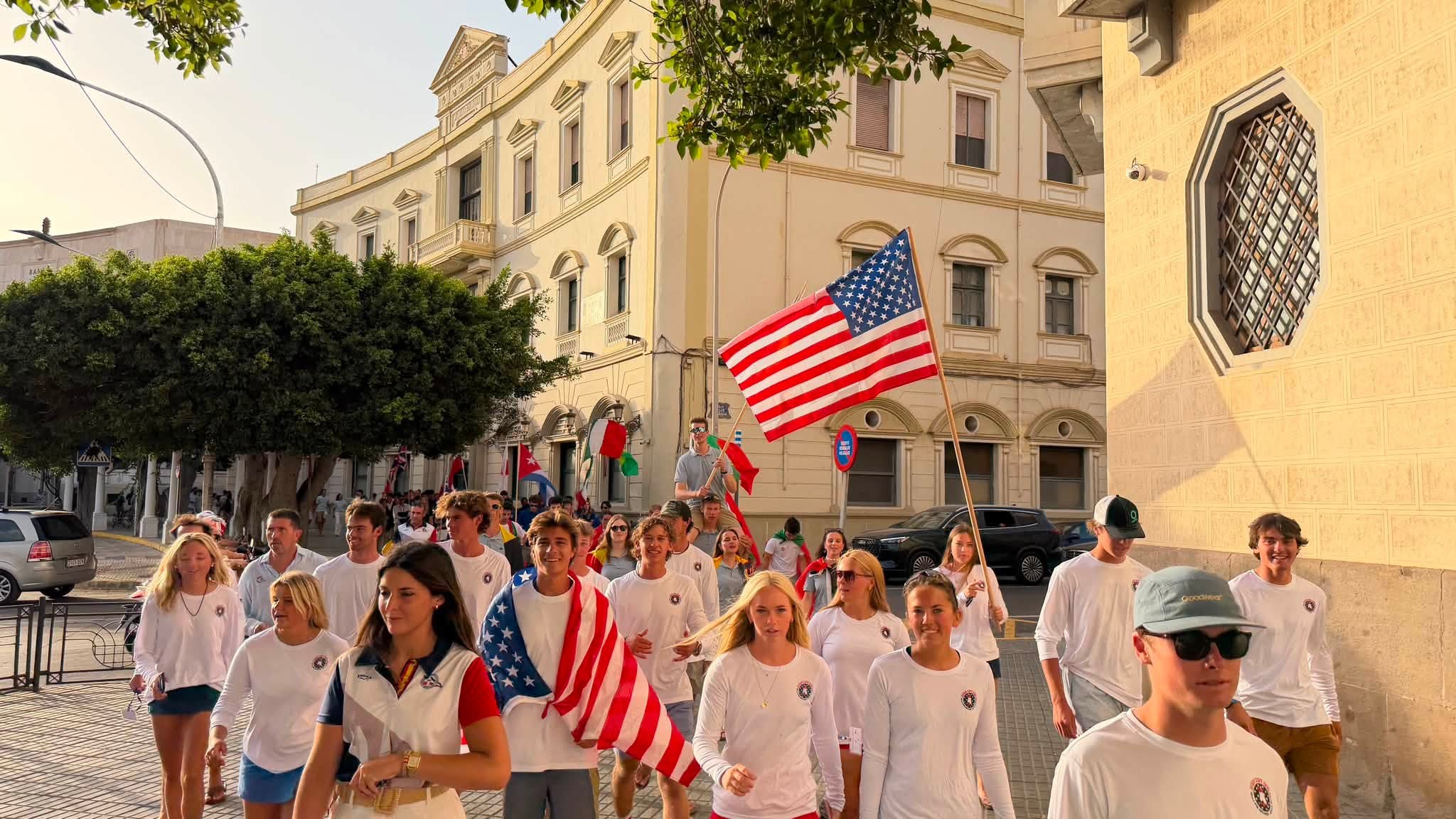
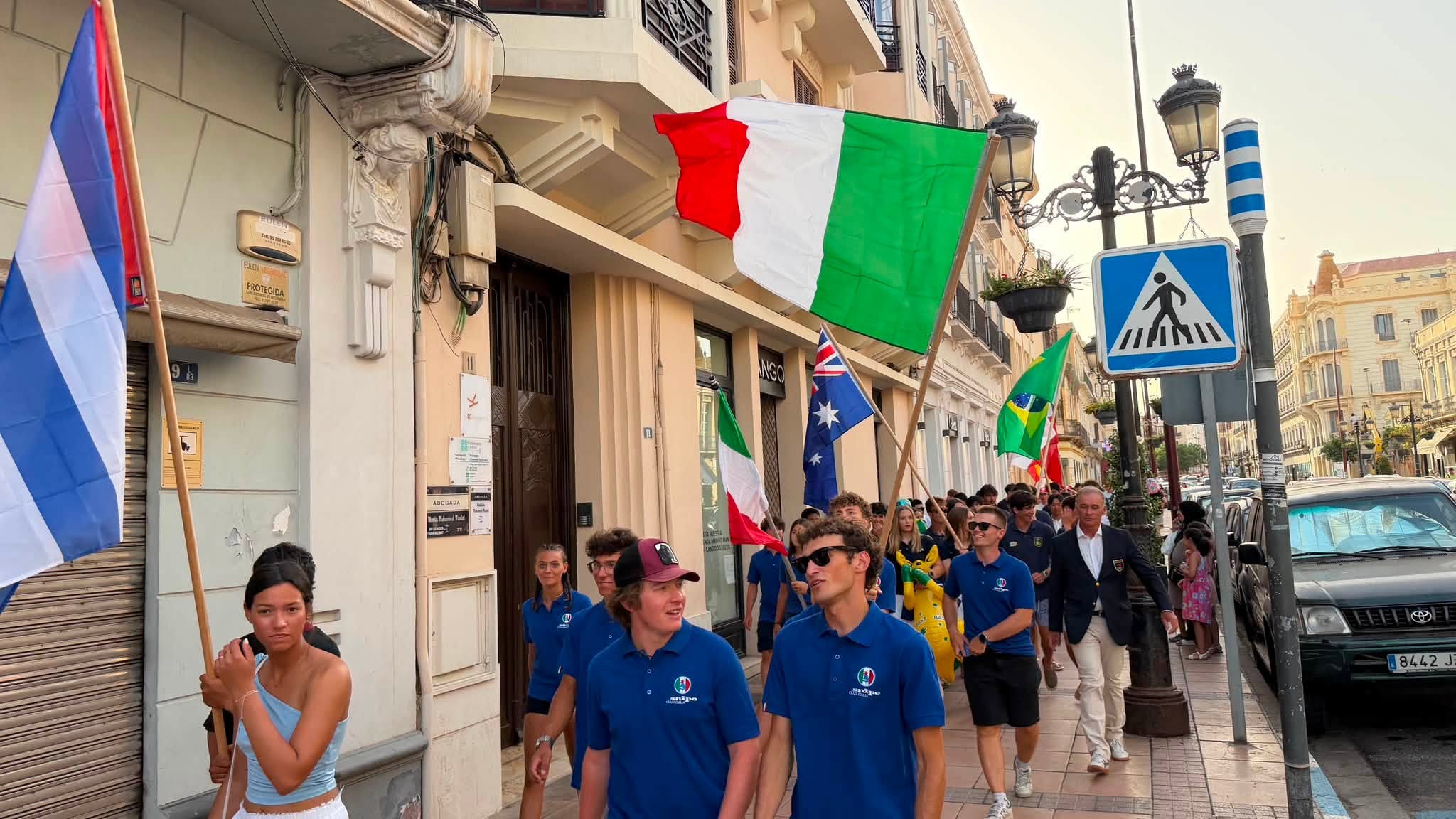
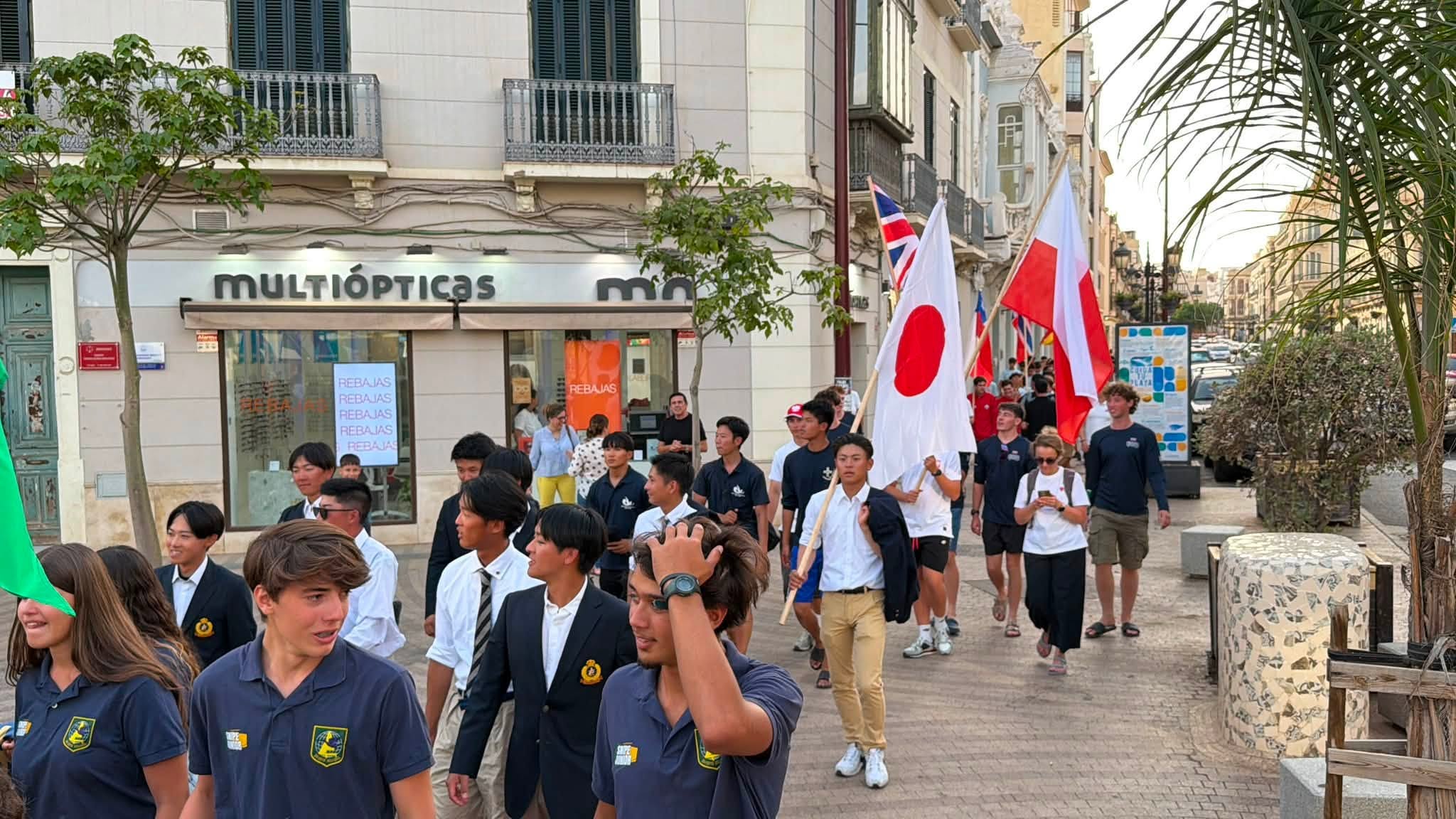
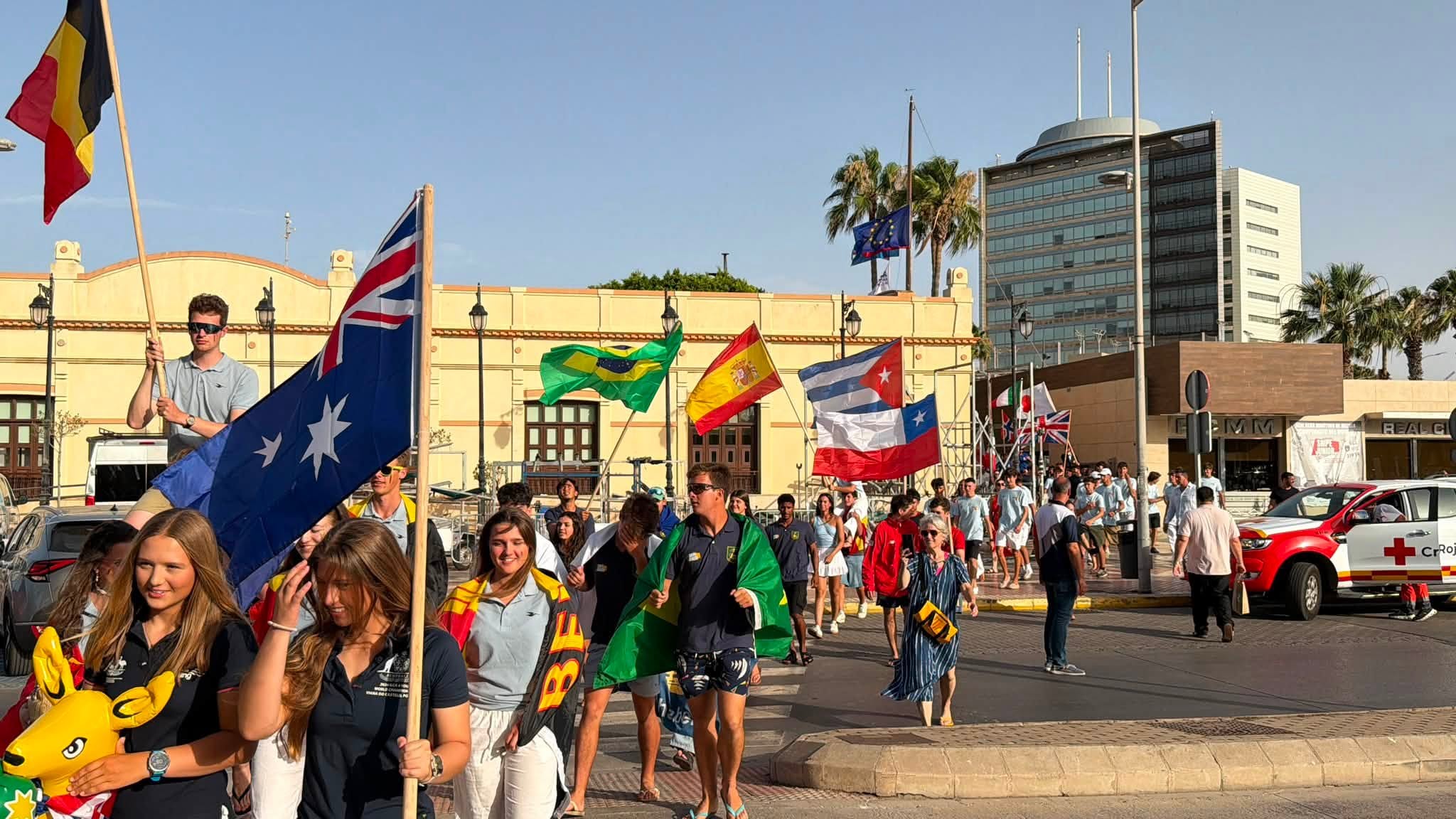
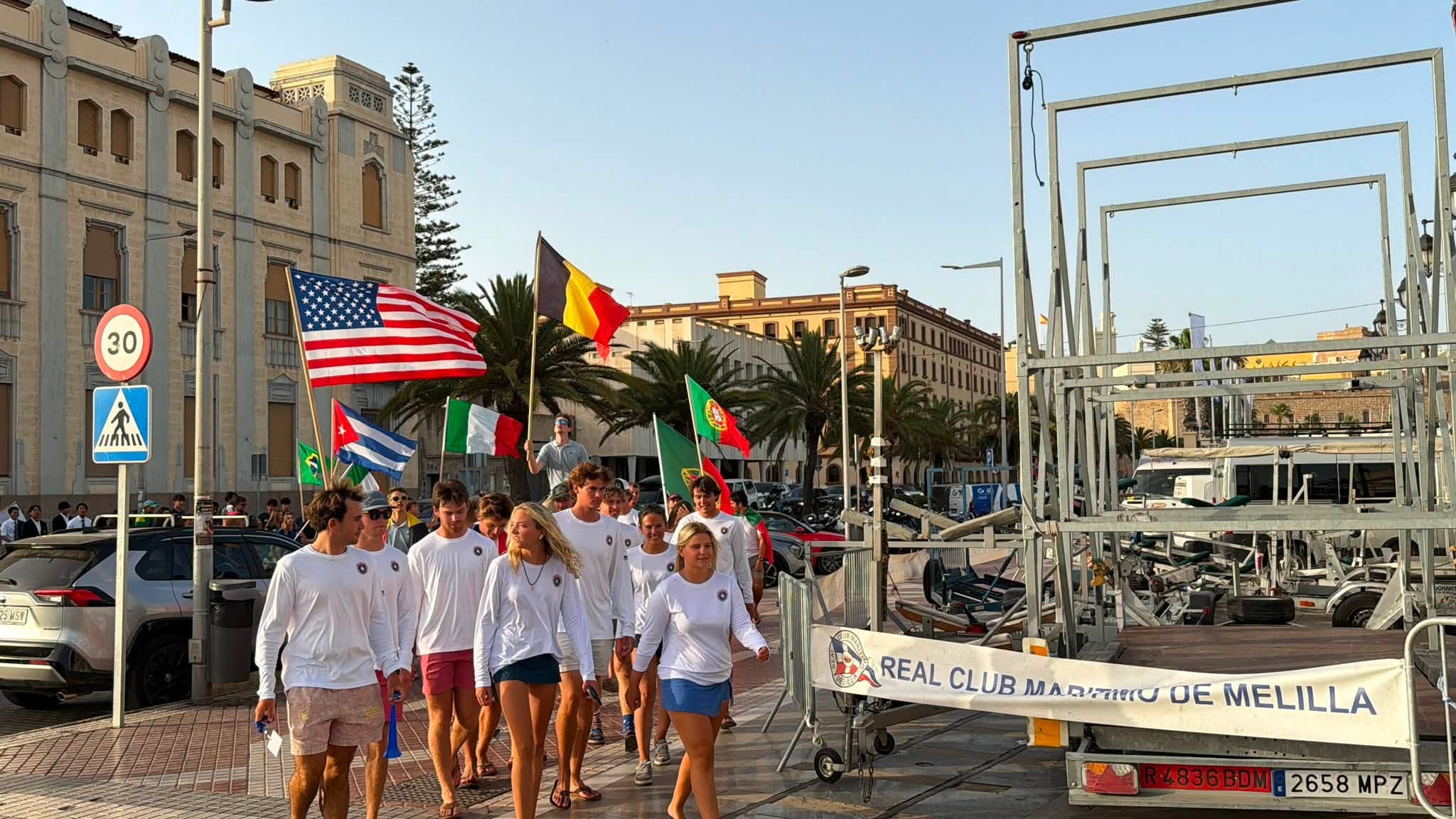
The regatta officially opened at the Salón Dorado del Palacio de la Asamblea, featuring a parade of national teams. Beyond the formal speeches from local dignitaries, the true highlight was the visible warmth and friendship among the teams—a spirit warmly captured in the opening speech by Manuel Stichini Vilela, SCIRA representative and SCIRA Secretary for Europe.
The Racing
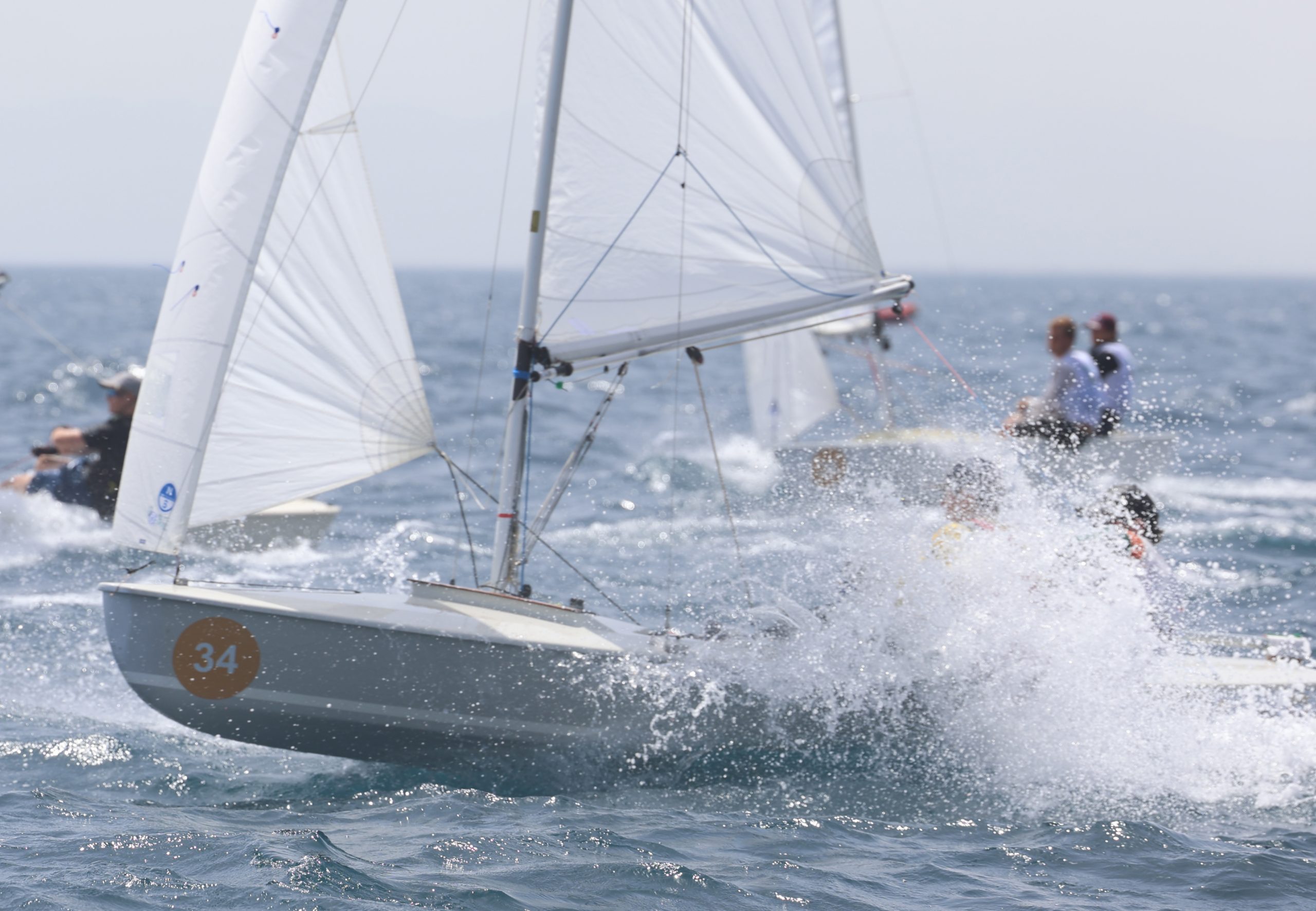
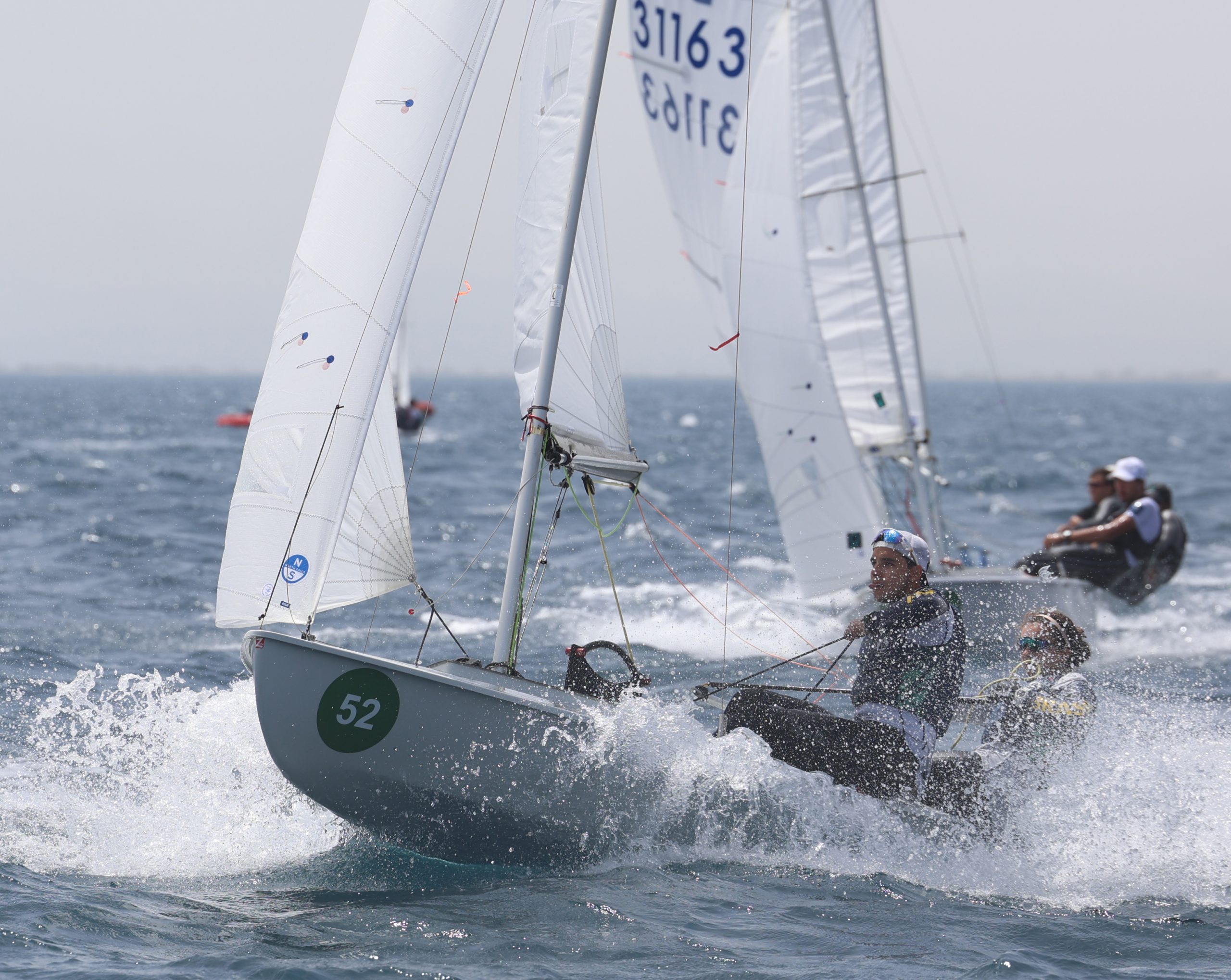
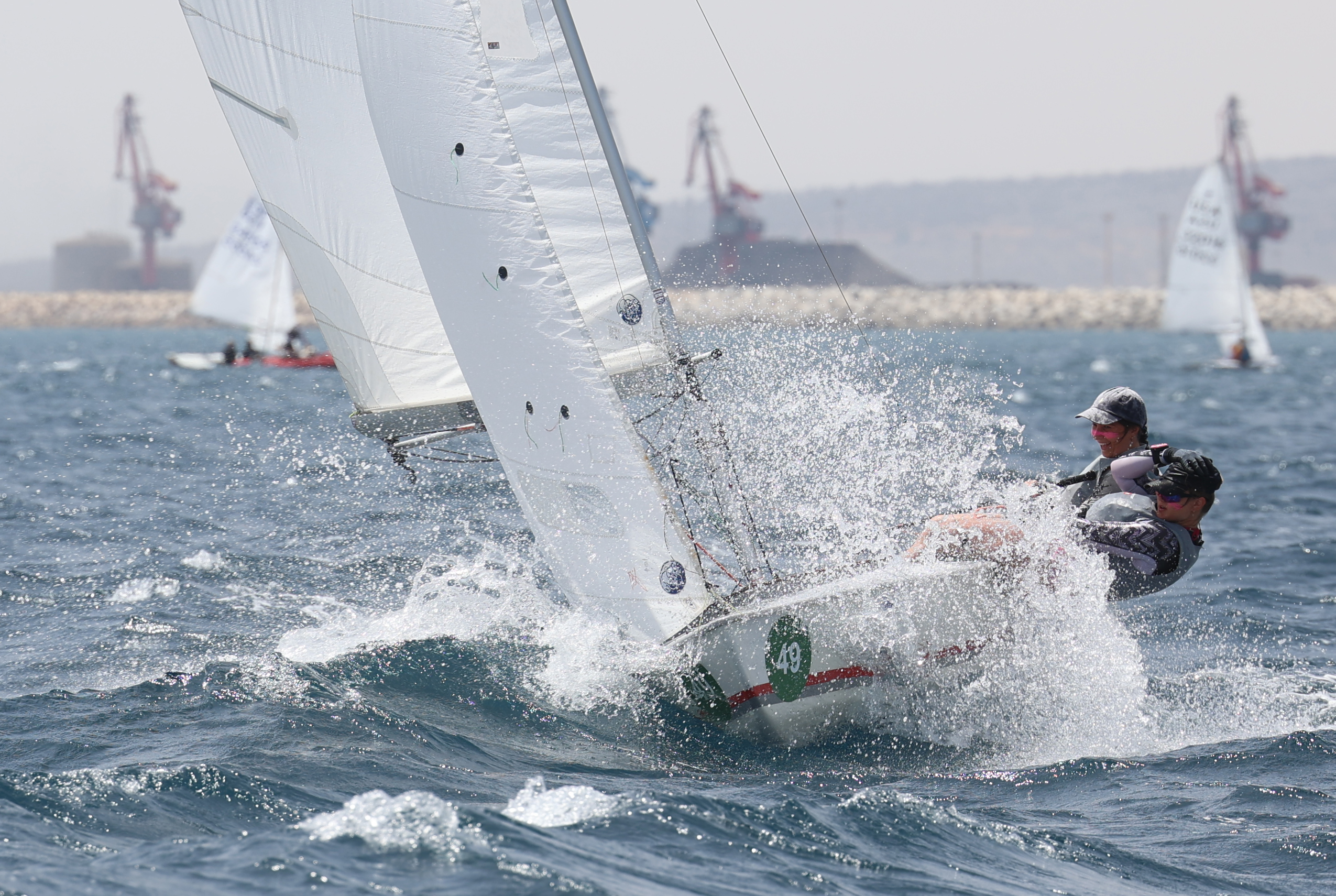
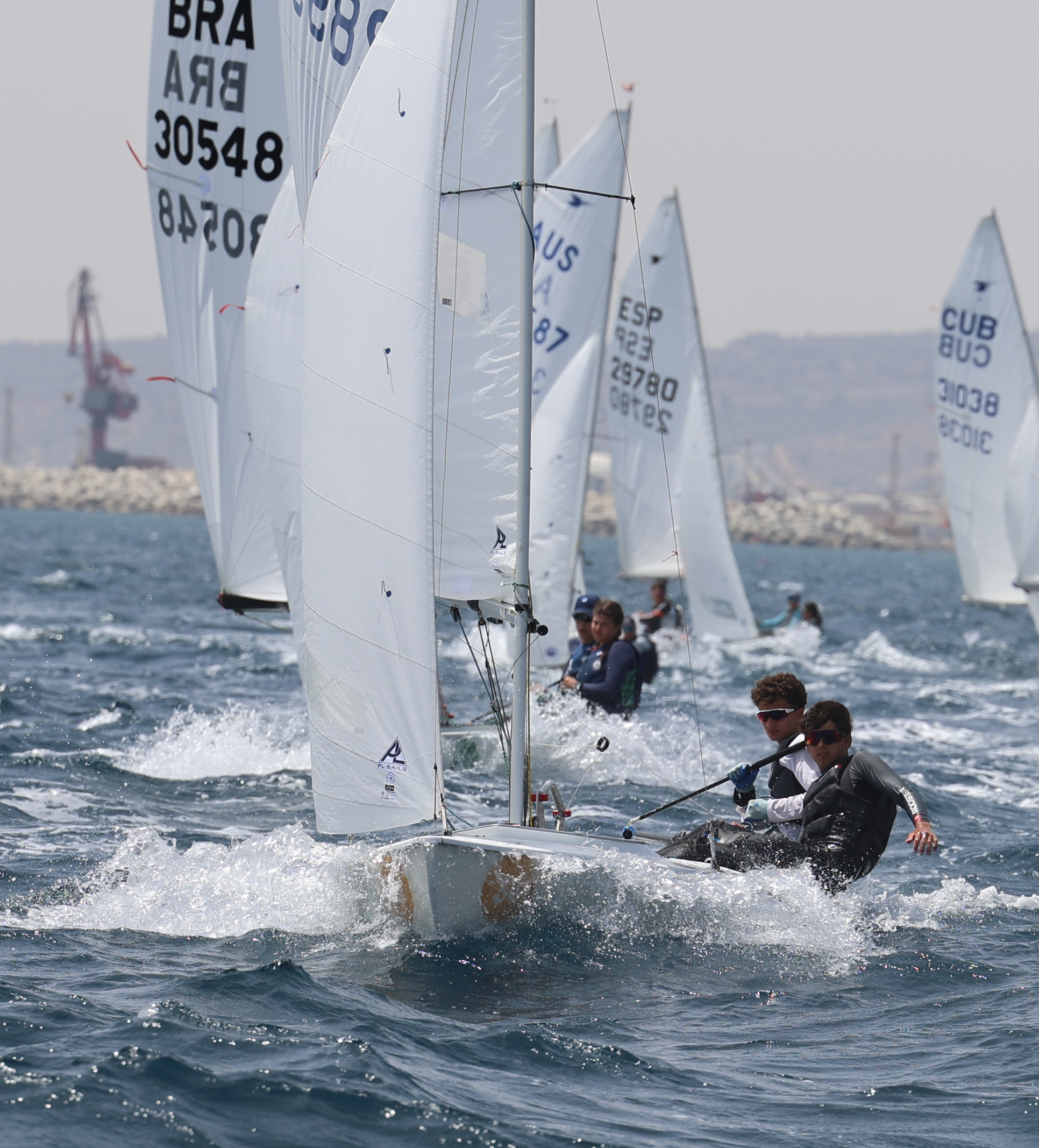
Expert Race Officer César Sans managed the series, getting six out of eight scheduled races in the bag despite varied conditions.
- Days 1 & 2: The championship kicked off in light air. American duo Owen Fretwell and Colin Krebs dominated the opening day, taking two authoritative wins (the second in barely sailable breeze). The second day brought medium winds, reshuffling the leaderboard and delivering a few surprises.
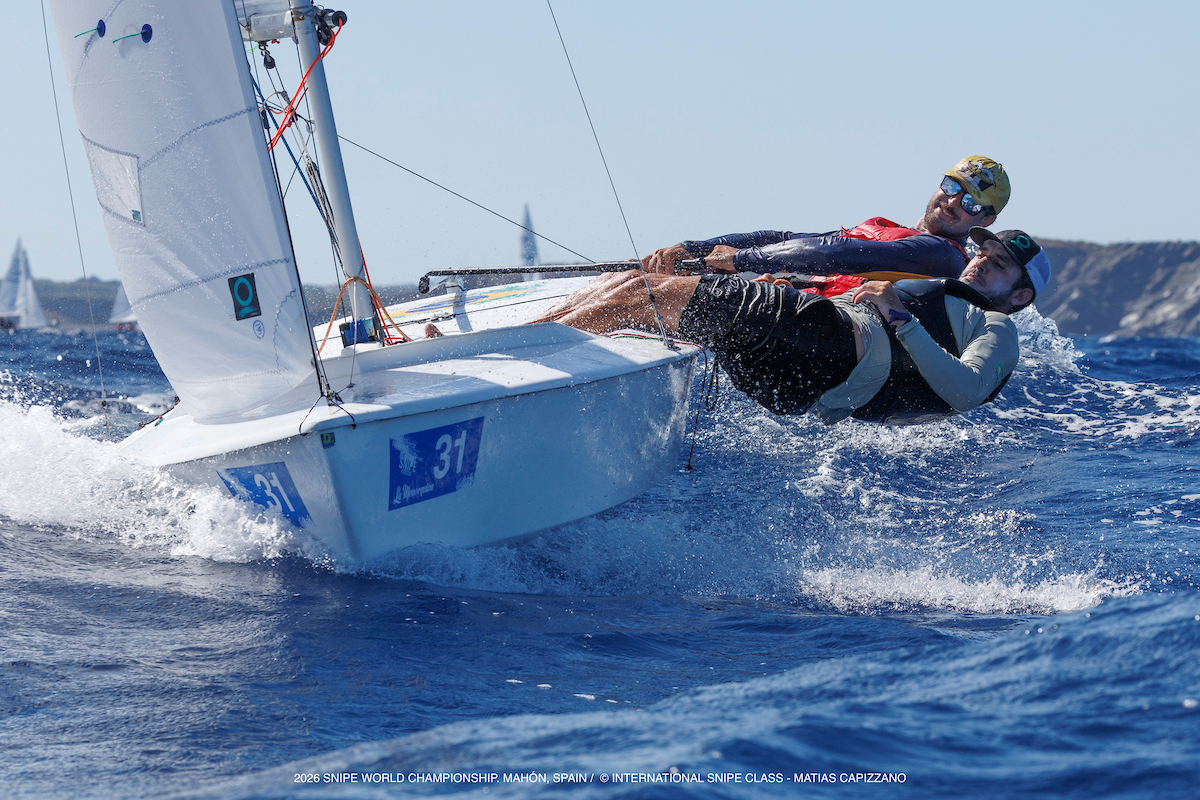
- Day 3: Medium-to-strong winds challenged the fleet on day three. After a second bullet in the series, the Spanish team of Juan José Fernández Maldonado and Álvaro Rodríguez Sánchez surged to the top of the standings (the second race of the day was shortened at the second windward mark).
- Final Day: The final day saw no racing, triggering a bit of inevitable debate on shore. In the end, Juan José Fernández Maldonado and Álvaro Rodríguez Sánchez took home a well-deserved victory.
On the final evening, the event concluded in the first-floor hall of the Club with the official Prize Giving Ceremony. The ceremony struck the perfect balance—carrying all the solemnity expected of a Royal Yacht Club and the rich traditions of the Snipe Class, while buzzing with the lively energy and enthusiasm of the young sailors. Winners across all categories were given a well-deserved celebration, bringing the championship to a memorable close.
For complete results and final standings
The True Spirit of the Snipe Junior Worlds
What makes the Snipe Junior Worlds so special? Anyone who has spent time in youth or Olympic classes will tell you that the Snipe scene is entirely unique. The level of connection, camaraderie, and open exchange between teams from different countries is vastly deeper here than almost anywhere else in competitive sailing.
The fleet naturally features a wide range of backgrounds. You have Snipe specialists who race regularly in strong local fleets at home or carry on a rich “family tradition.” Then you have sailors stepping into the Snipe from high-level ILCA 6, 470, 420, or 29er campaigns, eager to spend a week sharing the water with peers from around the globe.
Having had the privilege of supporting teams and helping organize seven Snipe Junior Worlds, I can safely say that this blend of competitive drive and genuine international friendship is the true magic of the Snipe class—and Melilla 2026 was no exception.
Note: The “Exchange of Views and Reading” section of this website hosts the views of the Snipe Sailors.
This article represents a personal opinion, which may not coincide with the official opinion or view of the Class or other sailors. We deem it useful to discuss (naturally avoiding offensive content) various topics relating to our Class, to allow for an open and democratic discussion, as has always been the case on SnipeToday for more than a decade.
Dear readers, if you want to reply to this article, agreeing, or disagreeing, or proposing different solutions, I will be happy to host you in this section of the site (email to: [email protected])
Leave a reply
Your email address will not be published. Your comment will be revised by the site if needed.
0 comments